Content intelligence tool that helps content teams grow brands, organic traffic, and revenue
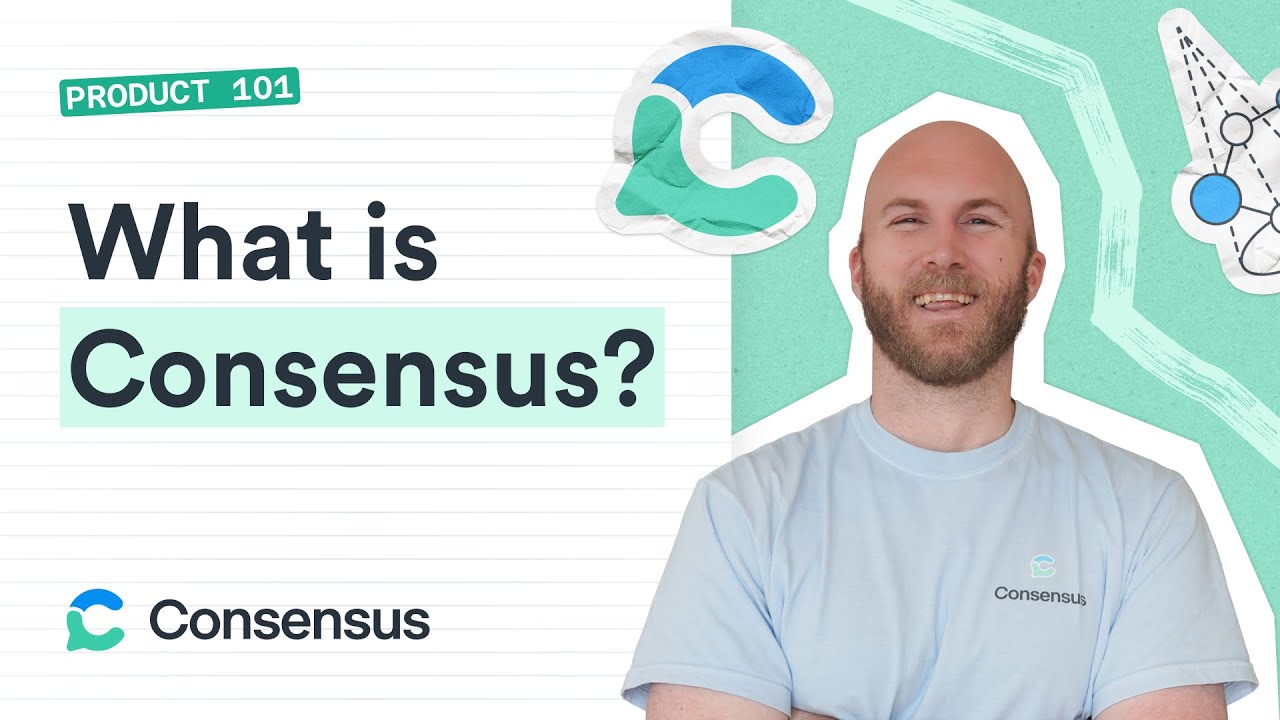
Consensus is on a mission to democratize expert knowledge. It does that through its AI-powered search engine to deliver evidence-based answers and find insights in research papers.
You can, for instance, ask Consensus questions such as “Does creatine help build muscle?,” “Can mindfulness improve sleep?”, and “Do direct cash transfers reduce poverty?”.
Beyond researchers, Consensus could also help students find supporting evidence for your paper, clinicians – find answers to patients’ questions; analysts – get expert quotes for presentations; content creators – source peer-reviewed insights for your blog; and health and fitness enthusiasts – check the viability of supplements and routines.
All being said, we are not surprised to learn that the tool has more than half a million users (September 2023) — including researchers, students, doctors, professionals, and evidence-conscious consumers.
Among them are researchers from the world’s top institutions, such as Merck, NASA, NIH, Princeton University, UCLA, University of Michigan, Stanford, Pfizer, MIT, Harvard, Berkeley, IEEE, University of Virginia, Johnson & Johnson, McKinsey & Company, and others.
Who is it for?
🤔
As an AI-powered search engine for finding insights in research papers, Consensus is primarily used by researchers, who rely on it to conduct literature reviews with ease. Furthermore, it can also help students find supporting evidence for their paper, clinicians - find answers to patients' questions, and analysts - get expert quotes for presentations. In addition, content creators use it to source peer-reviewed insights for your blog, and health and fitness enthusiasts to check the viability of supplements and routines. Finally, we have evidence-conscious consumers who rely on Consensus to make better-informed purchases.
FAQs
💬
What is Consensus AI, and who is it for?
Consensus AI is an AI-powered search engine that helps you find evidence-based answers to research questions by scanning peer-reviewed scientific papers. It targets students, researchers, doctors, and professionals in fields like medicine, biology, and social sciences who need quick, reliable insights without digging through endless databases. I think it shines brightest for beginners overwhelmed by tools like Google Scholar.
How does Consensus AI work?
You type a natural-language question, like "Does coffee reduce diabetes risk?" The AI analyzes abstracts from its massive database, extracts key findings, and generates a summary with citations. Features like the Consensus Meter show agreement levels across studies, such as "80% yes." It uses a customized GPT-4 to prioritize authority over popularity, avoiding biased results.
What are the key features of Consensus AI?
Standouts include the Consensus Meter for yes/no consensus stats, Study Snapshots for 7-bullet paper summaries, Deep Search for automated literature reviews in minutes, and Pro Analysis for content creation. You also get filters by study type, sample size, and more, plus a Copilot chat for follow-ups. Recent updates add API access for custom integrations.
Is there a free version of Consensus AI, and what are the paid plans?
Yes, the free tier lets you run basic searches and explore the platform with limited results. Pro costs about $9 per month or $96 yearly and unlocks unlimited Pro Searches, 3 Deep Searches monthly, and advanced filters. Enterprise plans for teams over 200 users are custom-priced. Students often snag a free Pro year through partnerships.
How accurate is Consensus AI for scientific research?
It pulls only from peer-reviewed sources and scores high on citation accuracy in benchmarks, but like any AI, it might miss nuances in abstracts or recent papers not yet indexed. Reviews from 2025 note 96%+ accuracy on verifiable claims, though users on Reddit advise cross-checking with originals for high-stakes work. Probably the best for scoping, not final verdicts.
Can Consensus AI handle questions outside biomedicine?
Absolutely, though it started strong in health sciences. It covers 22+ fields like finance, tech, and social sciences, with Deep Search adapting to any topic. A 2025 VentureBeat piece highlights its edge in broad queries, but niche areas might need supplements like PubMed.
How does Consensus AI compare to tools like Elicit or Perplexity?
Consensus excels at consensus-building from studies with its Meter, while Elicit focuses on data extraction and Perplexity on web-wide answers. Reddit users say Consensus feels more "birds-eye" for lit reviews, but Perplexity wins for conversational nuance. In 2025 benchmarks, Consensus tops report quality for academic tasks.
What are the main limitations of Consensus AI?
It relies on abstracts, so full-text details can slip, and the database lags slightly on brand-new papers. Some PhD folks on forums gripe about occasional hallucinations in summaries, and Deep Search is capped on free/Pro plans. Still, it's miles ahead of manual sifting, I reckon.
Is Consensus AI safe and trustworthy for sensitive research?
It sticks to peer-reviewed data, cites sources transparently, and follows privacy basics like no query logging for ads. A real-world story from 2025 shows a doctor using it to save a patient's life via an obscure case report. Experts praise its anti-bias design, but always verify for ethics boards.
How do I get started with Consensus AI?
Head to Consensus' website, sign up free, and search away, no credit card needed. And if you're academic, check for free Pro access via your uni.