logo-darklogo-darklogo-darklogo-dark
  • Home
  • Browse
    • Assistant
    • Coding
    • Image
    • Productivity
    • Video
    • Voice
    • Writing
    • All Categories
    • AI Use Cases
  • My Favorites
  • Suggest a Tool
✕
Home â€ș Learning & Education / Research & Data Analysis â€ș

Semantic Scholar

Published by Dusan Belic on June 22, 2023

Semantic Scholar by AI2

Semantic
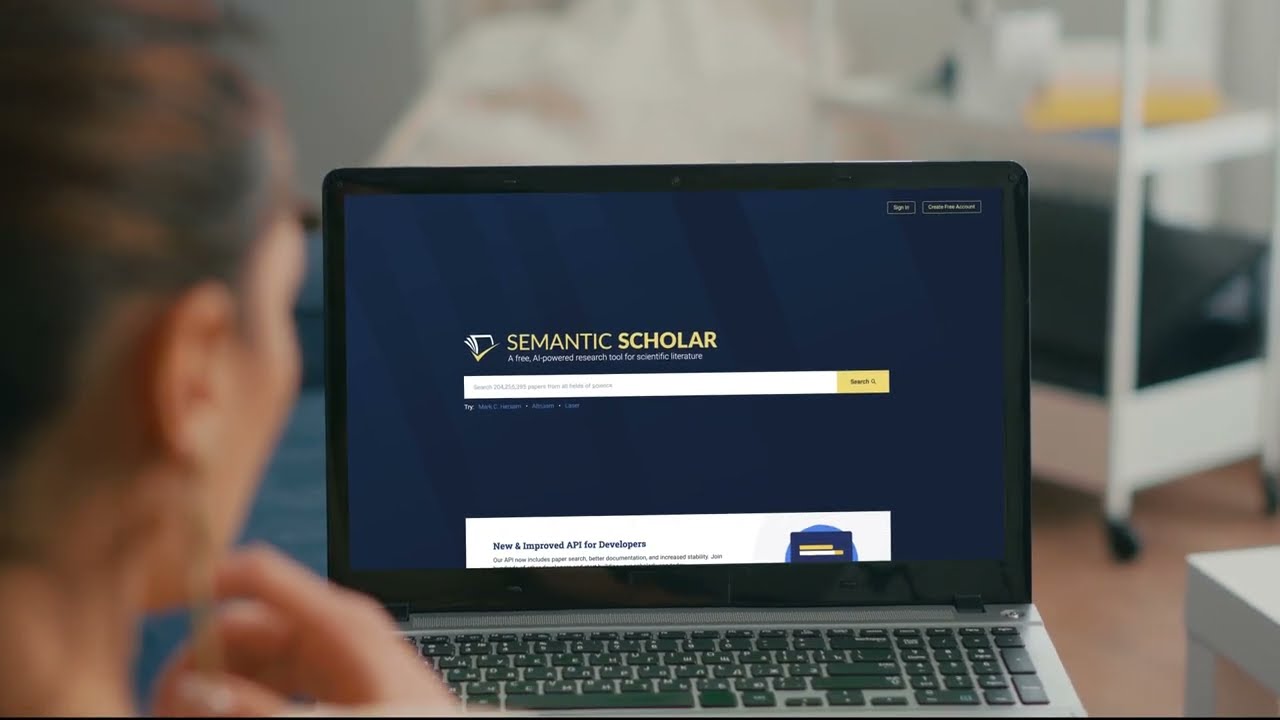
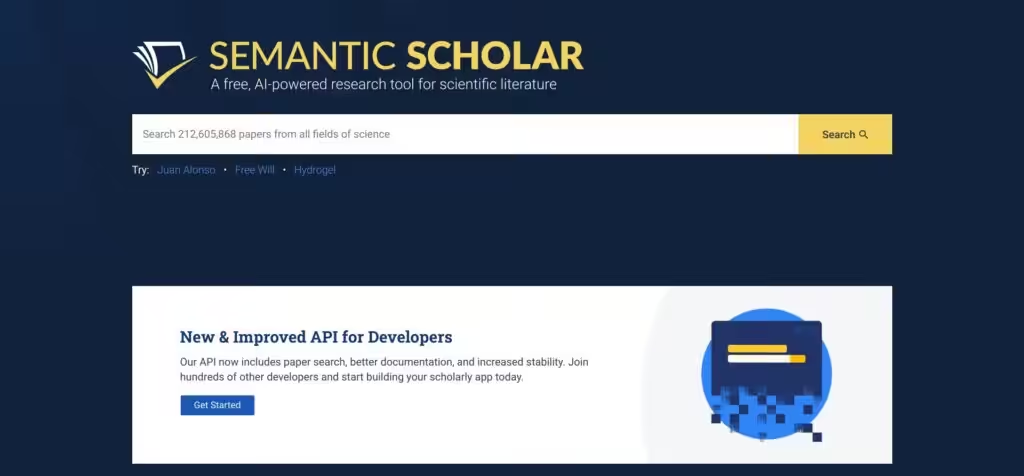
Semantic Scholar Homepage
Categories Learning & EducationResearch & Data Analysis
A free, AI-powered tool designed to help researchers navigate scientific literature

Semantic Scholar

Semantic Scholar is a free, AI-powered tool designed to help researchers navigate scientific literature. It works as a searchable database of scientific papers from all fields of study, making it easier to find relevant information quickly and efficiently. With over 212 million papers from various fields of science, it is a rich source of knowledge; so, whether you’re a researcher, a student, or just someone interested in learning more about a particular scientific topic​ – you’ll find Semantic Scholar helpful.

The technology behind the tool utilizes AI to help sort, filter, and present relevant information in a way that’s more digestible and accessible. The AI also aids in processing the vast amount of data in the scientific literature to deliver the most relevant results.

One of the cool features of Semantic Scholar is the Semantic Reader, which is an augmented reading tool that aims to augment the way people read and interact with scientific papers. It makes scientific reading more accessible and richly contextual — offering an enhanced reading experience that can be particularly beneficial for complex or dense scientific literature​.

Also provided is the API that allows developers to integrate Semantic Scholar’s paper search capabilities into their applications.

Semantic Scholar is based at the Allen Institute for AI, indicating its roots in a leading AI research organization.

Semantic Scholar Homepage
Categories Learning & EducationResearch & Data Analysis

Video Overview ▶

What are the key features? ⭐

  • Search research papers: Semantic Scholar allows you to search through over 200 million papers across various fields of science. You can filter results by journals, conferences, authors, publication types, and date range to find the needed research.
  • TLDR summaries: To help you scan papers faster, there are "Too Long; Didn't Read" (TLDR) summaries on search results pages, providing a paper's main objective and results.
  • Influential citations: Thanks to this feature, you can focus on the most impactful citations, as determined by a machine-learning model that considers factors such as the number of citations to a publication and the surrounding context for each.
  • Manage your papers: Semantic Scholar lets you store and organize all the papers that interest you in your online library. You can organize papers into folders and bulk export citations.
  • Semantic Reader: This is an augmented reading application which makes the reading experience more accessible and richly contextual by providing citation information directly within the context of a paper.

Who is it for? đŸ€”

Semantic Scholar is made for researchers, academics, and students engaging in scientific research across various fields. It also offers something for developers, with its API allowing everyone to integrate Semantic Scholar's capabilities into new apps and services. Finally, there is the general population with interest in scientific literature, including journalists, policymakers, and lifelong learners, who need a reliable tool to navigate the vast world of academic papers.

Examples of what you can use it for 💭

  • Research for academic writing and/or projects
  • Stay up-to-date with the latest research
  • Paper management and collaboration with other researchers
  • Track citations and get alerts when there are new citations for a specific paper or author

Pros & Cons ⚖

  • Lets you easily find research papers
  • Keep up with the latest research on just about any subject under the sun
  • Semantic Reader is convenient for non-academic folks
  • There are no mobile apps

FAQs 💬

What is Semantic Scholar, and who is it for?
Semantic Scholar is a free AI-driven search engine for scientific literature, built by the Allen Institute for AI to help researchers discover and understand papers faster. It targets scholars, students, and anyone tackling literature reviews, especially in fields like computer science, biomedicine, and beyond. If you’re overwhelmed by endless search results, this tool cuts through with smart summaries and connections, making it ideal for beginners or busy pros starting a project.
How does Semantic Scholar use AI to improve research?
It employs natural language processing and machine learning to pull out key insights like TL;DR summaries, influential citations, and paper highlights. Features like Semantic Reader add inline explanations and skimming tools right in the PDF, so you grasp core ideas without reading every word. Recent 2025 updates, such as better Research Feeds, learn your preferences to suggest relevant papers, saving time on broad scans.
Is Semantic Scholar free to use?
Yes, completely free with no subscriptions or hidden fees. You get full access to search, AI features, and data downloads without an account, though signing up unlocks alerts and libraries. This open model supports global users, from students without institutional access to independent researchers.
How does Semantic Scholar compare to Google Scholar?
Both index millions of papers, but Semantic Scholar shines in AI smarts for relevance, like auto-summaries and citation context, while avoiding paywalled links. Google Scholar has broader coverage across all disciplines, yet Semantic Scholar often delivers fewer, higher-quality results in STEM fields. In 2025 tests, they match closely on computer science citations, but Semantic Scholar feels more efficient for quick dives.
What’s the size of Semantic Scholar’s database?
It indexes over 225 million papers as of mid-2025, with 2.8 billion citation edges, pulling from sources like arXiv, PubMed, and publisher partnerships. Coverage is strongest in sciences but expanding to humanities; it’s not exhaustive everywhere, so pair it with other tools for niche topics.
Can I access full-text PDFs on Semantic Scholar?
Absolutely, it prioritizes open-access versions and links to free PDFs where available, skipping paywalls unlike some engines. If a paper’s locked, it flags institutional access options. Users in 2025 reviews praise this for seamless downloads, especially in biomed and CS.
How do I set up alerts or recommendations?
Create a free account, then hit “Create Alert” on author, paper, or topic pages for daily or weekly emails on new citations or related work. Research Feeds use your ratings to personalize suggestions, adapting over time. It’s simple, and recent feedback says it’s great for staying current without constant checking.
Does Semantic Scholar work well for non-English papers?
It handles English best, with AI features like summaries limited there, but indexes multilingual content. For global research, it’s solid on abstracts, though translations aren’t automatic. If you’re in non-English fields, it might need supplements like BASE or DOAJ.
What are some limitations of Semantic Scholar?
Coverage can be spotty in humanities or obscure subfields, and AI summaries occasionally miss nuances or err on facts, so always verify. It doesn’t integrate directly with citation managers like Zotero yet, and beta tools like Ask This Paper are English-only. Still, 2025 users call it a strong starter hub.
How accurate are the AI features like TL;DRs?
Pretty reliable for overviews, generated via models like GPT, but not perfect, think 80-90% hit rate based on reviews. They capture main ideas well in CS and biomed, but complex contexts might need a double-check against the full text. The platform flags them as aids, not substitutes.

Related tools ↙

  1. YouLearn YouLearn An AI-powered educational platform designed to enhance the learning experience
  2. Sub Translate AI Sub Translate AI Translates SRT subtitles accurately with AI context awareness
  3. Courseau Courseau Transforms existing content into interactive online courses quickly
  4. Speak Speak A new way to learn languages with advanced AI Speaking technology
  5. Mathway Mathway Solves math problems from algebra to calculus with step-by-step explanations
  6. Quizgecko Quizgecko An AI tool that lets you quickly create online quizzes
Last update: November 18, 2025
Share
Promote Semantic Scholar
light badge
Copy Embed Code
light badge
Copy Embed Code
light badge
Copy Embed Code
About Us | Contact Us | Suggest an AI Tool | Privacy Policy | Terms of Service

Copyright © 2026 Best AI Tools
415 Mission Street, 37th Floor, San Francisco, CA 94105