Turnitin


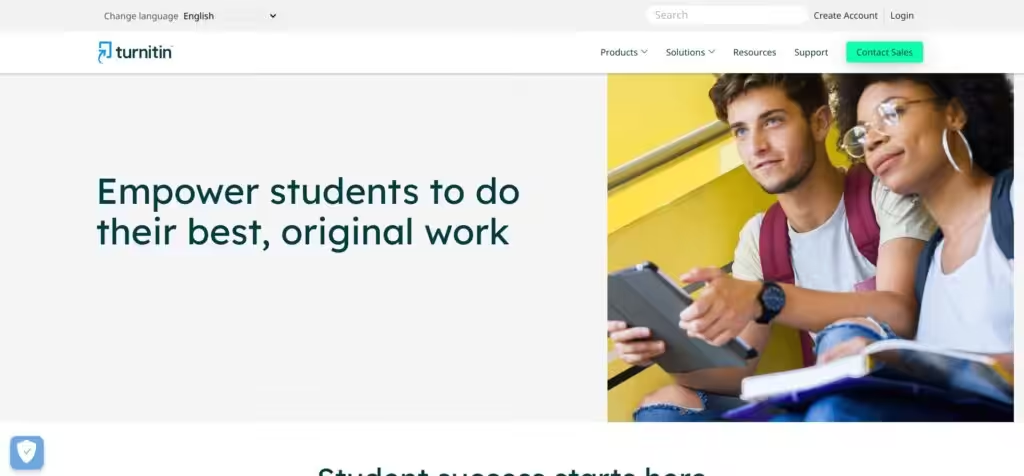
Turnitin is made to uphold academic integrity and support students in delivering their best, original work. Employing advanced AI tech, it can detect writing to differentiate between AI-generated and human-written text.
Unsurprisingly, this technology has been specially developed to deal with student writing and can be seamlessly incorporated into the educator’s existing workflow.
In other words, Turnitin ensures that the work submitted by students is original, helping institutions maintain the integrity of their academic programs and ensuring that the work students submit is genuinely their own.
The service also provides tools that streamline the grading process for instructors. For instance, it can automate some aspects of assessment, allowing educators to spend more time on teaching.
Furthermore, Turnitin can provide actionable feedback to students, and this part, too, can be incorporated into teachers’ existing workflows. Said feedback helps students develop their original thinking skills, supporting their academic development and fostering a deeper understanding of their subjects.
Turnitin offers a range of products, such as “Originality,” which addresses the originality of student work; “Gradescope,” which is a platform for delivering and grading paper-based assessments; “iThenticate,” a high-stakes plagiarism checking tool used by academic researchers and publishers; “Similarity,” a plagiarism checker; “Feedback Studio,” a tool that aids in grading assignments; and “ExamSoft,” which improves program outcomes through data insights from digital exams.
Video Overview ▶️

What are the key features? ⭐
- Originality: This feature helps check the originality of student work. It also keeps track of new trends in misconduct, providing a comprehensive solution to maintain academic integrity.
- Gradescope: A modern assessment platform allowing educators to deliver and grade paper-based assessments from anywhere.
- iThenticate: A high-stakes plagiarism-checking tool that is considered the gold standard for academic researchers and publishers.
- Similarity: A comprehensive plagiarism checker that can be integrated into existing workflow.
- Feedback Studio: The feature designed to foster writing excellence and academic integrity by allowing educators to provide feedback and grade assignments.
- ExamSoft: Provides instant data insights from digital exams taken offline. This can help institutions evaluate the effectiveness of their programs and make necessary adjustments.
Who is it for? 🤔
Examples of what you can use it for 💭
- Check whether your students' work is truly original
- Grade assignments remotely with "Gradescope"
- Verify research integrity with "iThenticate" to make sure academic papers are free from plagiarism
- Give feedback and grade assignments
- Improve program outcomes with instant insights from digital exams taken offline
Pros & Cons ⚖️
- Helps improve students' writing skills
- Streamlines the grading process for instructors
- Provides instant insights from digital exams
- Not available for individual teachers, only for whole institutions