FlutterFlow


FlutterFlow AI Gen is an innovative tool designed to simplify and enhance the app development process using AI. It is a feature within FlutterFlow, a platform that allows users to design, build, and launch applications with Flutter, which is a popular open-source framework for mobile application development.
At the core of FlutterFlow AI Gen is the capability to generate various components of an app automatically using AI.
One of these is AI Page Gen, which enables you to provide a simple prompt or description, and the AI will generate a basic page layout or design for an app. This can significantly speed up the development process, as it kickstarts the app development with a ready-to-customize page, which can then be modified according to your specific needs. It also allows for exporting of the generated Flutter code, making it easy to integrate into your project.
Another feature, called AI Schema Gen, is designed to assist with backend development, which is one of the more complex aspects of app creation. You describe what you need, and the AI generates a scalable and interconnected database schema. Again, this can save a lot of time and effort, especially in planning and structuring the database that supports your app.
Then there’s AI Theme Gen, which is used for the app design. It helps you craft color schemes for your app based on text descriptions. This means you no longer have to manually match hex codes or struggle with color coordination. By providing a description, AI Theme Gen generates a color scheme that can elevate the visual appeal of your app, making it more engaging for users.
Finally, AI Code Gen acts like a coding assistant right in your browser. It is integrated into FlutterFlow’s custom code editor, providing seamless code suggestions that are immediately usable within their intuitive visual app development platform. This feature offers guidance and facilitates the coding process, making the overall experience of app development more accessible and efficient.
The bottom line is FlutterFlow AI Gen makes the app development process easier, faster, and more accessible — covering various aspects of app development, from initial design and layout to backend schema creation and coding assistance. This makes it an invaluable asset for both experienced developers and newcomers to the field looking to streamline their workflow and create high-quality, visually appealing applications with less effort.
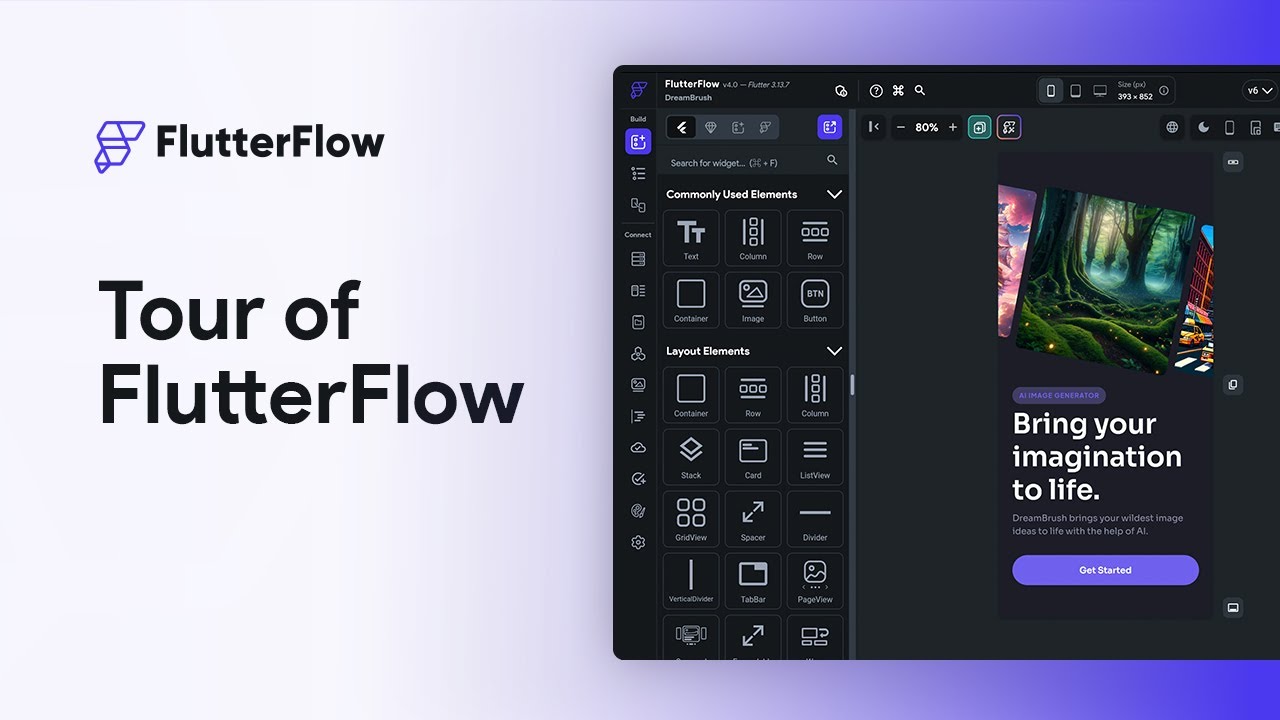
Video Overview ▶️
What are the key features? ⭐
- AI Page Gen: This feature is like having an automatic page designer. You provide a description of what you want on a page of your app, and AI Page Gen creates a basic layout or design for you.
- AI Schema Gen: When building an app, you need a well-organized database to store and manage information. That's where AI Schema Gen kicks in, helping you design the database structure easily.
- AI Theme Gen: This is your personal color stylist for the app. It lets you describe a theme or mood, and it creates a color scheme for you.
- AI Code Gen: This feature acts as your coding buddy, suggesting code snippets directly in the FlutterFlow environment.
- Flutter integration: While not a standalone feature, the seamless integration of these AI capabilities with Flutter is a significant aspect of FlutterFlow AI Gen.
Who is it for? 🤔
Examples of what you can use it for 💭
- Rapid prototyping of app pages with the help of AI
- Design a user-friendly database with ease
- Create an attractive app theme with AI-selected colors
- Get assistance in coding with code snippet suggestions
- Makes your overall Flutter development faster and easier
Pros & Cons ⚖️
- Design elements are included, as well
- Includes assistance with database creation
- Helps with coding with snippet suggestions
- Limited to Flutter developers