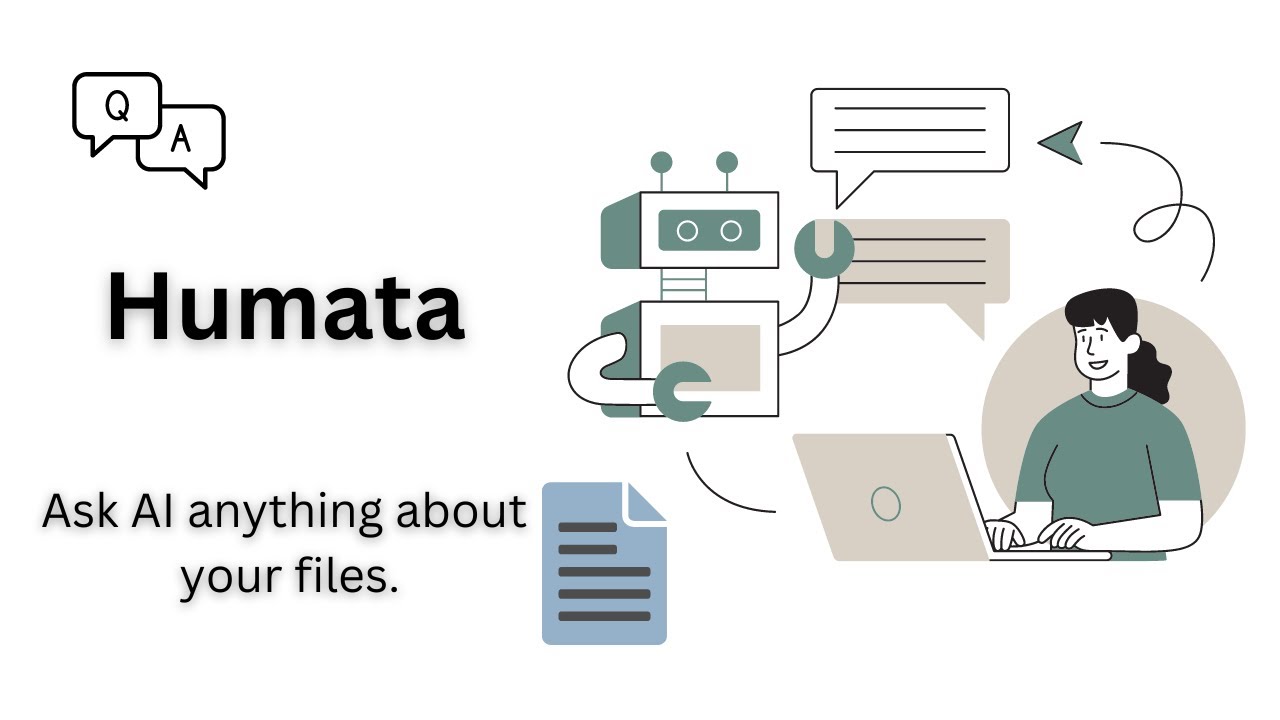
Humata by Tilda Technologies Inc.


Humata AI is like ChatGPT for all your files — because “asking is faster than skimming.” It lets you chat your way through long documents and use AI to summarize for you.
The tool is made for both individuals and organizations, allowing them to easily extract insights and answers from a single or multiple PDFs simultaneously. Ultimately, it helps users streamline the process of knowledge discovery.
Unlike other services that let you chat with your documents, Humata is made for teams from the ground up. It lets multiple users access the same or different files, with each having the same experience.
It is also a highly secure service, encrypting and storing your files in a secure private cloud with support for role-based security. Not everyone needs access to all files and folders, and Humata is ready to accommodate that request.
The tool can be tried for free, and as they say, it is cheap to scale for companies.
Video Overview ▶️
What are the key features? ⭐
- Extracting answers from your files: With Humata, users can ask AI-powered queries about their data and files and get instant answers. This feature makes it easy to discover new insights and save time by learning faster and working smarter.
- Unlimited files: Upload as many documents as you want with no limits on file sizes. Humata's AI answers questions will deliver answers in seconds.
- Unlimited questions: Need a shorter summary? Just ask for it. You can order the AI to rewrite your summary until you're satisfied. Ask again and again until you're happy.
- Citation highlighting: Build trust with cited links in your source files. Humata's AI answers come with citations, so you can trace where your insight came from.
- Embeds in any webpage: Include Humata in your webpage with a single click. Connect your customers with answers locked away in your docs.
- Security included: Humata is a highly secure service, encrypting and storing your files in a secure private cloud with support for role-based security. Not everyone needs access to all files and folders, and Humata is ready to accommodate that request.
Who is it for? 🤔
Examples of what you can use it for 💭
- Turns PDF archives into a knowledge database
- Chat your way through long documents
- Makes it easier to extract insights from PDFs
- Streamlines the process of knowledge discovery
Pros & Cons ⚖️
- Probably the best "chat with PDF" app
- Especially great for teams
- The free plan isn't that bad
- There are other options out there, some of which may be more affordable for you (depending on what you need)