Hume
Developing artificial intelligence systems that prioritize human emotional well-being
Hume is a tech company developing artificial intelligence systems that prioritize human emotional well-being. They aim to ensure AI serves human goals by integrating emotional intelligence into technology, enabling more empathetic and effective interactions between humans and machines.
Hume’s voice-to-voice model — Empathic Voice Interface (EVI) — facilitates natural, human-like conversations by understanding and generating speech reflecting the user’s tone and emotional state. It can emulate a range of personalities, accents, and speaking styles — making it adaptable to various applications.
Developers can leverage Hume’s platform to create customized voice personalities tailored to specific use cases. The platform offers tools for adjusting voice characteristics — such as femininity, nasality, pitch, and more — allowing for the design of synthetic voices that align with user preferences. This capability can be particularly beneficial for industries like customer service, healthcare, and education, where empathetic communication is crucial.
The company has also established The Hume Initiative, a non-profit organization that provides guidelines for creating empathic AI systems aligned with human values. This initiative is meant to underscore Hume’s dedication to responsible AI practices that enhance human well-being.
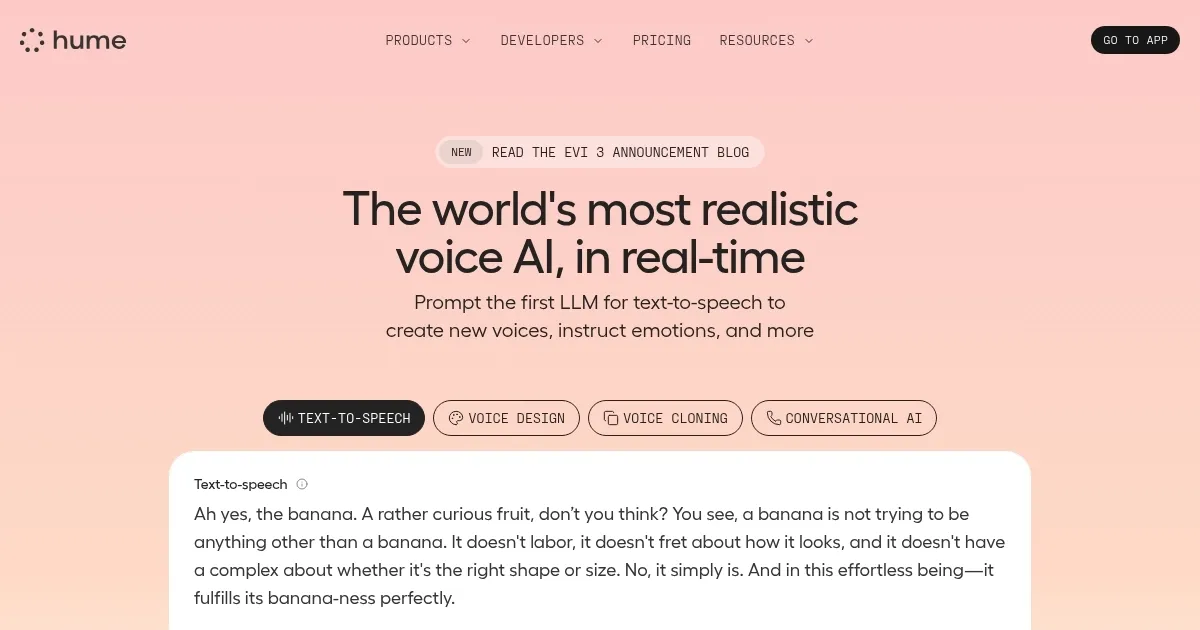
Homepage Screenshot 📸
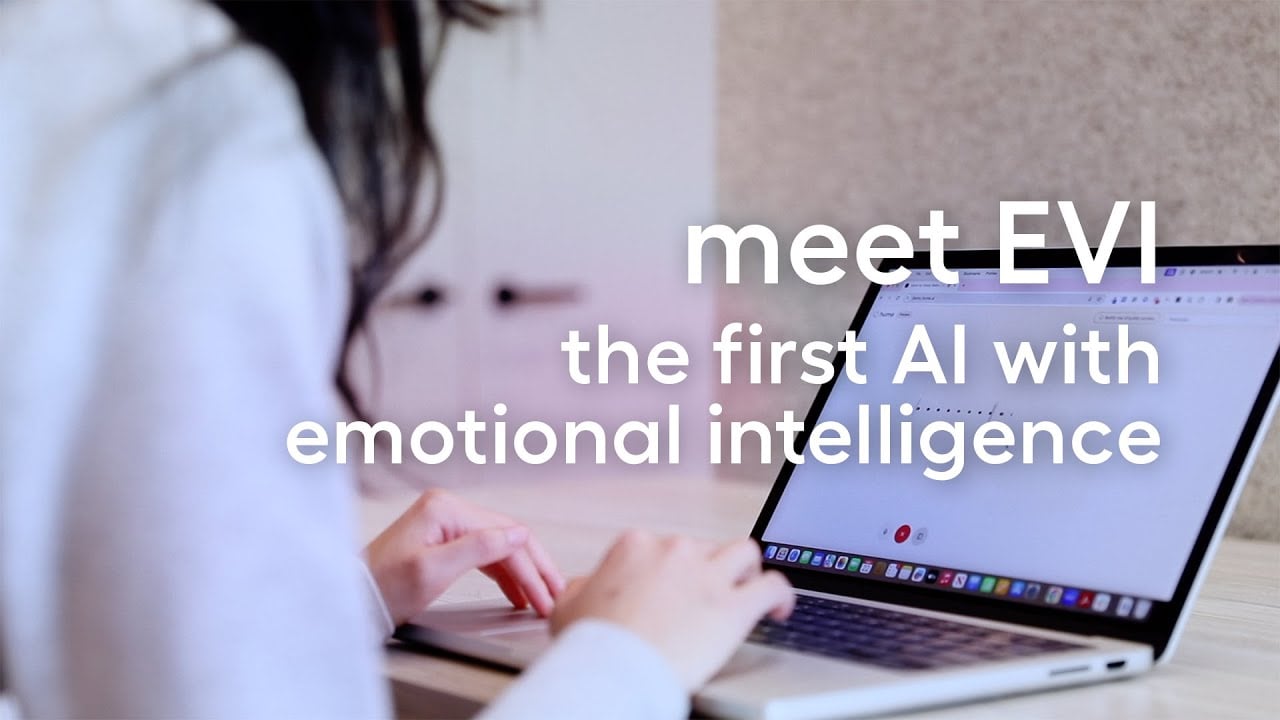
Video Overview 🎬
What are the key features? ✨
- Empathic Voice Interface (EVI): Hume's flagship model is a voice-to-voice AI capable of understanding and generating speech with emotional nuances. It can emulate various personalities, accents, and speaking styles.
- Expression measurement: The platform offers tools to measure emotional expressions across voice, video, and text - providing insights into facial expressions, vocal tones, and language use.
- Real-time interaction: Hume enables real-time conversations with AI that feels human-like, adapting to the user's emotions and tone during interactions.
- Voice customization: Users can modulate voice features such as timbre, pitch, and perceived gender to allow for tailored speaking styles that align with specific application needs.
- Seamless integration: The platform is compatible with various large language models (LLMs) and external tools, facilitating easy integration into existing systems while maintaining expressiveness and accuracy.
Who is it for? 🤔
Examples of what you can use it for 💡
- Enhance customer interactions by providing emotionally intelligent responses
- Develop empathetic AI companions for patients in the healthcare setting
- Create engaging virtual tutors that adapt to students' emotional states
- Design interactive characters in games and media that respond authentically to user emotions
- Analyze audience reactions to campaigns and advertisements in real-time
Pros & Cons ⚖️
- Advanced voice-to-voice model capabilities
- Enhances AI with understanding of emotions
- Modulate voice for different applications
- Emotional data handling raises privacy concerns
FAQs 💬
Ready to try Hume?
Developing artificial intelligence systems that prioritize human emotional well-being
Visit HumeHume alternatives 🔗