Pathway
Provides rapid access to evidence-based medical guidelines and algorithms
Healthcare moves fast, and clinicians need tools that keep up. Pathway, a sleek, AI-powered medical knowledge platform, steps into this high-stakes arena with a promise to streamline decision-making for doctors, nurses, and medical students. Built by Pathway Medical Inc., this tool organizes complex medical information into digestible, evidence-based summaries and interactive algorithms. It’s a lifeline for professionals drowning in data, offering quick, vetted answers to clinical questions. I think it’s fair to say Pathway feels like a trusted colleague who’s always ready with the latest research.
The platform’s strength lies in its ability to deliver concise guideline summaries, pulling from trusted sources like UpToDate and PubMed. Its AI-driven search, dubbed Pathway AI, tackles complex queries with startling precision — boasting a 96% USMLE accuracy score, a feat that sets it apart from general-purpose AI tools. Features like “Find Dose” and “Use Calculator” let users access drug dosing or clinical scoring systems in seconds, while the “Counsel Patient” tool offers plain-language explanations for patient discussions. This mix of speed and depth is a game-changer in busy settings like emergency rooms or primary care clinics. Still, the app’s focus on healthcare professionals means it’s not for patients or casual users, which keeps its scope tight but limits its audience.
Pathway’s mobile app, available on iOS and Android, is a standout. It’s clean, intuitive, and lets clinicians earn CME credits while tackling real-world cases — a feature that’s surprisingly rare among competitors like UpToDate or DynaMed. These rivals offer robust content but lack Pathway’s AI-driven responsiveness or sleek interface. However, some users note Pathway’s subscription cost, which feels steep for trainees despite a 30-day guest period and educational discounts. The platform’s reliance on a subscription model might frustrate those used to institution-funded resources, though its independence from pharmaceutical funding adds credibility.
What might catch users off guard is the depth of Pathway’s knowledge graph, which connects medical concepts in ways that spark new insights. For instance, entering a symptom like chest pain pulls up not just diagnostics but also related guidelines and calculators, all cross-referenced. It’s a bit like having a medical librarian, researcher, and clinician in your pocket. On the flip side, the app’s occasional lag in processing complex queries can disrupt workflow, especially in time-sensitive scenarios. Recent feedback on forums like Reddit suggests the developers are quick to address bugs, which is reassuring.
For clinicians, Pathway is a powerful ally, but it’s not flawless. Its focus on evidence-based medicine is a strength, yet some specialties, like rare diseases, feel underrepresented compared to broader fields like internal medicine. If you’re a clinician looking to cut through the noise, I’d recommend starting with the free trial to test its fit for your practice. Pair it with existing tools like Epocrates for drug interactions to cover all bases. Keep an eye on updates, as Pathway’s team seems committed to expanding its database.
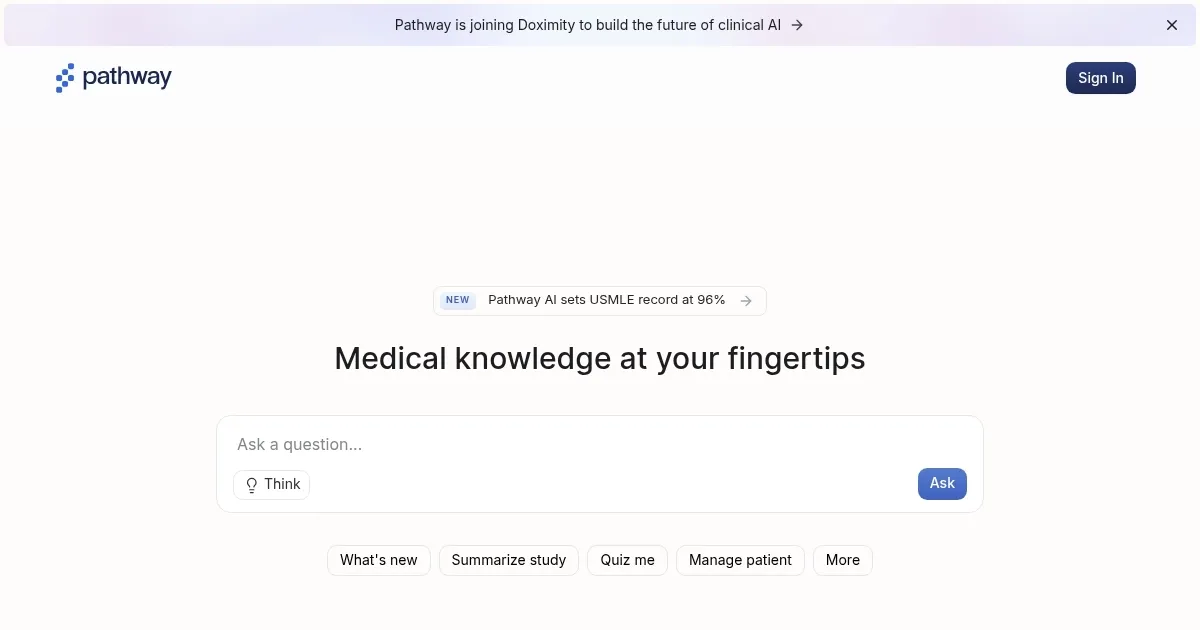
Homepage Screenshot 📸
What are the key features? ✨
- Find Dose: Provides rapid, evidence-based drug dosing guidelines.
- Use Calculator: Offers clinical scoring tools like Wells Score for DVT risk.
- Counsel Patient: Delivers patient-friendly explanations for complex diagnoses.
- Pathway AI: Answers complex clinical questions with 96% USMLE accuracy.
- CME Credits: Allows clinicians to earn credits while addressing cases.
Who is it for? 🤔
Examples of what you can use it for 💡
- Emergency Physician: Uses Pathway AI to confirm treatment protocols for acute conditions like atrial fibrillation.
- Medical Resident: Relies on “Find Dose” to adjust medications accurately during ward rounds.
- Primary Care Nurse: Employs “Counsel Patient” to explain diabetes management to patients clearly.
- Medical Student: Utilizes “Use Calculator” to practice clinical scoring for case studies.
- Family Practitioner: Earns CME credits while researching guidelines for common conditions.
Pros & Cons ⚖️
- Fast, evidence-based answers.
- CME credit integration.
- AI with 96% USMLE accuracy.
- Limited rare disease coverage.
- Occasional app lag.
FAQs 💬
Ready to try Pathway?
Provides rapid access to evidence-based medical guidelines and algorithms
Visit PathwayPathway alternatives 🔗