The White House is stepping up efforts to protect American artificial intelligence companies from what it calls systematic theft by foreign competitors. A new internal memo claims Chinese firms are running large-scale operations to copy US AI technology through sophisticated hacking techniques.
The allegations come as the AI industry faces increasing geopolitical tensions, with American companies investing hundreds of billions in AI development while competitors potentially shortcut the process through unauthorized copying. The situation highlights growing concerns about protecting intellectual property in the rapidly evolving AI sector.
White House outlines new protection measures
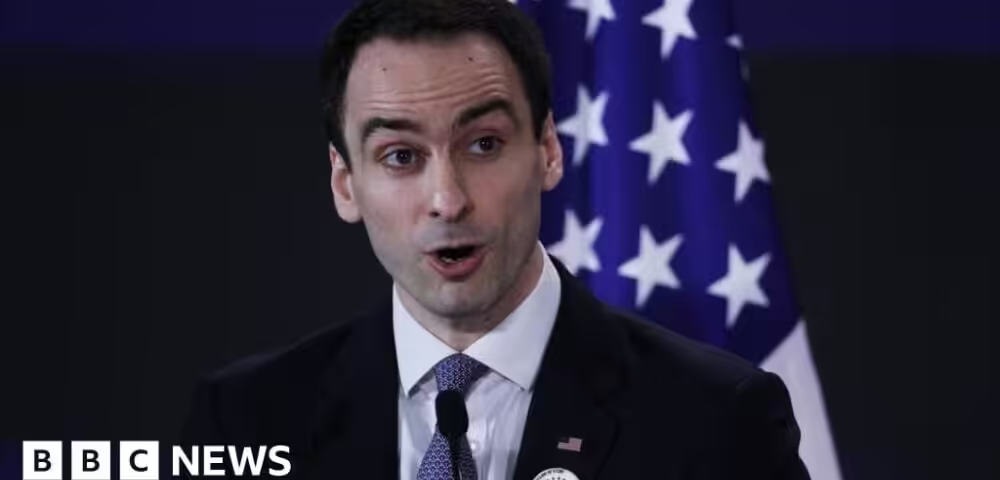
Michael Kratsios, Director of Science and Technology Policy, wrote in the memo that the administration has new intelligence about “foreign entities, principally based in China” exploiting American AI firms through a process called “distilling.”
This technique involves copying AI technology developed by US companies with the goal to “systematically undermine American research and development and access proprietary information,” according to Kratsios.
The White House plans four specific countermeasures:
- Share more intelligence with US AI companies about distillation tactics and the actors behind them
- Improve coordination with companies to fight these attacks
- Develop best practices to identify and stop distillation campaigns
- Explore ways to hold foreign actors accountable for technology theft
The memo did not provide specific details about planned actions against foreign entities found engaging in AI distillation.
How distillation attacks actually work
Distillation campaigns operate through networks of thousands of fake user accounts on AI chatbots and tools. These accounts appear to be normal users but work together in coordinated attempts to “jailbreak” AI systems and extract information that companies keep private.
The stolen data gets fed into the attackers’ own AI model development and training processes, essentially allowing them to copy years of research and development work. This gives foreign competitors a significant shortcut to building advanced AI systems without the massive investment typically required.
Major AI companies confirm ongoing attacks
Leading US AI companies have confirmed they’re dealing with these systematic copying attempts. Earlier this year, Anthropic specifically named three Chinese AI laboratories – DeepSeek, Moonshot, and MiniMax – as conducting distillation attacks against its models.
OpenAI has also accused DeepSeek of copying its technology. DeepSeek became popular after claiming its AI model cost only a few million dollars to create, compared to the hundreds of billions other companies spend on development.
The three Chinese companies did not respond to requests for comment about the allegations.
China pushes back on theft allegations
China’s embassy in Washington rejected the White House claims, calling them “unjustified suppression of Chinese companies.” An embassy representative said China’s AI development comes from “its own dedication and effort as well as international cooperation that delivers mutual benefits.”
The representative added that “China is not only the world’s factory but is also becoming the world’s innovation lab,” defending the country’s growing AI capabilities as legitimate technological progress.
These tensions occur as President Donald Trump is expected to visit China in May, potentially bringing AI competition into high-level diplomatic discussions.