HubSpot Breeze


Breeze is HubSpot’s AI-powered suite that streamlines marketing, sales, and service tasks by integrating seamlessly with its CRM platform. It’s designed to boost productivity, offering tools like Breeze Assistant, Breeze Agents, and embedded AI features that leverage your business data for smarter outcomes. Unlike standalone AI solutions, Breeze feels like a natural extension of HubSpot, making it accessible for teams already using the platform. It’s built to save time and drive growth, with customers like Agicap reporting 750 hours saved weekly and Kaplan cutting response times by 30%. The suite’s strength lies in its ability to deliver context-aware assistance, pulling from your CRM to offer tailored suggestions.
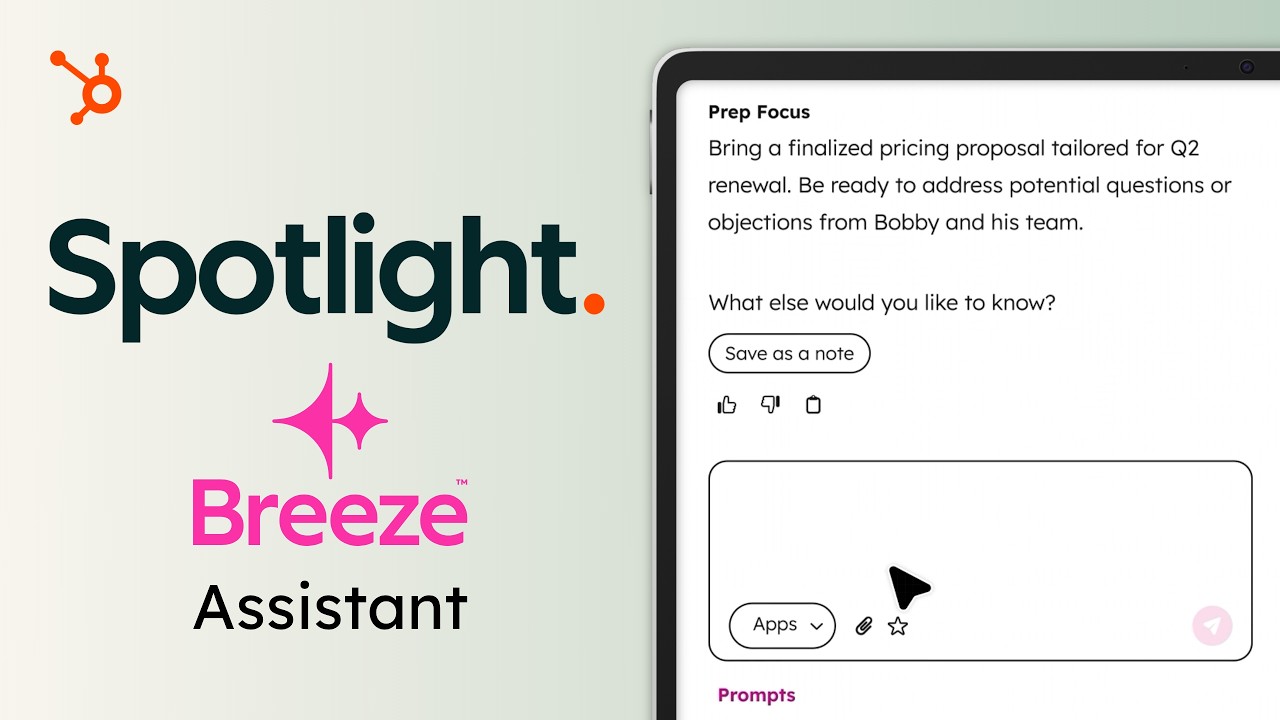
Breeze Assistant acts as a virtual assistant, helping with tasks such as drafting emails or preparing for meetings. It uses your CRM data to provide relevant insights, such as suggesting key points for a sales pitch based on customer history. This makes it a standout for busy professionals who need quick, actionable help. Unlike Salesforce Einstein, which can be overwhelming with complexity, Breeze Assistant keeps things simple and intuitive. It’s embedded across HubSpot’s tools, so you can access it from anywhere, whether on desktop or mobile.
Breeze Agents are AI-powered teammates that automate repetitive tasks. Available through Breeze Marketplace, they handle tasks such as social media scheduling, sales prospecting, and customer service responses. You can customize them in Breeze Studio (beta), which offers flexibility for unique workflows. For example, a content marketing agent can generate blog outlines or social posts, freeing up creative time. HubSpot customers, such as Sandler, have utilized these agents to increase engagement by 25%, demonstrating their tangible impact. However, advanced agents require premium subscriptions, which may not be suitable for smaller budgets.
Embedded AI features are scattered across HubSpot’s platform, enhancing tools for marketing, sales, and service. Marketers can generate content faster, salespeople get predictive lead scoring, and service reps can automate responses. This tight integration sets Breeze apart from competitors like Zoho Zia, which often feels less cohesive. The tools rely on leading large language models, and HubSpot emphasizes data transparency, so you know how your information is used. This builds trust, a key factor for businesses wary of AI.
The downside is Breeze’s dependence on HubSpot’s ecosystem. If you’re not a HubSpot user, its value drops significantly, as it’s built to work within that platform. Additionally, while the free tier includes Breeze Assistant and some features, advanced tools like Breeze Agents are locked behind premium plans, which could be a hurdle for startups. Compared to Salesforce, Breeze is less feature-heavy but more user-friendly, making it ideal for mid-sized businesses focused on efficiency.
To make Breeze work for you, start with the free tools to test compatibility with your workflow. Ensure your CRM data is clean for accurate AI outputs, and explore Breeze Marketplace for agents that match your needs. If you’re considering a premium plan, weigh the cost against the time savings and growth potential Breeze offers.
Video Overview ▶️
What are the key features? ⭐
- Breeze Assistant: Provides personalized AI help using CRM data.
- Breeze Agents: Automates tasks like content creation and prospecting.
- Breeze Studio: Customizes AI agents for unique workflows (beta).
- Embedded AI: Enhances HubSpot tools with smart features.
- Breeze Marketplace: Offers pre-built AI agents for quick setup.
Who is it for? 🤔
Examples of what you can use it for 💭
- Marketer: Uses Breeze to generate email and social media content quickly.
- Sales Rep: Leverages Breeze Assistant for personalized call prep.
- Customer Service Rep: Automates responses with Breeze Agents.
- Business Owner: Customizes workflows in Breeze Studio for efficiency.
- Social Media Manager: Schedules posts using Breeze Marketplace agents.
Pros & Cons ⚖️
- Seamless HubSpot integration
- Context-aware AI assistance
- Automates repetitive tasks
- Transparent data usage
- Requires HubSpot ecosystem
- Advanced features need premium plans