ZeroGPT
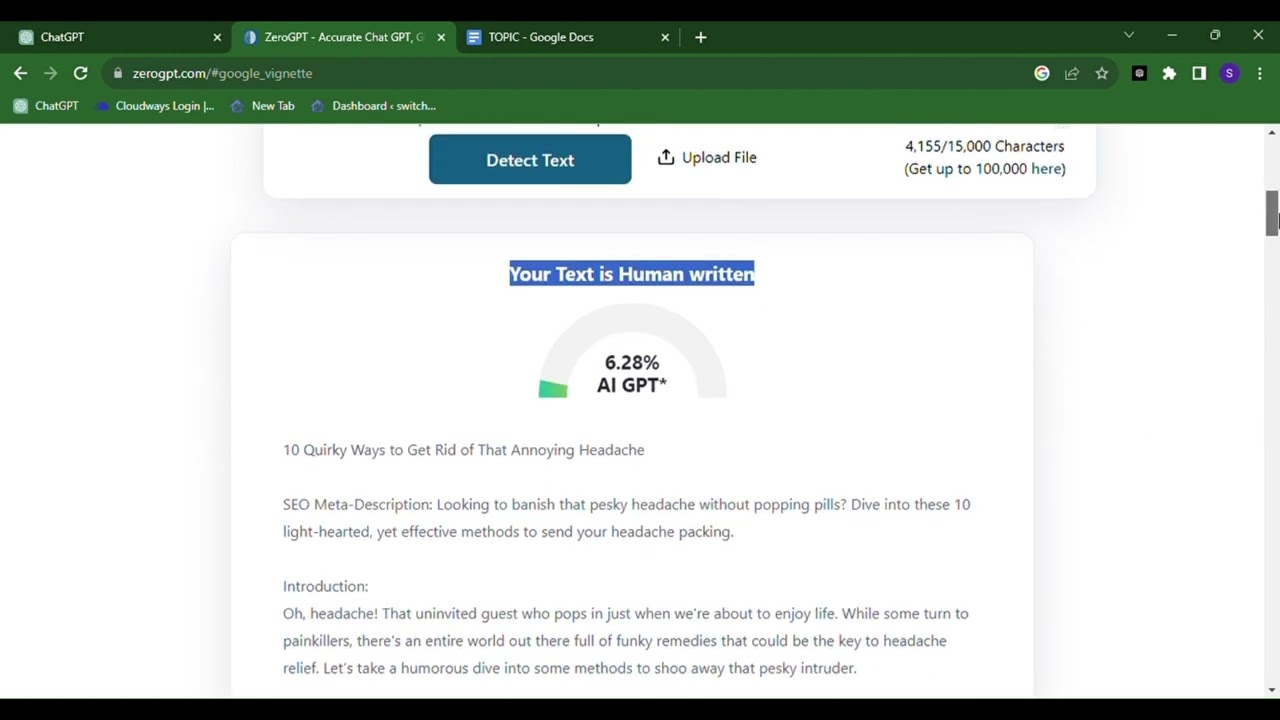
ZeroGPT is an AI detector that can spot whether text was written by a human or generated by tools like ChatGPT, Grok, or Google Gemini. It is free to use and works in multiple languages.
In order to use ZeroGPT, all you have to do is paste it into your text and click a button, and it tells you if the content is likely AI-generated. However — and this isn’t the issue with this tool alone — some users have reported that it sometimes misclassifies human-written text as AI-generated.
Nevertheless, ZeroGPT is popular among teachers and students. Moreover, it is also used by freelancers and small businesses to check if the content is AI-generated. But it’s not the only game in town, with its competitors like StealthGPT, AIHumanizer and Originality.ai (to name a few) offering similar services.
Also worth noting is that some users have found ways to bypass ZeroGPT’s detection. For instance, paraphrasing AI-generated text can sometimes fool the detector.
To sum it up – ZeroGPT can be a useful tool for detecting AI-generated content, but it’s not foolproof. In that sense, it is best used as one part of a broader strategy to ensure content originality.
Video Overview ▶️
What are the key features? ⭐
- AI detection: ZeroGPT analyzes text to determine if it's AI-generated or human-written. It provides a percentage score indicating the likelihood of AI involvement.
- Multilingual support: The tool can detect AI-generated text in multiple languages, making it useful for a global audience.
- User-friendly interface: ZeroGPT offers a simple interface where users can paste text and quickly get results.
- Free to use: Users can access ZeroGPT's features without any cost, making it accessible to individuals and organizations.
- Additional tools: Beyond AI detection, ZeroGPT offers features like plagiarism checking, paraphrasing, summarizing, grammar checking, and translation.
Who is it for? 🤔
Examples of what you can use it for 💭
- Teachers can use ZeroGPT to check if student assignments are AI-generated
- Bloggers and writers can ensure their content is original and not AI-generated
- Companies can verify the authenticity of reports and communications
- Freelancers can demonstrate to clients that their work is human-written
- Users can translate text and check if the translation appears AI-generated
Pros & Cons ⚖️
- Additional features like plagiarism checking and grammar correction
- Support for multiple languages
- Free to use!
- May incorrectly label human-written text as AI-generated