Cartesia
A cutting-edge AI voice platform that can transform text into lifelike speech
Cartesia is a cutting-edge AI voice platform that can transform text into lifelike speech. At first glance, it might seem like just another text-to-speech tool — but there’s more beneath the surface. Cartesia’s real strength lies in its ability to deliver ultra-realistic voices with minimal latency, making it ideal for real-time applications. Whether you’re developing a virtual assistant or creating dynamic content – Cartesia offers a powerful solution.
The company’s Sonic model boasts a latency as low as 40 milliseconds. This means smoother interactions and a more natural user experience. In a way, it’s like having a conversation with a real person, not a machine.
Beyond speed, Cartesia also rocks impressive voice cloning capabilities. With just a few seconds of audio, it lets you create a custom voice that mirrors the nuances of human speech. This feature can be invaluable for content creators looking to maintain a consistent voice across their projects.
In addition, Cartesia supports multiple languages and accents — making it useful for global applications. So, whether you’re targeting audiences in Europe, Asia, or the Americas – Cartesia ensures your message is conveyed authentically.
In a market bursting with AI voice solutions, Cartesia stands out for its combination of speed, realism, and adaptability. Beyond converting text to speech, it helps you create meaningful, human-like interactions that resonate with users worldwide.
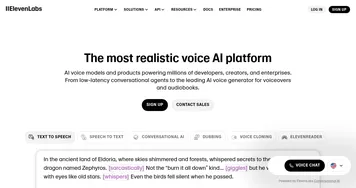
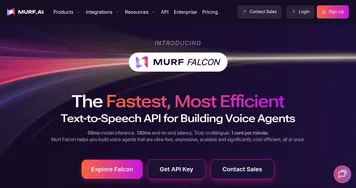
When compared with other AI voice platforms like ElevenLabs, Murf, and Play.ht – Cartesia offers a unique blend of speed and realism. Moreover, its focus on real-time interaction and high-quality voice cloning sets it apart, making it a great choice for anyone looking to elevate their voice-enabled applications.
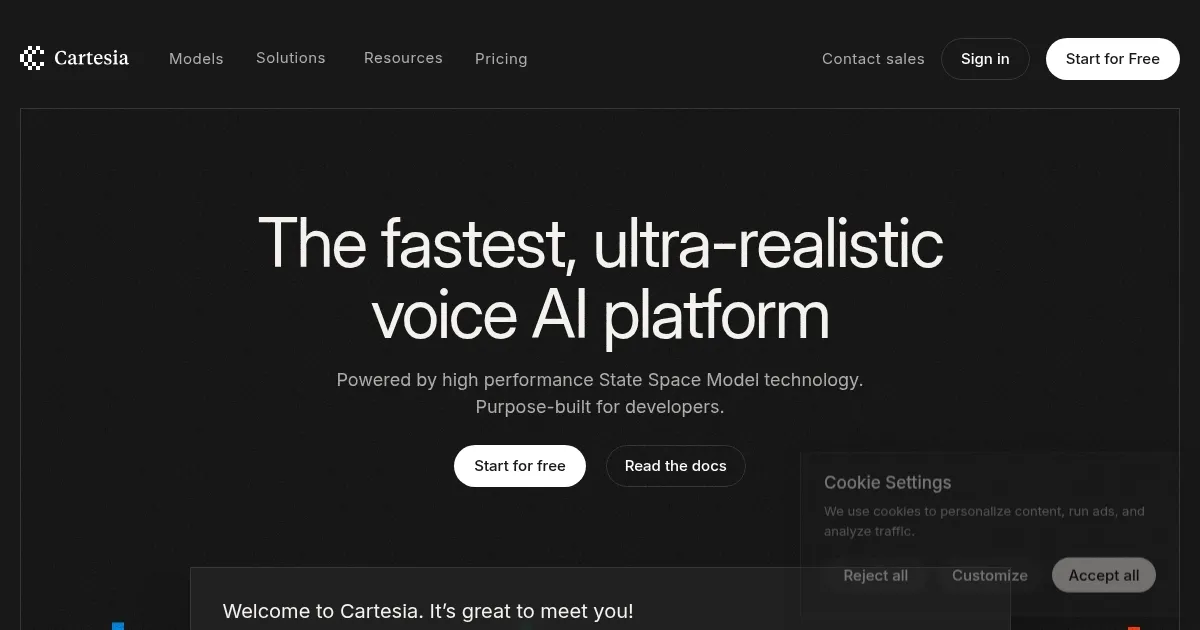
Homepage Screenshot 📸
Video Overview 🎬

What are the key features? ✨
- Ultra-low latency: Cartesia's Sonic model delivers responses in as little as 40 milliseconds, ensuring real-time interactions without noticeable delays.
- Advanced voice cloning: With minimal audio input, you can create custom voices that capture the unique characteristics of human speech.
- Multilingual support: It supports 15 languages and various accents, allowing for authentic communication with diverse global audiences.
- Seamless integration: Easily integrates with platforms like Twilio, Pipecat, LiveKit, and Rasa to streamline the development of voice-enabled applications.
- High-quality pronunciation: Accurately handles complex terms, numbers, and industry-specific jargon to ensure clarity and professionalism in speech output.
Who is it for? 🤔
Examples of what you can use it for 💡
- Develop responsive voice assistants for customer service or personal use
- Enhance videos, podcasts, and e-learning materials with realistic voiceovers
- Offer learners accurate pronunciations and intonations across multiple languages
- Facilitate clear and empathetic communication between healthcare providers and patients
- Game developers can use it to bring characters to life with dynamic and expressive voices
Pros & Cons ⚖️
- Speed and responsiveness suitable for real-time applications
- High-fidelity voice cloning with minimal input
- Broad language and accent support
- It requires technical expertise for optimal integration and customization
Ready to try Cartesia?
A cutting-edge AI voice platform that can transform text into lifelike speech
Visit CartesiaCartesia alternatives 🔗