Best AI Large Language Model Tools

156 toolsRanked by traffic

A large language model, or LLM, is the underlying AI engine that powers chat apps and assistants: a system trained on vast amounts of text to understand and generate language, accessed through an app, an API, or a playground. The best-known models include OpenAI's GPT in ChatGPT, Anthropic's Claude, and Google's Gemini.

Looking at these as models, rather than chat apps, is what you do when you care about the technology itself: comparing reasoning ability, context window size, speed, and price, or wiring a model into your own product through its API. Developers and power users weigh these tradeoffs constantly, since the right model for cheap bulk text differs from the one for hard reasoning. Hubs like Poe let you compare several models side by side before committing.

ChatGPT
ChatGPT - icon
ChatGPT
All-round AI assistant generating human-like responses to user queries and tasks
Gemini
Gemini - icon
Gemini
Generates responses from text, images, audio, and video inputs using advanced multimodal AI
Claude
Claude - icon
Claude
Assists users in reasoning, coding, writing, and analyzing data with advanced AI models
Grok
Grok - icon
Grok
Delivers witty, real-time AI responses with advanced reasoning and image generation
DeepSeek
DeepSeek - icon
DeepSeek
Delivers advanced AI models for coding and reasoning at low costs
Perplexity
Perplexity - icon
Perplexity
Delivers cited AI answers from web searches instantly
Poe
Poe - icon
Poe
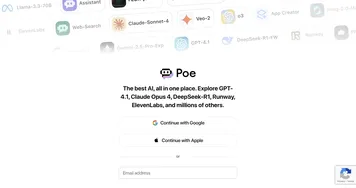
Aggregates top AI models for seamless chatting and bot creation
Character.AI
Character.AI - icon
Character.AI
Generates interactive AI-driven chats with fictional characters.
Bing
Bing - icon
Bing
Empowers searches with AI-driven insights and creative generation
Brave Leo
Brave Leo - icon
Brave Leo
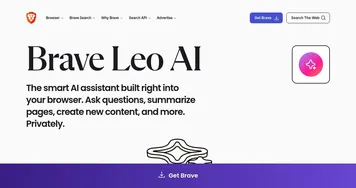
Assists with web queries, content creation, and document analysis in-browser
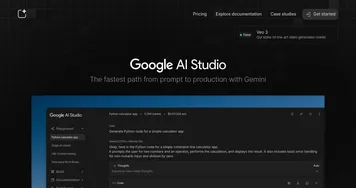
Google AI Studio
Google AI Studio - icon
Google AI Studio
Prototypes AI solutions using Gemini models in a browser-based IDE
Microsoft Copilot
Microsoft Copilot - icon
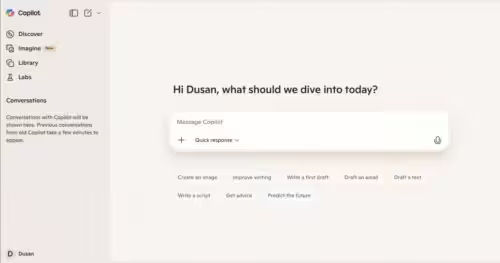
Microsoft Copilot
Boosts productivity with AI-driven answers, writing, and image creation
Amazon Bedrock
Amazon Bedrock - icon
Amazon Bedrock
The easiest way to build and scale generative AI applications with foundation models
ChatRTX
ChatRTX - icon
ChatRTX
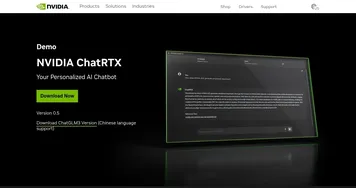
Allows users to create a personalized LLM chatbot by using their own data on their own computer
Qwen Chat
Qwen Chat - icon
Qwen Chat
Alibaba's AI assistant, designed to handle text, images, audio, and video

Frequently Asked Questions

What's the difference between an LLM and a chatbot?
An LLM is the underlying model, the engine trained to understand and generate text, while a chatbot is the product wrapped around it: the chat window, memory, and features you interact with. One LLM can power many different chatbots, and a single app may let you switch between several models under the hood.
What is the best large language model?
There's no single best large language model; it depends on the task. GPT models are strong all-rounders, Claude excels at long-context reasoning and careful writing, and Gemini handles multimodal input and ties into Google's ecosystem. Benchmarks shift with each release, so most teams test a couple of models on their own work.
What is a context window in an LLM?
A context window is how much text a large language model can consider at once, measured in tokens, which are chunks of words. It covers your prompt plus the model's reply. A bigger window lets the model handle long documents or lengthy conversations without losing track of earlier details, which matters for research and coding.
How do I access an LLM through an API?
You access a large language model through an API by signing up with the provider, getting an API key, and sending text requests to their endpoint from your code. Providers charge per token of input and output. Many also offer a playground, a web console where you can test prompts and settings before writing any code.
How much does it cost to use an LLM?
Costs vary widely by model and use. Chat apps built on LLMs are often free or about twenty dollars a month, while API access bills per token, so prices scale with volume. Smaller, faster models cost a fraction of the top-tier ones, which is why teams match the model to the job to control spend.
Can large language models reason?
Large language models can perform many reasoning tasks, like working through multi-step problems and explaining their logic, and newer reasoning models are noticeably better at it. They do this by predicting text patterns, not by truly understanding, so they still slip on math, logic, and edge cases. Checking their work on anything critical remains wise.