Best AI Speech Synthesis Tools

57 toolsRanked by traffic

AI speech synthesis tools turn written content into natural spoken audio you can listen to instead of read. Speech synthesis is the technical name for converting documents, articles, and books into a clear human voice, which makes it a core accessibility and read-aloud technology. Popular options include Speechify, NaturalReader, ElevenLabs, and TTSMaker.

The people who rely on these most are students, busy professionals, and anyone with dyslexia or low vision who would rather hear a page than scan it. When choosing, focus on how comfortable the voice is to listen to over long stretches, whether you can adjust reading speed, and how well it handles PDFs, web pages, and ebooks. A natural voice matters more here than fancy effects, since you'll often have it running for an hour at a time.

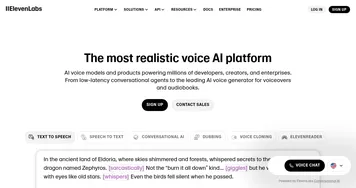
ElevenLabs
ElevenLabs - icon
ElevenLabs
Generates lifelike, expressive AI voices for diverse applications
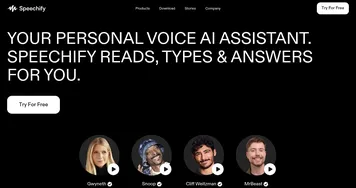
Speechify
Speechify - icon
Speechify
Transforms text into natural-sounding speech for effortless listening
NaturalReader
NaturalReader - icon
NaturalReader
Transforms text into natural AI voices for accessibility and content creation
TTSMaker
TTSMaker - icon
TTSMaker
Transforms text into natural-sounding audio in multiple languages
Voice.ai
Voice.ai - icon
Voice.ai
An online platform that offers users transformative voice modification capabilities
FineVoice
FineVoice - icon
FineVoice
Generates realistic AI voices from text for videos and podcasts
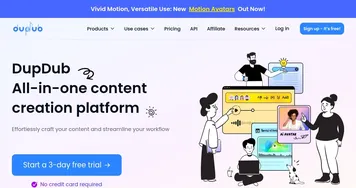
DupDub
DupDub - icon
DupDub
Transforms videos into multilingual content with AI dubbing and voiceovers.
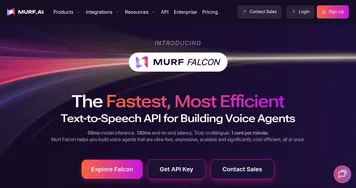
Murf
Murf - icon
Murf
Converts text to lifelike speech for various applications
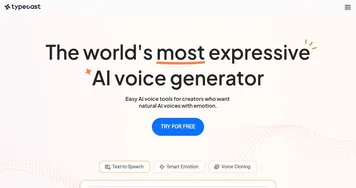
Typecast
Typecast - icon
Typecast
Dub your content with the best AI text reader and voice synthesizer
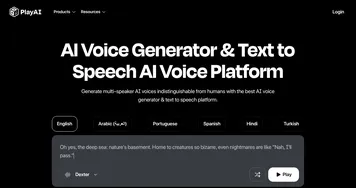
Play.ht
Play.ht - icon
Play.ht
A multilingual text-to-speech service for creating realistic voiceovers
TTSMP3
TTSMP3 - icon
TTSMP3
An AI tool that can convert written text into natural-sounding speech in 28+ languages
Voicemaker
Voicemaker - icon
Voicemaker
A text-to-speech conversion tool that uses human-like natural sounding voices
FakeYou
FakeYou - icon
FakeYou
A text-to-speech voice generator for audio and video
Hume
Hume - icon
Hume
Developing artificial intelligence systems that prioritize human emotional well-being
ReadSpeaker
ReadSpeaker - icon
ReadSpeaker
Converts text into lifelike spoken audio using AI voices across many languages

Frequently Asked Questions

What is speech synthesis?
Speech synthesis is the technology that converts written text into spoken audio using a computer-generated voice. AI speech synthesis goes further by producing voices that sound natural and human, with realistic rhythm and intonation. It powers read-aloud apps, screen readers, and listening tools that let you take in articles, books, and documents by ear.
What is the best app to read documents aloud?
Speechify and NaturalReader are the most popular apps for reading documents aloud, with support for PDFs, web pages, and ebooks plus adjustable speed. ElevenLabs offers some of the most lifelike voices for longer listening. The best choice often comes down to which natural voice you find easiest to listen to for hours.
Can AI read PDFs and books out loud?
Yes, many AI speech synthesis tools read PDFs, ebooks, web pages, and pasted text out loud. You import the file, choose a voice and reading speed, and listen on your phone or computer. Some apps also track your place and let you skim by paragraph, which makes long documents much easier to get through.
Is AI speech synthesis good for accessibility?
AI speech synthesis is genuinely useful for accessibility because it lets people who struggle with reading take in text by listening. It helps users with dyslexia, low vision, or reading fatigue, and supports learning a new language by pairing text with audio. Natural-sounding voices make long listening sessions far less tiring than older robotic ones.
Are speech synthesis tools free?
Most speech synthesis tools have a free tier that covers basic read-aloud with a limited set of voices and a daily or monthly cap. Paid plans add premium natural voices, faster reading, offline listening, and higher limits. For occasional document listening the free options are often enough.