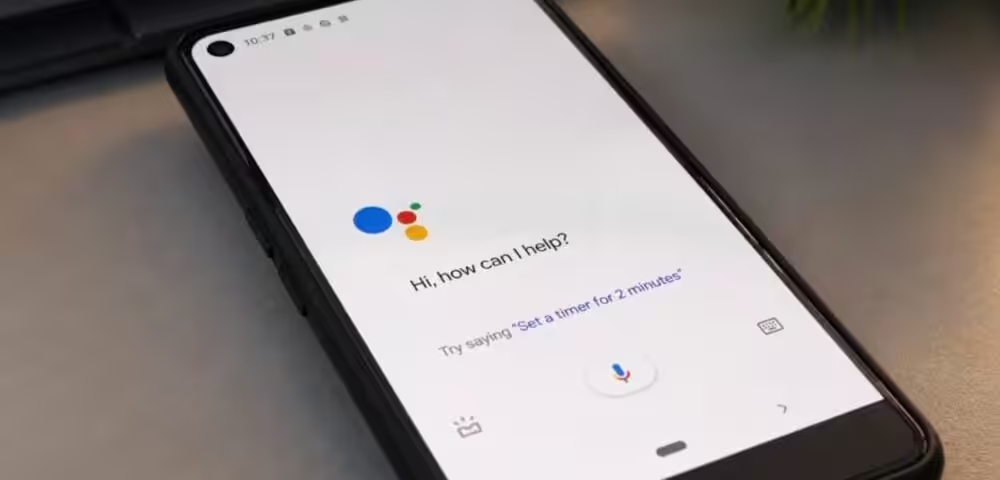
Google has been telegraphing this move for years, but now it’s official. Starting September 4, Google Assistant will begin disappearing from eligible Android devices, replaced by Gemini as the default assistant. As reported by TechEdt, the company has notified users by email, and the rollout will happen gradually over several weeks rather than as a single global cutover. For users on supported devices, there’s no manual action required and no going back. Once Gemini lands on your phone, Assistant is gone.
This matters beyond the obvious product news. Google Assistant launched in 2016 and became the backbone of a sprawling hardware ecosystem: Android phones, Wear OS watches, smart speakers, smart displays, cars, earbuds, and more. Replacing it isn’t just a software swap. It’s a platform migration across hundreds of device types and billions of users. The fact that Google is doing this in phases, while maintaining two different assistant platforms simultaneously across parts of its product lineup, tells you how complicated that is in practice.
The first phase covers eligible Android smartphones and tablets, along with several accessories that depend on the phone’s assistant: Wear OS watches, compatible earbuds, and vehicles using Android Auto through a paired handset. When your phone gets the update, those connected devices follow. But vehicles running Google’s software natively through Google Built-in are not in this wave. Those cars keep Assistant for now, on a separate migration schedule that hasn’t been announced yet. Google TV devices, smart speakers, and smart displays are also excluded from the September rollout, with no firm timeline given for when they’ll move to Gemini.
So for a period that could stretch well into 2025 or beyond, Google will be running Gemini on phones while Assistant continues handling queries on TVs and smart home hardware. That’s not ideal from a consistency standpoint, but it’s the practical reality of retiring a platform that spans this many product categories.
Not every Android user loses Assistant on September 4 either. Devices that don’t meet Gemini’s minimum hardware or software requirements will stay on Assistant, as will users in regions where Gemini hasn’t launched. Google hasn’t specified which devices fall below the threshold or given a timeline for when those markets will gain access. For now, those users are in a kind of holding pattern.
For everyone on a supported device, the change is automatic. Power button shortcuts and voice activation commands will trigger Gemini instead of Assistant once the update rolls out. The familiar entry points stay the same. What changes is what’s running underneath them.
It’s worth putting this in competitive context. Amazon has been aggressively rebuilding Alexa around large language models, and Apple continues to deepen Siri’s integration with its own AI stack through Apple Intelligence. Google moving its entire user base to a Gemini-powered assistant is a direct response to that pressure. Gemini is more capable than Assistant in meaningful ways, particularly for multi-step reasoning and natural conversation, but it also has a higher hardware floor and uneven availability across markets.
Google originally planned to wind down Assistant earlier, then pushed the timeline to 2026. The September 4 start date suggests the company is now confident enough in Gemini’s readiness to begin the real migration. Whether the phased approach goes smoothly will depend on how well Gemini handles the breadth of use cases that Assistant has covered for nearly a decade.