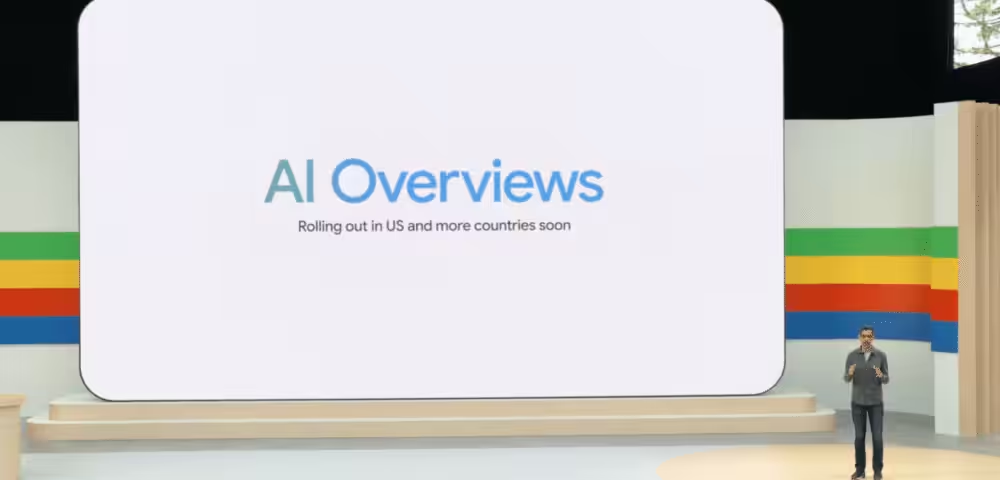
Google didn’t ask users if they wanted AI answers. It just started giving them. And according to new data from market intelligence firm Similarweb, reported by TechCrunch, AI Overviews now appear in 43% of Google searches, up from just 15% a year ago. That’s not gradual adoption. That’s a platform-level redirect of how a billion people find information.
The same Similarweb analysis found that AI Mode visits, Google’s more conversational follow-up layer, grew from 126 million in June 2025 to 279 million by May 2026. The pattern is clear: Google is pulling users deeper into its own interface, moving from a tool that pointed you somewhere else to one that tries to be the destination itself. The classic list of blue links still exists, but it’s increasingly buried beneath a generated answer that Google assembled from the very sites those links would have led you to.
Search query length is also changing. Similarweb’s data shows that average Google searches are getting longer, which suggests users are shifting from short keyword strings to full conversational questions built for AI. That’s a meaningful behavioral change. It also means Google is training its users, whether consciously or not, to interact with search as if it’s a chat interface rather than an index.
For publishers and media companies, this is a serious problem. When Google answers the question directly, fewer users click through to the source. Referral traffic drops. Ad revenue follows. Cloudflare recently responded to this pressure by releasing tools that let publishers block AI crawlers unless the companies behind them pay for content access. It’s a practical countermeasure, but it doesn’t fix the structural issue: Google controls the front door.
The citation picture is also mixed. While the number of AI responses that include citations has risen more than fivefold in the past year, only 6.8% of U.S. ChatGPT desktop queries included citations as of May 2026. Certain verticals do better, including:
- Travel queries
- Retail searches
- Sports-related questions
ChatGPT did show one encouraging signal. After a May 7 update, the share of U.S. desktop referrals that resulted in actual webpage visits jumped from 25% in March 2026 to nearly 60% by May 30. That’s a real improvement, and it suggests users will click through when links are visible and prominent.
But that’s one platform making one change. The broader direction hasn’t shifted. Google is systematically becoming less of a gateway and more of a walled answer machine. For developers building content businesses, SEO strategies, or anything dependent on organic discovery, that’s the number to watch: 43%, and climbing.