Real-time conversation translation without an internet connection sounds like exactly the kind of feature that would matter most when you actually need it: sitting across from someone at a restaurant in Tokyo, or negotiating directions in rural Portugal. Google appears to finally be working on that. But the limitations tell a more complicated story than the headline suggests.
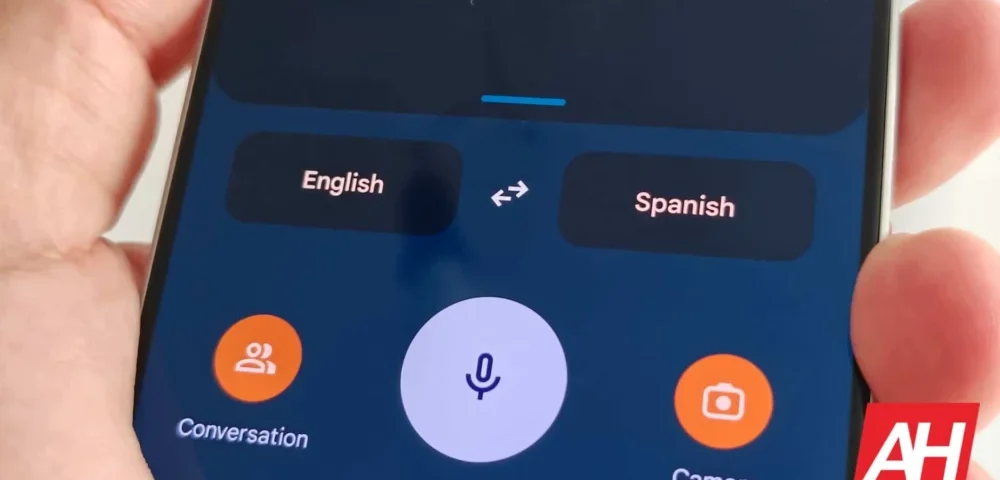
As reported by Android Headlines, Google is bringing offline support to Live Translate on select Pixel devices. For context, Live Translate is the two-way conversation mode inside Google Translate where each speaker talks in their own language and the phone handles translation in both directions. It’s meaningfully more useful than point-and-translate for signs or menus, because it allows a real back-and-forth. The problem has always been the data dependency. That limitation makes it nearly useless in exactly the places where you’d want it most.
The supported languages at launch are French, German, Hindi, Indonesian, Italian, Japanese, Portuguese, Russian, Spanish, and Swedish. That’s a solid list, but the real constraint isn’t the language count. It’s that at least one speaker must be using English. You can do Spanish to English or Japanese to English, but not Spanish to Japanese. So this is offline Live Translate for English speakers traveling abroad, not a general offline multilingual tool. That’s a narrower use case than it first appears.
Device support is also limited. Compatible hardware includes the Pixel 9, 10, and 11 series only. The Pixel 8 and older are out. Google hasn’t made an official statement on why, but the working theory is that offline translation depends on Gemini Nano running locally, which in turn requires the newer Tensor chipsets with enough NPU capacity and on-device memory to handle it. That’s a reasonable technical explanation, and it tracks with how Google has been positioning Gemini Nano as the engine behind on-device AI features across its hardware line.
This fits into a broader push from Google, and frankly the whole industry, toward on-device AI processing. Apple has been doing this with Apple Intelligence features tied to specific chip generations. Meta’s offline translation work on Ray-Ban glasses is another example. The direction is clear: capable AI that doesn’t need the cloud, but locked to recent hardware as the price of entry.
- Supported languages include French, German, Hindi, Indonesian, Italian, Japanese, Portuguese, Russian, Spanish, and Swedish
- One speaker must be using English for offline mode to work
- Compatible devices are limited to Pixel 9, 10, and 11 series
- Offline processing likely depends on Gemini Nano and Tensor chipset NPU capabilities
For Pixel 9 and newer owners who travel, this is genuinely useful when it ships. But Google needs to drop the English requirement before this becomes a broadly practical tool. Right now it’s a feature for one kind of traveler, not a solution for multilingual communication.