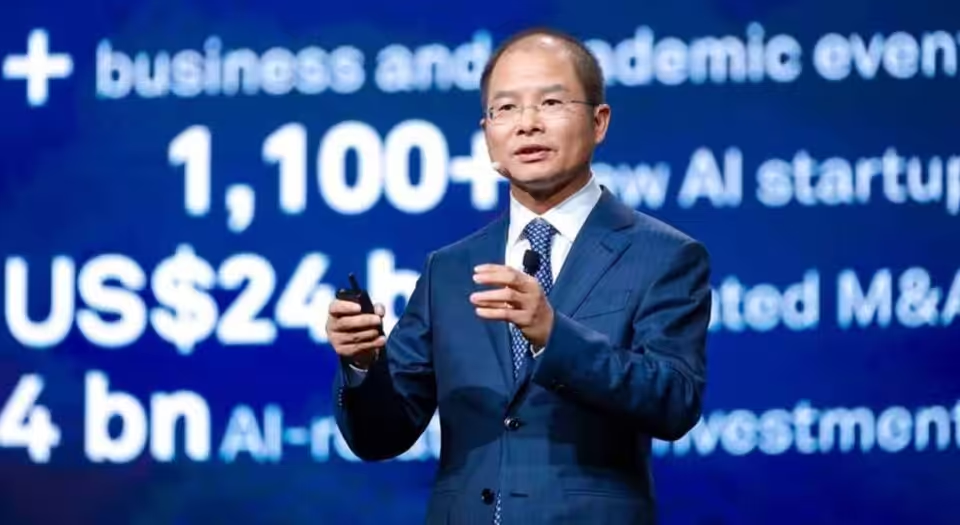
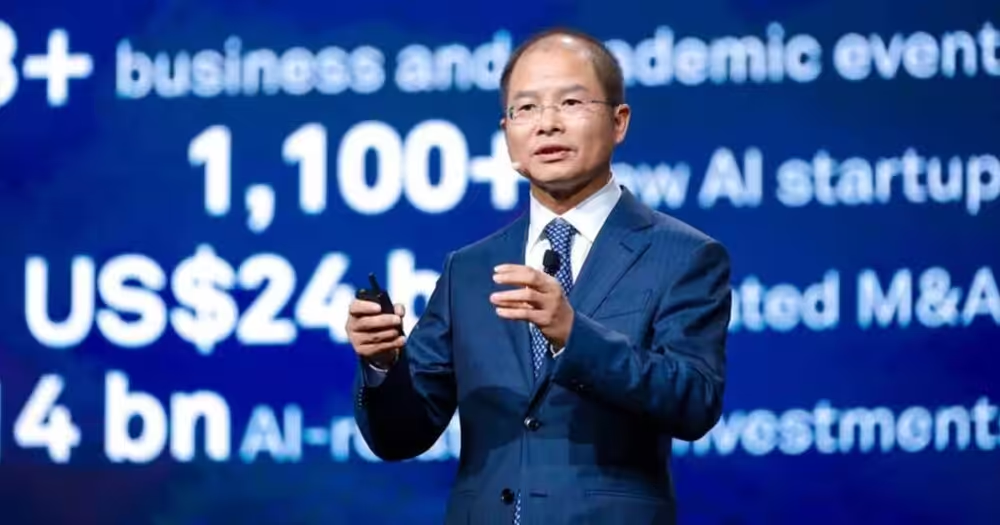
If Huawei’s numbers are right, the internet as we know it stops being primarily a human-driven network within a decade. According to Huawei Central, the company’s newly released report titled “Intelligent World 2035: Turning Vision into Action” predicts that AI agents will account for more than 90% of all network traffic by 2035. That’s not a rounding error. That’s a structural shift in who, or what, is actually using the internet.
The report covers a broad set of forecasts about how AI will reshape computing, connectivity, and infrastructure over the next ten years. Huawei’s central argument is that current systems are not built for a world where AI agents are the primary consumers of compute and bandwidth. To handle that kind of load, the company says the industry will need a dramatic increase in raw computing power alongside entirely new architectural approaches to how data moves and gets processed.
This matters beyond the headline number. AI agents, unlike human users, don’t browse, pause, or sleep. They operate continuously, make millions of decisions per minute, and require low-latency, high-throughput infrastructure that today’s networks weren’t designed around. Companies like Cisco, Ericsson, and Nokia are all watching this space closely, and cloud providers including AWS, Google, and Microsoft are already building out dedicated AI inference infrastructure to get ahead of the curve. Huawei, locked out of many Western markets due to ongoing geopolitical restrictions, is clearly positioning this report as a way to shape the conversation about what next-generation networks need to look like.
The 2035 timeframe is aggressive but not implausible. Agentic AI frameworks, including tools from Anthropic, OpenAI, and a growing number of startups, are already moving from experimental to production use. Enterprises are deploying AI agents for customer service, software development, data analysis, and supply chain management. The traffic those agents generate is still relatively small today, but compound growth over ten years can move fast.
For developers and infrastructure teams, the practical implication is this: the systems you’re building now will need to handle workloads that look very different from current baselines. Huawei’s forecast may be self-serving in that it creates a market for its own networking hardware, but the underlying trend it points to is real. AI agents are becoming the dominant computing workload. Planning for that now, rather than reacting to it in 2032, is the smarter position.