Jack Dorsey is not sitting still. The Twitter and Block co-founder has announced a new workplace chat app called Buzz, positioning it as a direct challenge to Slack and GitHub. The platform puts human team members and their AI agents in the same conversations, side by side.
Buzz was built by Block, the fintech company behind Square, Cash App, Afterpay, and Tidal. That gives this project real resources and a real team behind it, not just a founder’s side experiment. Dorsey described it on X as ‘model-agnostic, decentralized, self-sovereign, and open source.’ A free desktop app is already available for macOS, Windows, and Linux, and the source code is live on GitHub.
The timing makes sense. More companies are now running AI agents alongside their human employees, and those agents don’t always fit neatly into existing tools. Slack was built for people talking to people. Buzz is designed from the start to handle both.
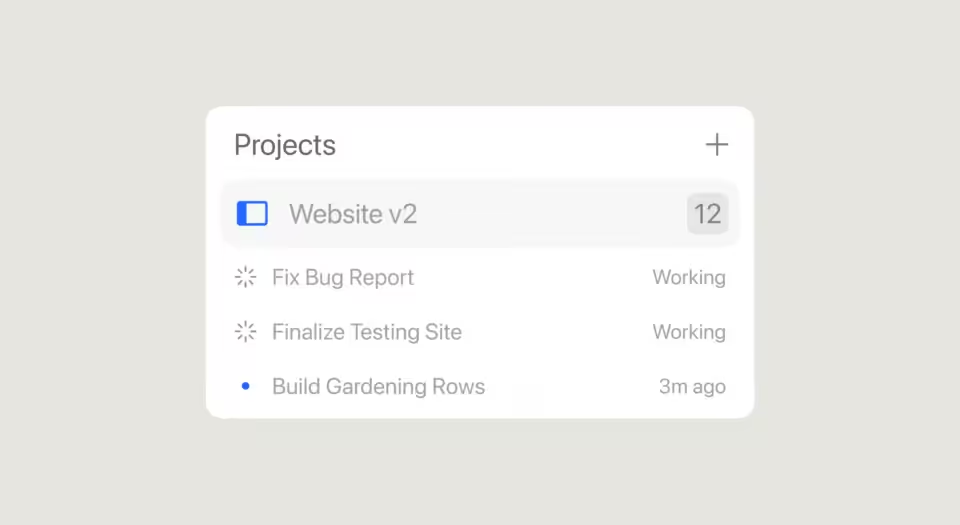
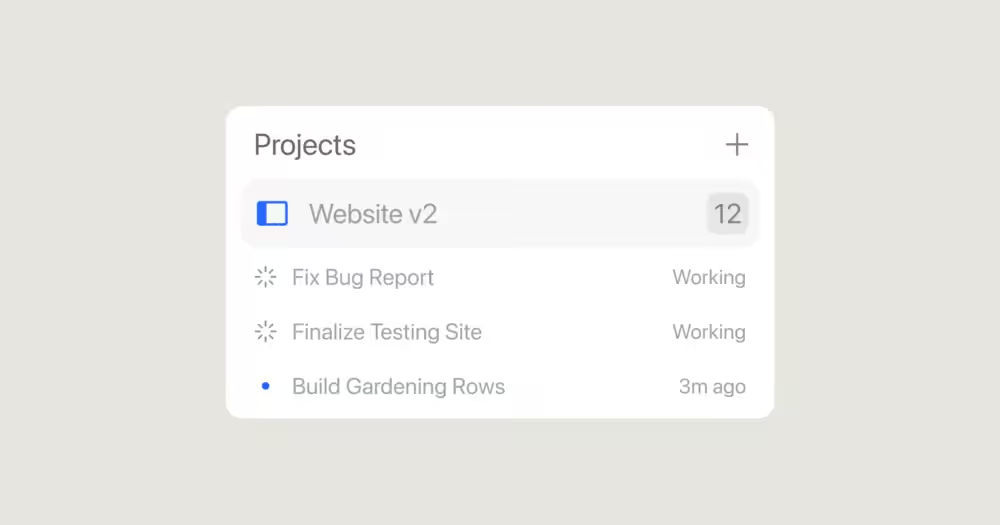
The core idea is that teams are juggling too many separate tools. You might manage code on GitHub, run AI tasks through one platform, and handle team communication through another. Buzz tries to pull all of that into a single workspace. From one window, you can chat with colleagues, work with AI agents, and manage GitHub projects without switching tabs or contexts.
Because Buzz is open source, teams are not locked into whatever features Dorsey’s team ships. If a team needs something specific, they can build it themselves. They have full access to the code, so customization is built into the product’s DNA rather than gated behind a paid tier or an enterprise contract.
Dorsey is not the only person working on this problem. Paradigm partner and CTO Georgios Konstantopoulos recently released a similar open source product called Centaur. It works either inside Slack or through an API, and Konstantopoulos describes it as a ‘virtual employee.’ His pitch is slightly different from Dorsey’s: rather than replacing Slack, Centaur adds AI agent capabilities on top of it. ‘There’s a lot of room for improvement for agents that live in Slack and can do more work than just coding for teams,’ he wrote on X.
That split approach, build a new platform versus add to an existing one, reflects a genuine open question in the industry right now. Companies already deep in Slack with years of history and integrations may not want to move. Newer startups building on AI from day one have much less to lose by trying something different.
For those newer teams, Buzz could be worth a look. But the app itself acknowledges it is in ‘early stages,’ which is worth taking seriously. Moving your entire team’s communication to a new platform is not a small decision, and switching costs are real. For now, Buzz is probably best suited for small teams or developers who want to experiment with what AI-native workplace chat actually looks like in practice.
Key things to know about Buzz right now:
- Free desktop app available on macOS, Windows, and Linux
- Source code is public on GitHub
- Built by Block, not a solo project
- Integrates AI agents and GitHub project management natively
- Self-described as being in early stages
Whether Buzz grows into a serious Slack competitor will depend on how fast the team ships improvements and whether developers in the open source community get behind it. The foundation is there. The product still has a long way to go.