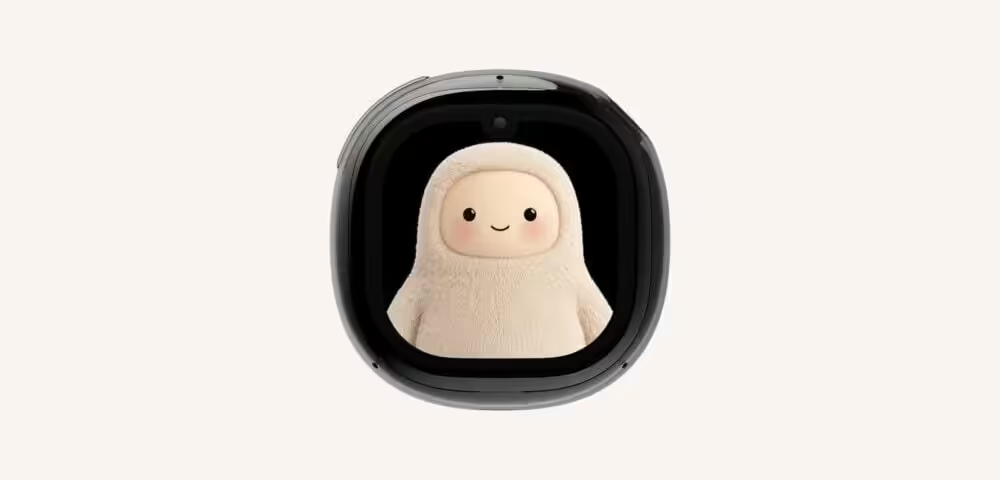
Meta is putting an AI assistant on your keychain. At its annual Connect event, Mark Zuckerberg revealed the Muse Charm, a small physical device that runs the company’s Muse AI, complete with a tiny animated avatar and real-time voice interaction. The comparison to a Tamagotchi is hard to avoid, and Meta isn’t shying away from it.
The device works through a fingerprint sensor in the corner. Tap it, and you’re talking to Muse. The screen displays a small, interchangeable animated avatar as the visual front-end for the AI. Zuckerberg described it as packing “the whole Muse experience, including the real-time voice and avatar stack” into something that fits on a keychain. That’s an aggressive claim for a device this size, and the real question is how much of that experience actually holds up when you’re not on a demo stage.
Meta hasn’t finalized the hardware design yet. Only a few units exist. But the company is targeting a holiday release this December, which gives it roughly three months to lock down components, manufacturing, and pricing. Zuckerberg offered no specs or cost details at Connect, promising more information soon. That’s a tight window for a product that isn’t finished.
So why does this matter? Because the AI companion hardware space is getting crowded fast, and most of the early attempts have flopped. The Humane AI Pin is basically dead. The Rabbit R1 had a rough reception. Friend, the AI necklace, generated buzz but limited traction. Meta is entering this category with significantly more distribution power, an existing AI model in Muse, and a price point that, if low enough, could make the Charm an impulse buy rather than a considered purchase.
The keychain form factor is smart. It doesn’t ask users to replace their phone or wear something visible. It sits in a pocket or on a bag and shows up when you want it. That’s a lower barrier than most ambient AI hardware has tried. Still, the avatar-plus-voice approach puts Muse Charm closer to a social or companion AI product than a utility tool, which is a specific and somewhat risky audience to target.
Meta has the resources to iterate quickly if the first version misses. But with the holidays as a hard deadline, there’s not much room to get this wrong out of the gate.