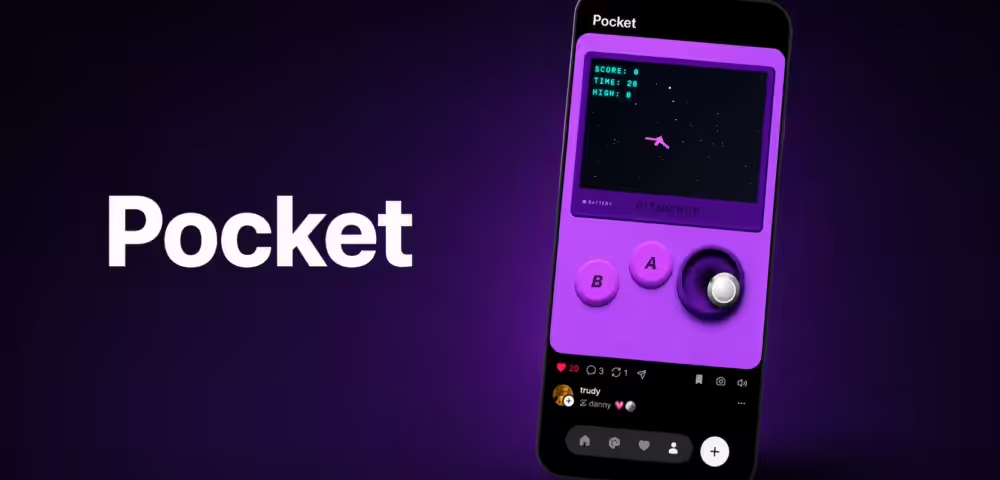
Meta is shipping apps at a pace that would have seemed unusual just two years ago. The latest is Pocket, a standalone mobile app that lets users generate small interactive games through AI prompts, now rolling out to all U.S. users after a quiet test launch in Brazil last month. It’s a telling signal of where Meta thinks consumer AI is heading.
Pocket is built on the bones of Gizmo, a vibe-coding gaming platform whose team Meta acqui-hired earlier this year. The games it produces, which Meta calls “gizmos,” respond to touch and phone tilt, play sound effects, and can pull in songs, photos from your camera roll, or live camera input. Once created, a game lives on your profile feed, where other users can save it, repost it, or remix it into something new. The format feels closer to TikTok’s creative loop than anything traditionally associated with gaming.
This matters because vibe coding, the practice of building software through natural language prompts rather than writing code directly, is moving fast from developer curiosity to consumer product. Tools like Replit, Cursor, and Lovable have made waves among developers. Meta is betting the same idea can work for a general audience with zero technical background, wrapped in a social feed they already understand.
Pocket isn’t arriving alone. Meta has been shipping standalone apps at an unusual clip recently, including:
- Instagram Instants, a quick-share photo app
- Forum, a standalone Groups app
- Seller, a standalone Marketplace app
- Vibes, an experimental AI video creation app
- An AI bedtime stories experiment
- A Meta AI app for Mac
CEO Mark Zuckerberg attributed the increased output directly to AI-assisted software development on the company’s July earnings call, saying he expects it to become significantly easier to ship new apps going forward. That’s not just a product strategy, it’s a structural shift in how Meta builds. Faster internal development cycles mean more experiments, more surface area for growth, and more data on what actually sticks with users.
So Pocket is both a product and a proof of concept. If it gains traction, it validates the idea that AI creation tools don’t need to target developers to be useful. And for Meta, a company still looking for its next major social format after Reels, a remix-driven game feed with low friction creation could be worth watching. Whether users actually make things, or just scroll, will be the real test.