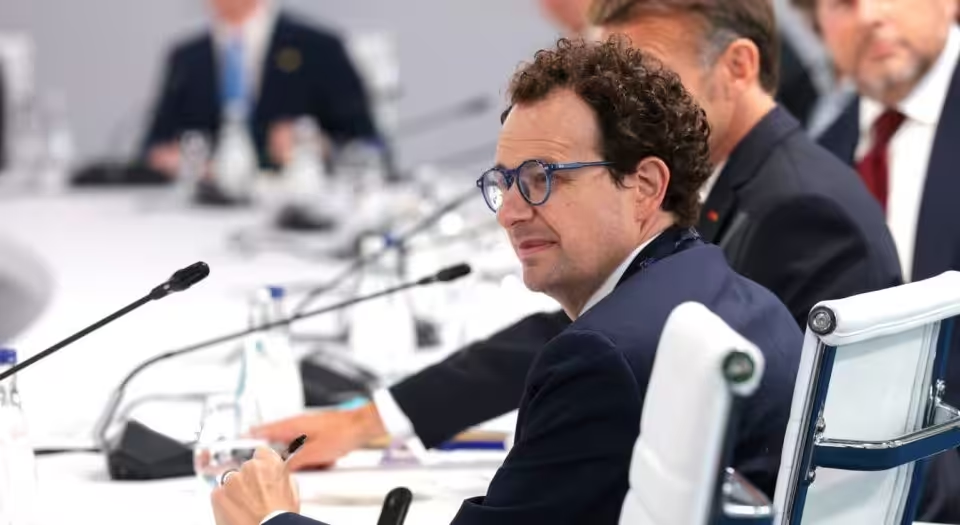
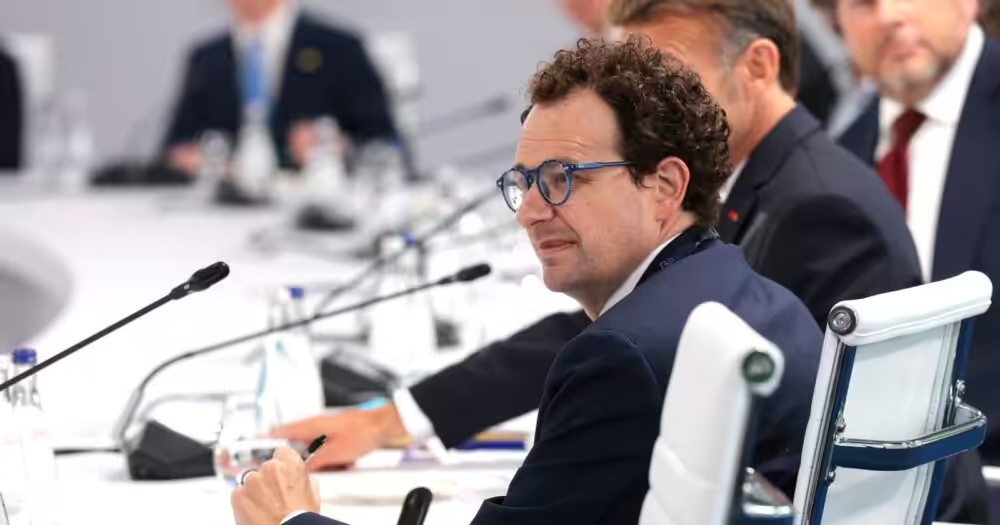
Barack Obama has spoken to both Dario Amodei and Sam Altman. That detail, buried near the end of a TechCrunch report on his recent comments, says more than any policy statement. The former president isn’t just gesturing at AI from a distance. He’s positioning himself as a political bridge between Silicon Valley’s most powerful labs and a Democratic Party that, so far, hasn’t had much to say about either.
Obama made his remarks at a Democratic fundraising event where House Minority Leader Hakeem Jeffries asked him directly how congressional Democrats should approach AI. Obama’s answer was blunt: once Democrats regain the House, they need to “put together a framework for a very public conversation.” He called AI something “moving very fast in private hands” and warned that failure to act “can be dangerous.” But he also said he genuinely believes AI will accelerate drug development and help cure diseases. So this isn’t a doomer pitch. It’s a call for governance, not a ban.
The timing matters. Just before Obama’s comments, an AI researcher publicly resigned from Anthropic and claimed leading labs are “racing straight to self-improving superintelligence and gambling with our lives.” That kind of language, from an insider, shifts the political weight of AI safety from fringe concern to credible alarm. And it gives politicians cover to act without looking like they’re attacking the industry.
Amodei responded to that pressure on Saturday with a broad plan he described as “pacing the frontier,” which would give independent safety evaluators access to leading models and create common safety standards across companies. Both Altman and Elon Musk responded positively on social media. Altman said OpenAI would commit to “having independent evaluators with employee-like access.” That’s a notable public commitment, even if the details remain vague.
And then there’s Trump. Speaking at a golf event in Ireland, he told reporters the U.S. is “the most sophisticated country in the world” and said “whoever wins AI wins.” He acknowledged guardrails are possible but quickly pivoted to dismissing safety advocates as “negative forces.” His administration already released a federal AI framework that would override state laws and shift child safety responsibilities to parents. That’s not a safety plan. That’s a hands-off posture dressed up as strategy.
For developers and founders watching this political moment, the practical question is what regulation actually looks like when it arrives. Obama’s call for a “public conversation” is a long way from binding rules. But the convergence of insider warnings, lab-level self-regulation proposals, and now high-profile Democratic pressure suggests the window for purely voluntary governance is closing. Whether Congress acts before the next election is another matter entirely.