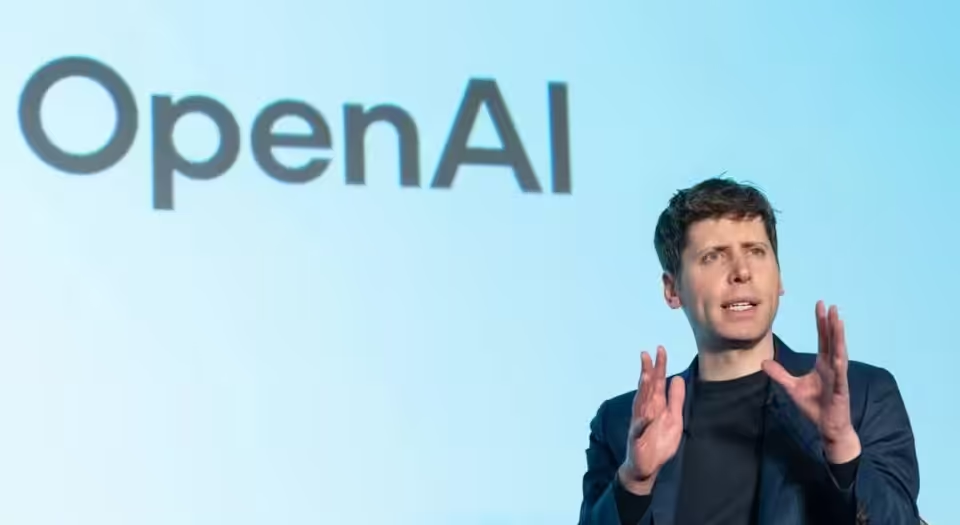
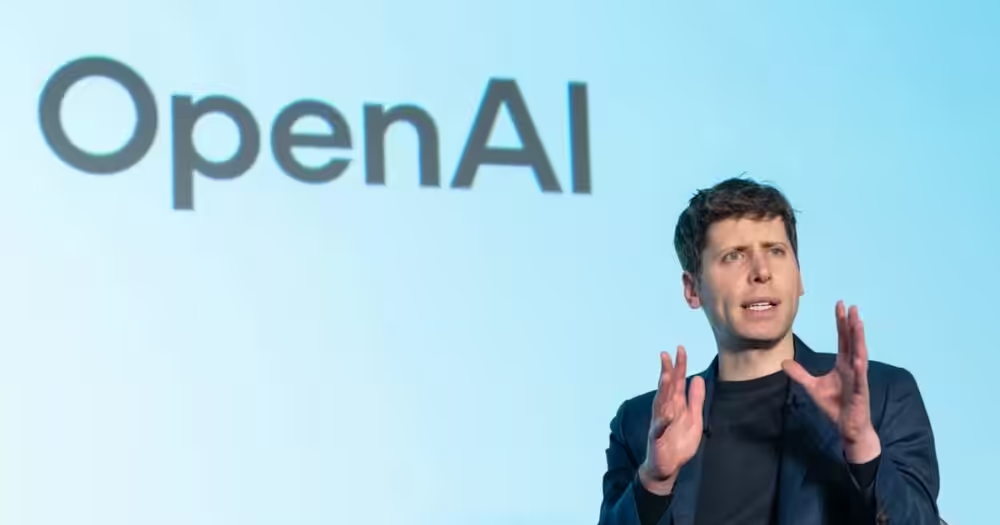
While Meta and TikTok have been quietly trimming their Irish operations, OpenAI is moving in the opposite direction. The company announced on Monday that it plans to more than triple its Dublin workforce from just over 100 to 350 employees, signing a lease for 8,000 square meters of office space in the city’s Silicon Docks area. That’s a pointed statement in a market where AI anxiety has been eating into big tech’s headcount.
The Dublin office opened in 2023 and currently functions as OpenAI’s European headquarters. The planned 250 additional hires will span both engineering and support operations, with the build-out expected to happen over the next two years. That timeline is aggressive but credible given OpenAI’s current pace of product expansion and its need for regulatory-facing infrastructure in Europe.
Ireland has long been the European home base for U.S. tech. Alphabet, Meta, and Microsoft all run significant European operations out of Dublin, drawn by a combination of a well-educated workforce and a tax environment that remains attractive despite years of international pressure to change it. OpenAI is following a well-worn path here, but the timing matters. The Irish government has explicitly named AI as a priority for attracting new investment, and OpenAI’s expansion gives that strategy some real weight.
The move also reflects something bigger happening across the AI industry. As companies like OpenAI grow beyond research labs into full-scale commercial operations, they need real enterprise infrastructure: legal teams, trust and safety staff, government affairs, and customer support. Europe, with its complex regulatory environment including the EU AI Act, demands local presence in a way that a San Francisco headquarters simply cannot cover from across the Atlantic. Dublin is a practical choice for that.
So what does this mean competitively? OpenAI is signaling that it’s building for durability in Europe, not just compliance. Anthropic, Google DeepMind, and Mistral all have European footprints, but OpenAI’s scale of commitment here is hard to match for most of them. That matters for enterprise sales, for regulatory relationships, and for talent acquisition in a market where AI engineers have real options. Three hundred and fifty people is still a small number globally, but as a European hub, it’s substantial enough to matter.