OpenAI’s relationship with Microsoft has always had an awkward undertone, given that Microsoft’s $13 billion investment was supposed to buy loyalty, or at least neutrality. So it’s worth pausing on the fact that OpenAI just announced a set of features that look a lot like a direct attack on Microsoft 365.
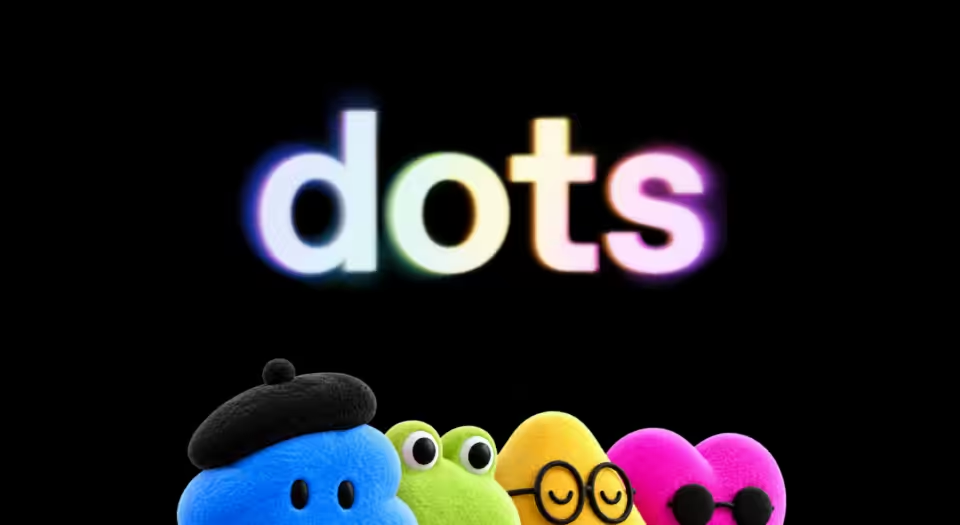
At its Dev Day conference in San Francisco, OpenAI rolled out several new ChatGPT tools aimed squarely at office workers. The centerpiece is a feature called Spaces, a shared workspace inside ChatGPT where colleagues can collaborate with the chatbot and with AI agent personas, called Dots, that can carry out tasks on users’ behalf. CEO Sam Altman described Spaces as something like a living drive: ‘Your pages and files all live together in Space, like they would in a drive. But spaces feel alive.’ Users can give a page standing instructions, like pulling updates from a team channel automatically.
OpenAI also launched Pages, a word processor it describes as ‘a new type of document, built for human and agent collaboration.’ That’s a careful way of saying it’s going after Google Docs and Microsoft Word at the same time. Pages lets users write, research, generate charts, create images, and visualize data, all within the same interface.
And then there are collaborative slides, OpenAI’s answer to PowerPoint. You generate them by talking inside ChatGPT, and once they exist, multiple users and agents can edit them, leave comments, and iterate together. The workflow is closer to Figma than to traditional presentation software, and that’s probably the point.
Taken together, these three features form something that looks a lot like a productivity suite:
- Spaces: shared team workspace with AI agents embedded
- Pages: AI-native word processor for human and agent co-authoring
- Collaborative slides: voice-generated, multi-user presentation tool
The broader context here matters. Microsoft has spent the past year racing to AI-ify its own products, shipping Copilot features across Word, Excel, Teams, and Outlook. Salesforce has done the same with Agentforce. Both companies are trying to become more like OpenAI. And now OpenAI is trying to become more like them. That’s a collision, not a partnership.
For developers and founders evaluating productivity tooling, the question is whether OpenAI’s native AI integration actually beats bolted-on AI in legacy software. Early signals suggest users want AI that understands their work context by default, not as an add-on. If Spaces and Pages deliver on that, OpenAI has a real wedge into enterprise software budgets. And that’s exactly where Microsoft makes its money.