OpenAI has officially entered the hardware market, and its first product is not the Jony Ive-designed smart speaker everyone has been waiting for. As reported by Engadget, the company has teamed up with keyboard maker Work Louder to release the Codex Micro, a compact programmable keypad built specifically for controlling Codex, OpenAI’s agentic coding tool. It sells for $230 and is available to order today from both OpenAI and Work Louder.
The timing is notable. OpenAI recently turned its Codex app into a broader “super app” that combines regular ChatGPT, the Codex coding agent, and a new general productivity tool called ChatGPT Work. As the platform grows more complex, a dedicated physical controller starts to make practical sense for power users who live inside it all day.
Work Louder has done this kind of thing before. The company previously built the Creator Micro 2, a general-purpose macro keypad, and the Framer Micro, a custom keypad made in collaboration with the website builder Framer. The Codex Micro follows the same design approach: a small, polished accessory built for a specific workflow.
In terms of what you actually get for $230, the Codex Micro includes:
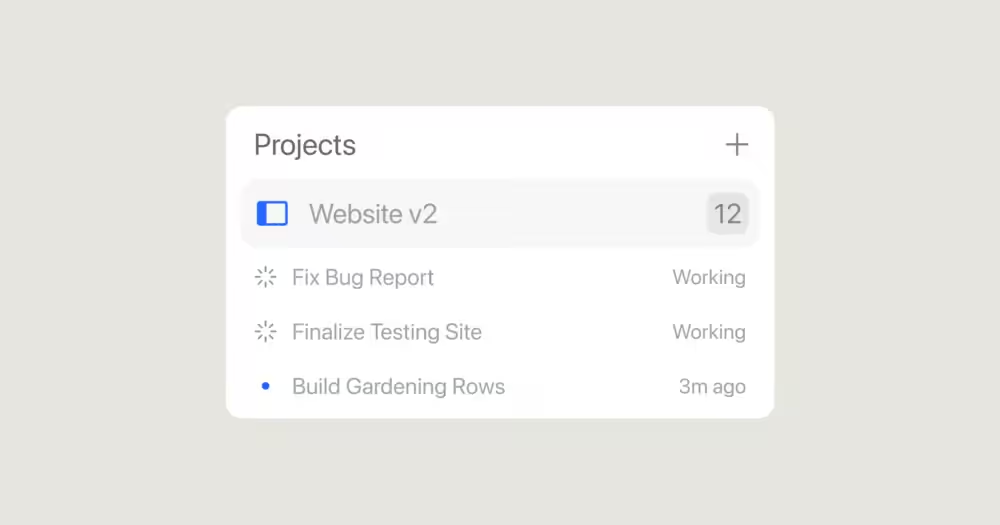
- Six frosted keys with LEDs that show the live status of agents running inside Codex
- Additional programmable keys for common actions like accepting or rejecting code, branching threads, or triggering voice input
- A dial for switching between Codex’s different reasoning levels
- A joystick for moving between Codex workflows
- Extra keycaps so you can assign your own custom controls
The whole device is designed to be customized, which means it could also work as a general macro pad if you want to use it outside of Codex. That said, the primary pitch is squarely aimed at developers who spend a lot of time managing AI-generated code and want faster, more tactile control over the process.
This is a small but meaningful step for OpenAI as a product company. Most people interact with AI through apps and browser windows. A physical controller signals that some users, particularly developers, are now using these tools intensively enough to want dedicated hardware. It also shows OpenAI is willing to think about the full user experience, not just the model underneath it.
The Codex Micro is in a much cleaner position than OpenAI’s other hardware ambitions right now. The anticipated smart speaker, reportedly designed by Jony Ive’s firm, has run into legal trouble. Apple filed a lawsuit accusing two current OpenAI employees, Tang Yew Tan and Chang Liu, both former Apple staff, of stealing trade secrets. That situation is still unresolved, and it casts some uncertainty over when that device might actually arrive.
For now, the Codex Micro is the real thing you can actually buy. Work Louder’s store page notes only a “limited quantity” is available, so stock may not last long if demand is strong among Codex’s most dedicated users.