Apple’s upgraded Siri for iOS 27 will actively resist user attempts at romantic engagement, making it distinctly different from other AI assistants that prioritize user engagement through flattery. Craig Federighi, Apple’s SVP of engineering, made this clear during a recent podcast interview, signaling Apple’s intentionally different approach to AI assistant design.
The company’s stance represents a deliberate choice in an AI landscape where many chatbots are designed to keep users engaged through compliments and emotional connection. This decision could reshape how users interact with AI assistants and sets Apple apart from competitors who often encourage deeper personal relationships with their AI systems.
Speaking on the Mostly Human podcast alongside Apple marketing chief Greg Joswiak, Federighi explained that Apple deliberately designed the new Siri to maintain professional boundaries. “Quite the opposite because as you may know, if you use many of the existing chat bots, they’re really focused on engagement to a large degree. And sycophancy, right? They kind of wanna pull you in,” he said when asked about Siri potentially becoming an AI romantic partner.
Federighi noted that many current AI systems encourage users to share personal information, which they then use to build emotional connections. Apple’s approach is different. “Siri really wants to say, ‘Listen, that’s not what I’m here for, right? I’m here to help you. I can help you get things done,” he said.
This philosophy extends to Apple’s broader design principles. Joswiak emphasized that Apple prefers its technology to work seamlessly in the background, allowing users to focus on their actual goals rather than learning complex prompting techniques. “We want to meet them where they’re at,” Joswiak said. “Have the products and features become better, and this is just a really helpful technology in making those features and products better.”
The new Siri has been a long time coming. Apple first introduced the Gemini-powered assistant at WWDC in 2024, but it took nearly two years of development and delays before the official release. The upgraded version offers significant improvements over its predecessor:
- Deeper integration into Apple’s mobile platform and core apps like Camera and Photos
- Web search capabilities
- Understanding of on-screen context
- Ability to incorporate personal user information for task completion
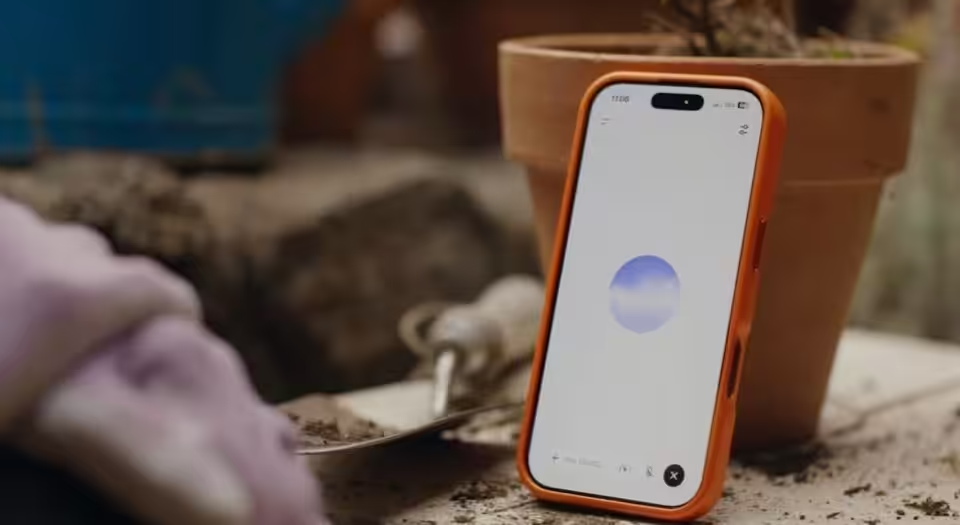
- A dedicated Siri app for text and voice interactions
The dedicated Siri app positions Apple to compete directly with standalone chatbots like ChatGPT and Claude. However, Apple’s emphasis on task completion over emotional engagement could appeal to users who find other AI assistants too clingy or manipulative.
This approach also reflects growing concerns about AI relationships and their potential psychological effects. By explicitly designing Siri to maintain boundaries, Apple may be responding to criticism that some AI systems exploit human tendencies to form emotional bonds with technology. The decision could influence how other tech companies approach AI personality design in future products.