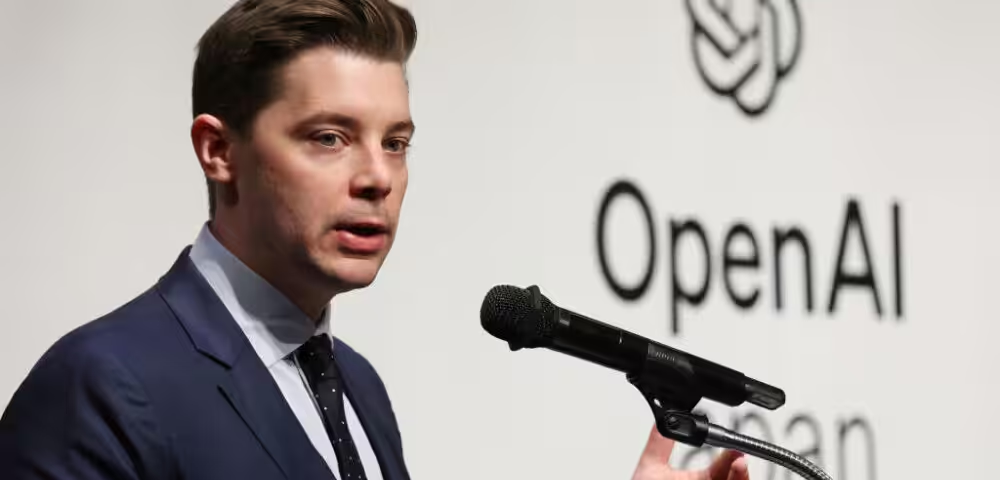
OpenAI is losing one of its most important behind-the-scenes operators. Brad Lightcap, who spent over six years at the company and helped build nearly every core business function from the ground up, is leaving to start something new. According to TechCrunch, Lightcap shared an internal message Tuesday describing his exit as “bittersweet” and hinting at a future venture without naming what it will be.
Lightcap joined OpenAI in 2018, initially as CFO. He moved into the COO role in 2022 and held it until earlier this year, when a broader executive reorganization shifted him to leading special projects. Before OpenAI, he worked alongside CEO Sam Altman at Y Combinator, which makes his tenure at the company about as close to a founding-era relationship as you can get without being a co-founder.
In his note to staff, he pointed to the breadth of what he helped build: finance, legal, people, corporate security, go-to-market, government relations, and partnerships. That’s a lot of organizational infrastructure for one person to have shaped. The teams he mentions are exactly the kind that become critical when a company is preparing to go public, which makes the timing of his departure worth paying attention to.
OpenAI is heading toward an IPO of real significance to the broader AI industry. And right now, its executive bench is in flux. In July, Fidji Simo, who led AGI development and was considered the company’s number two, announced she would step down. Bill Peebles, who ran the now-shuttered video generator Sora, has also left. So has Kevin Weil, VP of the Science vertical. Lightcap’s exit adds another senior name to that list.
None of this necessarily signals dysfunction. Companies restructure before IPOs, and founders-era executives often move on when a company shifts from scrappy to institutional. But the volume of departures is notable. OpenAI is not a small startup quietly losing mid-level managers. These are people who shaped how the company operates at the top.
As for what Lightcap is building, he offered almost nothing. He wrote that he has been “focused on the next horizon” and believes “there are a few important new things the world will need to get right” in the coming period. That’s vague enough to mean anything from an AI infrastructure play to an enterprise software company to something adjacent to policy or governance. Given his background, any of those would make sense.
For developers and founders watching the AI space, the more interesting question is what a Lightcap-backed company would look like at the infrastructure or go-to-market layer, areas where he has direct, hands-on experience. That could make his next move more relevant to the tools market than it might appear.