Google already launched virtual try-on last year. Pinterest has spent years building visual search into a shopping engine. So when OpenAI rolls out a similar feature for ChatGPT, the question isn’t whether the technology works, it’s whether anyone will change where they actually go to shop.
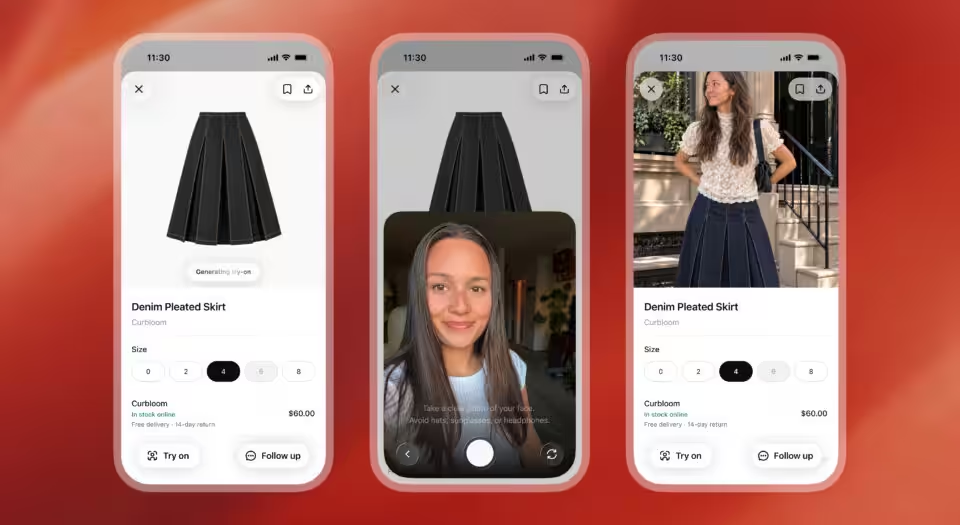
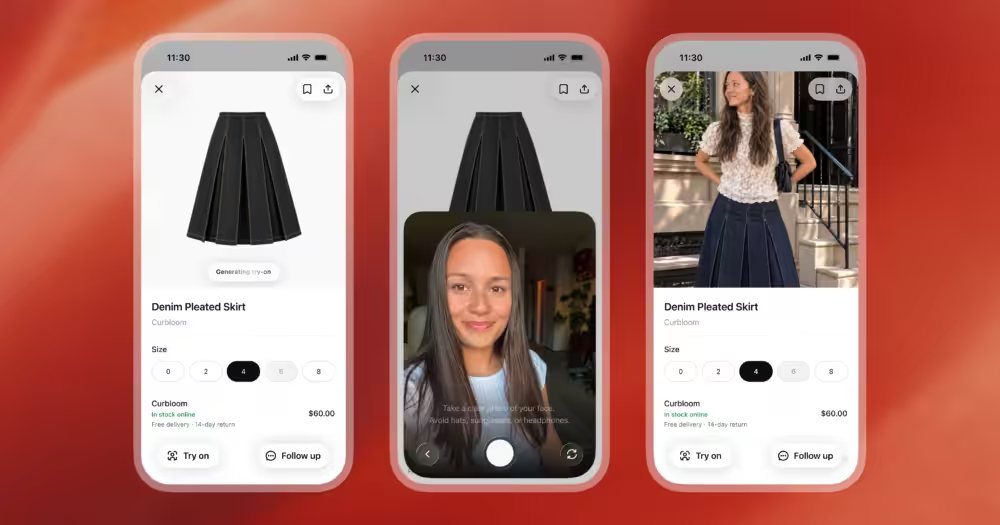
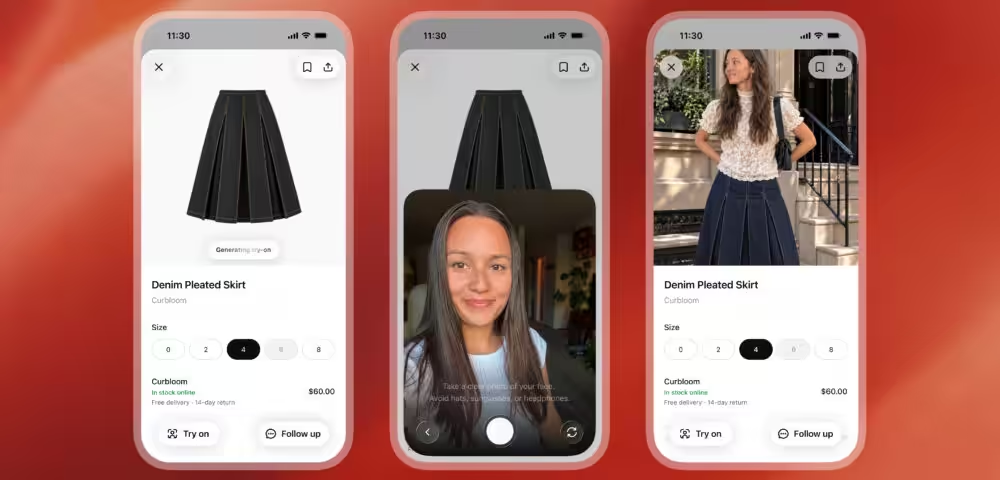
According to TechCrunch, OpenAI has globally launched two new shopping features for ChatGPT. The first is a virtual try-on tool that lets users upload a selfie or full-body photo to see how a piece of clothing or an accessory might look on them. The second is a Favorites feature that lets users save products they discover to a dedicated Library inside the app, alongside any try-on images they generate.
Both features are built on OpenAI’s newly released ChatGPT Images 2.5 model. The company says this model produces more natural lighting and richer textures than its predecessor, follows editing instructions more reliably, and reduces image generation latency. That last point matters for a try-on use case, where slow or low-quality outputs would break the experience fast.
The try-on workflow is fairly straightforward. A new Try On button appears in ChatGPT’s shopping results. Users can upload their own photo, or drop in a screenshot of an item from anywhere on the web and ask ChatGPT to visualize it on them. You can also describe a style in plain text and ask ChatGPT to find individual pieces that build the full look, or upload a celebrity photo and ask it to find shoppable versions of whatever they’re wearing. That last use case is something Pinterest built an entire product category around, and it’s been one of Google Lens’s strongest retail applications.
This isn’t OpenAI’s first attempt at making ChatGPT useful for shoppers. An earlier instant checkout feature was eventually pulled after it underperformed. And the broader category has had some awkward moments too: agentic AI startup Instinct drew criticism for pushing proactive product recommendations that users compared more to ads than to genuine help. OpenAI’s approach here is more reactive, responding to explicit requests rather than surfacing products unprompted, which is a safer position.
Still, the competitive picture is crowded. Google has virtual try-on integrated into Search. Pinterest’s Lens feature has years of visual discovery data behind it. Both platforms already sit in the shopping mindset of most users in a way that ChatGPT, primarily seen as a general-purpose assistant, does not yet.
What OpenAI does have is an interface people already use for research and decision-making. If a user is already asking ChatGPT to compare products or explain sizing across brands, having try-on built directly into that same conversation removes a step. The Favorites feature adds a lightweight persistence layer that makes ChatGPT feel less like a one-off search and more like a place you return to.
- Virtual try-on via selfie or full-body photo upload
- Try On button integrated into ChatGPT shopping results
- Support for uploaded images and web screenshots of items
- Favorites library to save and revisit discovered products
- Powered by the new ChatGPT Images 2.5 model
Whether these features actually shift user behavior is another matter. Shopping is habitual, and changing where people start that habit is hard. But OpenAI is clearly building toward a version of ChatGPT that competes less with search engines and more with the entire pre-purchase journey. That’s a big surface area, and these two features are a real step in that direction.