OpenAI has tried the AI shopping thing before, and it didn’t go well. An instant checkout feature got pulled after poor results. So it’s worth paying attention to what the company is doing differently this time. According to TechCrunch, OpenAI has globally launched two new shopping features inside ChatGPT: a virtual try-on tool and a product favoriting system. Neither is entirely new to the industry, but the execution here has some interesting angles.
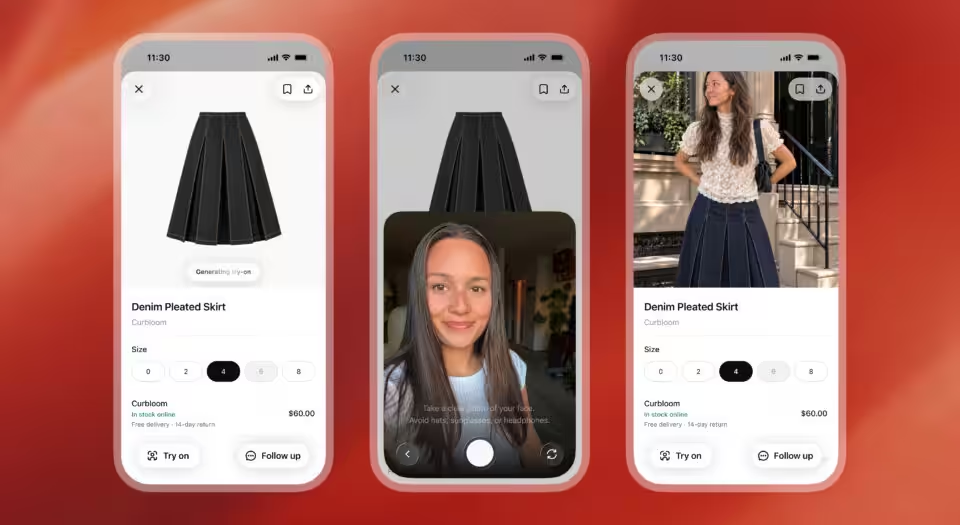
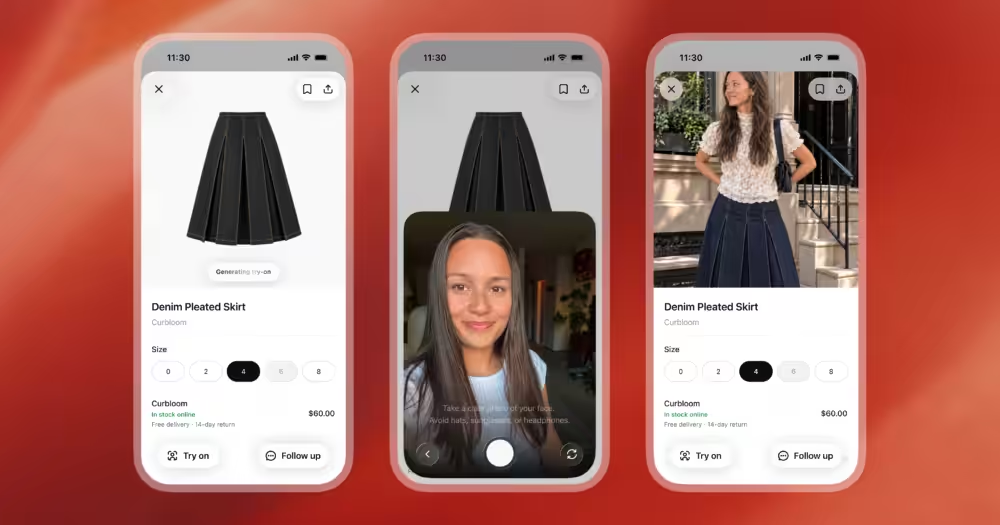
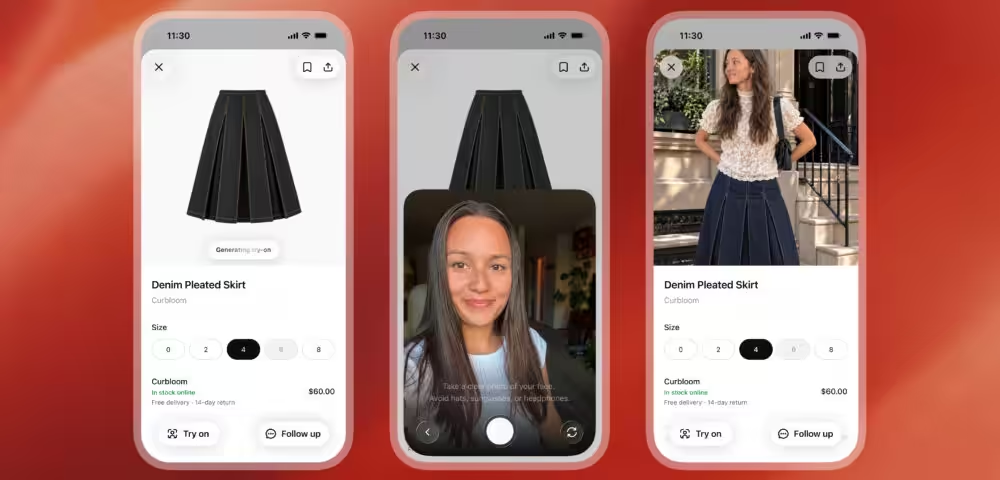
The virtual try-on feature lets users upload a selfie or a full-body photo, then visualize how a specific clothing item or accessory would look on them. A new “Try On” button appears directly in ChatGPT’s shopping results. You can also screenshot a product from any website, upload it, and ask ChatGPT to place it on your image. That’s a genuinely useful workflow, especially compared to tools that lock you into their own product catalog. The second feature, Favorites, lets users save discovered products to a Library within the app, stored alongside any try-on images they’ve generated. Simple, but the kind of thing that makes a shopping tool feel complete rather than throwaway.
Both features run on the newly released ChatGPT Images 2.5 model. OpenAI claims the model produces more natural lighting and richer textures, follows editing instructions more reliably, and cuts image generation latency. Those are meaningful claims for a try-on tool specifically, because the biggest failure mode in virtual try-on has always been images that look obviously fake. If the lighting doesn’t match or the fabric drapes wrong, users don’t trust the result, and the feature becomes a gimmick.
The broader use case OpenAI is pitching goes beyond just “does this shirt fit.” You can describe a style, ask ChatGPT to find the pieces that complete the look, or upload a celebrity photo and ask it to identify purchasable versions of what they’re wearing. That last one is where things get competitive. Pinterest has built a significant part of its business model around exactly this kind of visual fashion discovery and purchase conversion. Google Lens does it too, and Google actually launched its own virtual try-on feature last year. So ChatGPT is entering a space with established, well-resourced players who already have the user behavior trained.
Still, the conversational layer is where ChatGPT has a real structural advantage. Pinterest and Google are primarily visual search tools. ChatGPT can take a vague brief like “I want to look more put-together at work without spending a lot” and turn that into a shopping shortlist. That’s a different kind of interaction, and it maps well to how people actually think about clothes. The question is whether users will shift that behavior to ChatGPT or keep defaulting to platforms they already associate with fashion.
It’s also worth noting what OpenAI is not doing here: there’s no native checkout, no affiliate infrastructure announced, and no sign of the kind of aggressive product push that got AI startup Instinct criticized for making recommendations that felt more like ads than assistance. OpenAI is positioning this as a discovery and visualization tool, not a sales funnel. Whether that changes is worth watching.
- Virtual try-on using uploaded selfies or full-body photos
- Try On button integrated directly into ChatGPT shopping results
- Support for uploading any product image, including web screenshots
- Favorites feature for saving products to an in-app Library
- Style-based shopping prompts and celebrity outfit matching
- Powered by the ChatGPT Images 2.5 model
The features are rolling out globally now. For developers building on top of OpenAI’s APIs, or founders evaluating where consumer AI is actually getting traction, shopping is clearly a priority vertical for OpenAI right now. Whether this attempt sticks better than the last one depends on whether the try-on output quality is good enough to earn repeat use.