Prompt-based website creation stopped being impressive about a year ago. What actually separates useful AI builders from novelty tools is everything that comes after the first generation, and OpenAI just made a significant move in that direction. The company announced five updates to ChatGPT Sites that collectively push it closer to something a real team could use, not just a solo developer running a quick experiment.
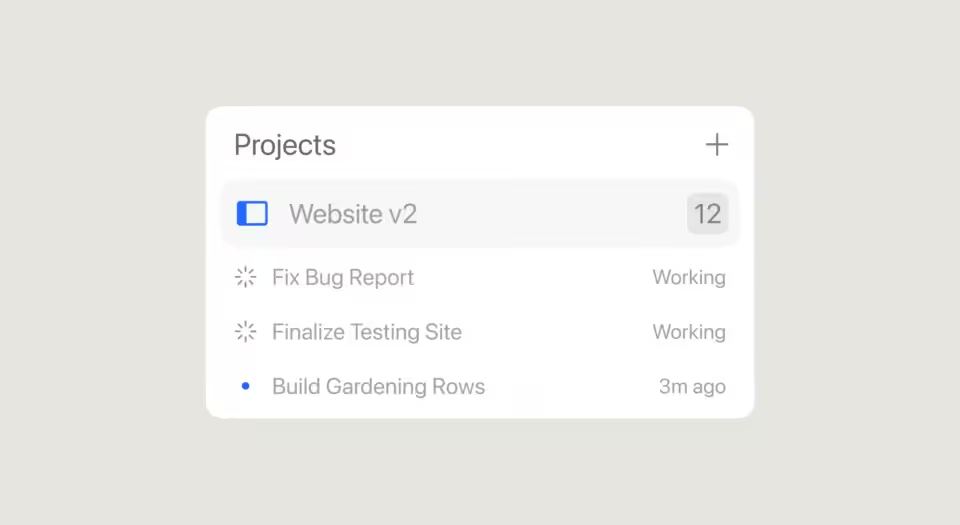
The headline feature is Build Together, a collaboration tool that lets multiple users edit the same ChatGPT Site. Invited contributors can make changes, save them, and publish updates without routing everything through whoever originally built the project. That sounds basic, because it is. But it’s also been a meaningful gap. Marketing teams, designers, developers, and clients all end up involved in web projects eventually, and an AI builder that locked editing to a single person was always going to hit a wall fast.
Private sharing is the other addition with real teeth. Sites can now stay hidden from the public while specific users get access. That opens the door to internal dashboards, client previews, and work-in-progress tools that simply weren’t appropriate to share openly before. For agencies and product teams, this changes the calculus on where ChatGPT Sites fits in an actual workflow.
The remaining three updates are more incremental but still relevant. OpenAI says it has cut deployment time by roughly 50%, which matters when you’re iterating quickly and regenerating versions repeatedly. A new database inspection feature gives the AI and collaborators visibility into the data connected to a Site, which should make troubleshooting less of a headache for lightweight data-driven apps. And custom domain support means site owners can ditch the default platform URL, which has always been a prerequisite for anything customer-facing.
The five upgrades together are:
- Build Together for multi-user collaborative editing
- Private sharing with selective access controls
- 50% faster deployment times
- AI-powered database inspection for collaborators
- Custom domain support
The competitive context matters here. Tools like Framer, Webflow’s AI features, Wix’s ADI, and newer entrants like Relume are all chasing the same space. Most have had collaboration and custom domains for a while. So OpenAI isn’t ahead of the field on these features, but it’s closing the gap while sitting on top of a user base that already generates sites through ChatGPT as part of a broader workflow.
Still, ChatGPT Sites won’t replace professional development for anything complex. Projects with serious infrastructure needs, custom backends, or specialized engineering requirements aren’t going anywhere near this stack. But the gap between “AI prototype” and “thing people actually ship” just got smaller. That’s the real story here, and it’s a direction the whole industry is moving.