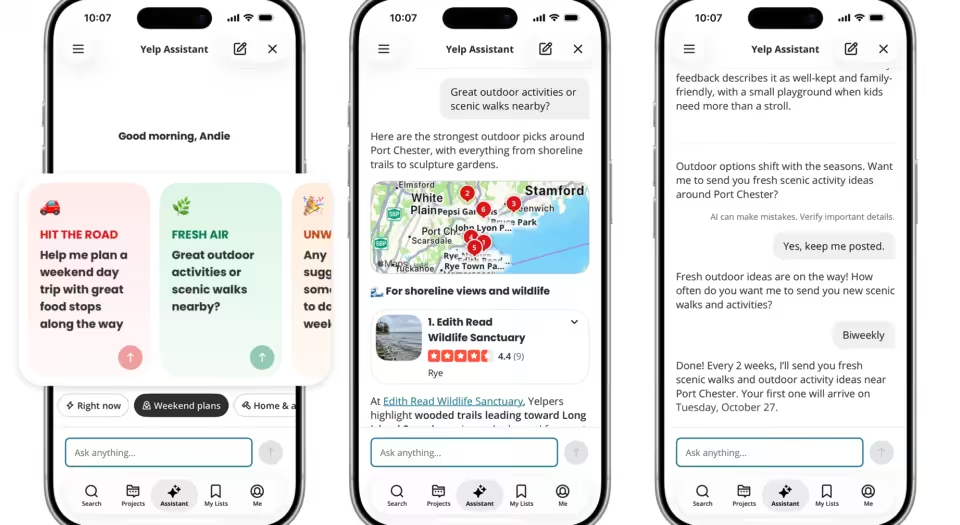
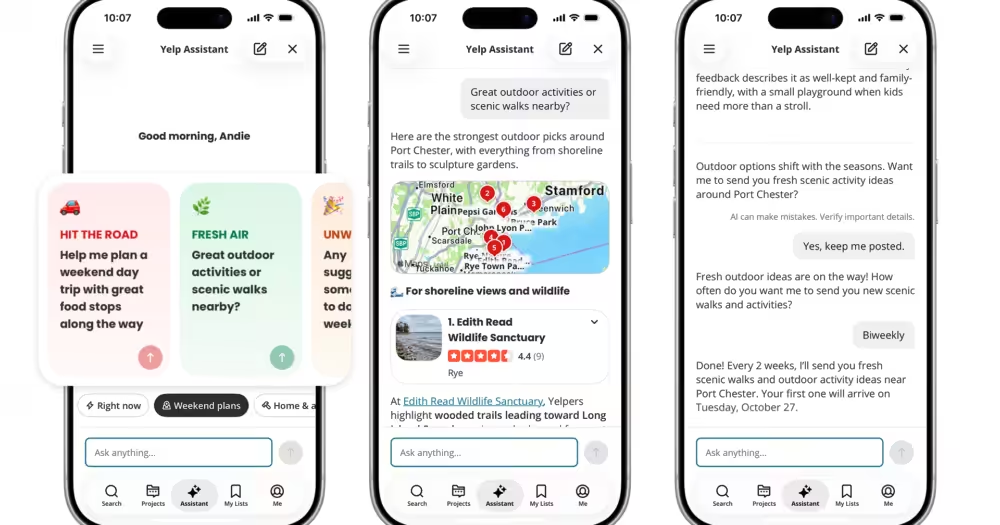
A voice assistant that knows your flight number is more useful than one that can only recite the weather. That’s the bet behind Google’s latest Gemini move, and the car is where the bet makes the most sense. Google announced that Personal Intelligence, the feature that lets Gemini pull from your other Google apps, is now rolling out to Android Auto.
The pitch is simple. Say you’re driving to the airport. Ask “what’s my flight gate?” or “is my flight on time?” and Gemini can answer from the confirmation email in your linked Gmail account. No pulling over, no squinting at your phone. You can also say “take me to my doctor’s appointment” instead of reciting an address, and ask for vegetarian-friendly dinner spots along your route in a new city.
None of this is a technical leap. It’s the same feature Google launched at the start of the year, first for Google AI Pro and Ultra subscribers, then for free accounts in March. What’s new is the setting. Driving is the one place where typing is off the table and hands-free voice is the whole interface. Personalization that saves a spoken follow-up question has real value there, and it’s where older assistants like Google Assistant, Siri and Alexa have always felt thin.
That’s the competitive angle. Apple CarPlay still leans on Siri, which has struggled to keep up with LLM-based rivals. Amazon has pushed Alexa+ in a similar direction, but Google has an advantage neither can easily copy: Gmail, Calendar and Maps already sit under one account. Context is the moat, and Google owns more of it.
The privacy trade is the obvious catch. Personal Intelligence is opt-in, you can switch it off at any time, and you choose which apps Gemini can read. That’s the right default. But a car is a shared space, and people should think about what an assistant might say aloud with passengers listening. Google hasn’t said much on that front.
Availability is also uneven. The rollout is global starting today, except for Switzerland, the European Economic Area, the UK and Nigeria. Regulation is the likely reason, and it’s a reminder that the most personalized AI features keep landing in Europe last.
The bigger step comes in the coming months, when Google plans to bring the feature to cars with Google built-in. Those vehicles don’t depend on a phone, so Gemini becomes part of the car itself. That’s where the strategy gets interesting, because automakers get a ready-made AI layer without building their own.
Is this noise? Mostly no. It’s an incremental update, but it’s the kind that makes an assistant something people actually use daily.