Google has announced that personalized image generation is now available for free to all eligible users in the United States through the Gemini app. The feature, which launched on June 29, 2026, ties together the app’s Personal Intelligence system with Google Photos and a model capability called Nano Banana.
The idea is straightforward: instead of typing out detailed descriptions of yourself, your home, or your preferences, you can use short prompts like “design my dream house” or “create an illustration of me and my favorite things.” Gemini pulls relevant context directly from your connected Google apps and, crucially, can pull actual photos of you from Google Photos without requiring manual uploads.
This is a meaningful step away from generic AI image tools, which typically require users to describe everything from scratch or upload reference images themselves. By connecting to apps people already use daily, Google is betting that convenience will drive adoption of its AI image features.
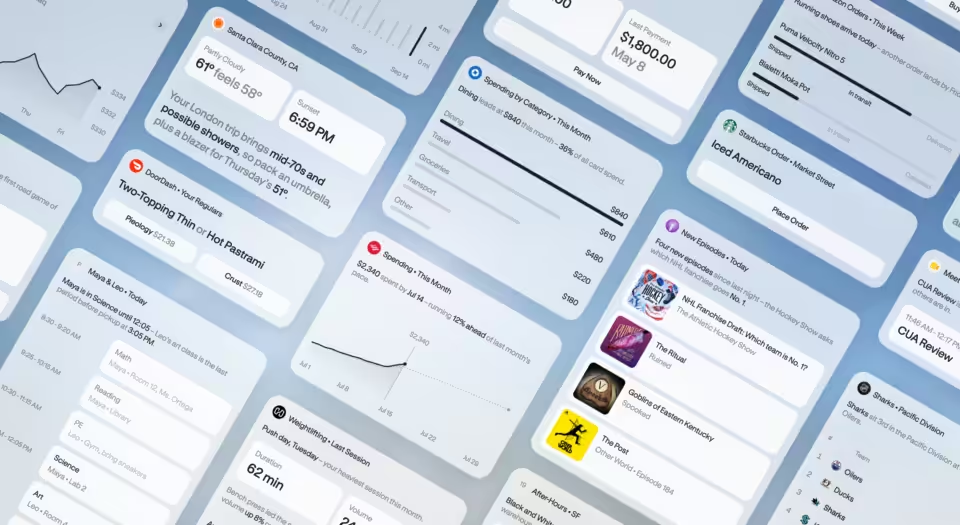
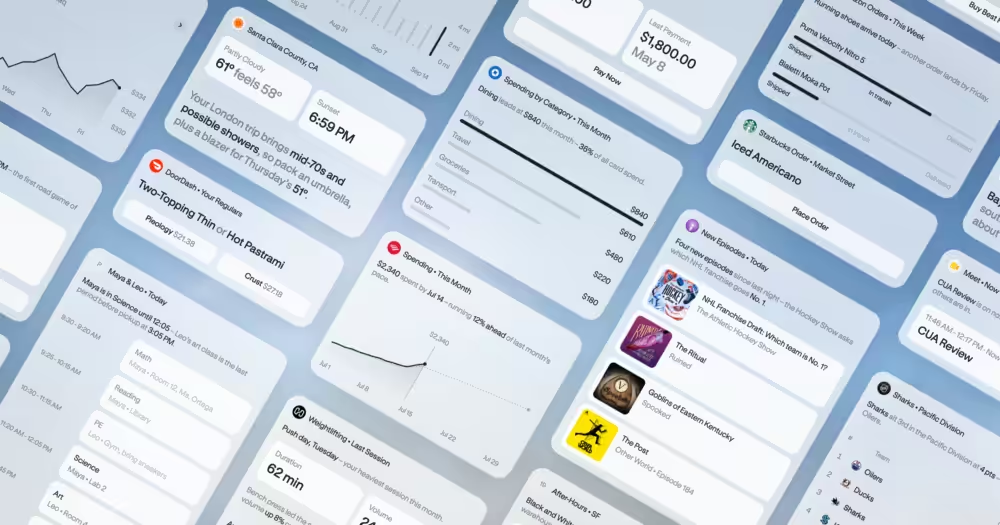
The feature sits inside a broader framework Google calls Personal Intelligence. With a user’s permission, it can draw from a range of Google products to make responses feel more relevant:
- Gmail
- Google Photos
- YouTube
- Search
Google is careful to frame this as an opt-in experience. Users can connect or disconnect their apps at any time through the Gemini app’s settings. That framing matters given how sensitive personalization based on personal photos and emails can be. Privacy concerns around AI tools that access personal data have grown significantly over the past few years, and Google’s opt-in approach is clearly designed to address that directly.
The broader context here is that AI image generation has become a crowded space. Tools from OpenAI, Adobe, Midjourney, and others have set high expectations for quality and control. What Google is doing differently is using the data it already has about users to reduce the friction of prompting. Whether people are comfortable granting that level of access to generate pictures is a separate question, but for those who are, the experience could feel noticeably more personal than what competitors currently offer.
For now, the rollout is limited to eligible users in the United States. Google has not yet said when it plans to expand availability to other countries.