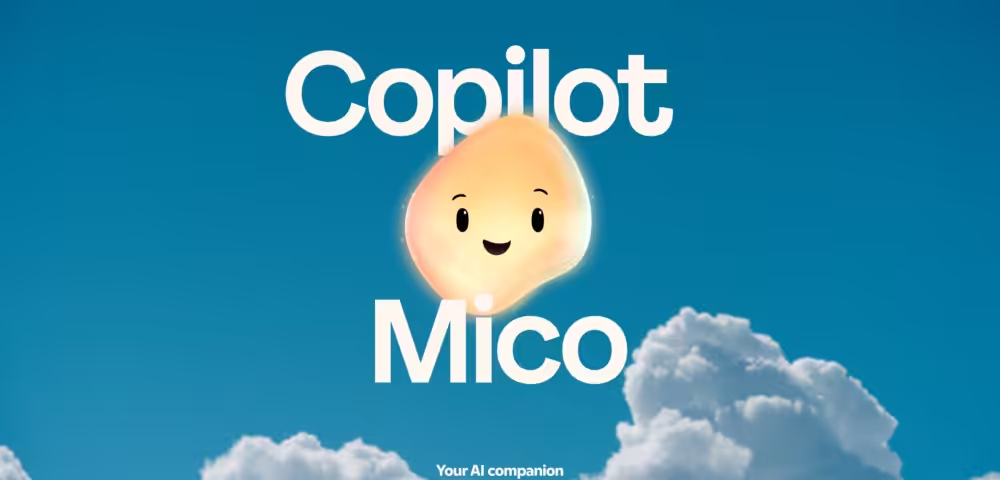
The internal memo said it all. Microsoft EVP Jacob Andreou, who oversees Copilot, told staff the app needed to earn “the right to exist” in customers’ lives. That’s not the language of a product that’s winning. According to TechCrunch, Microsoft is now merging its consumer-facing Copilot app with the Microsoft 365 Copilot app, while cutting a string of features that failed to gain traction.
The specific cuts are telling. By August 18, 2026, Microsoft will remove Group Chats, AI-generated podcasts, Copilot Labs experimental features, and Deep Research from the consumer app. Mico, the floating animated blob that was essentially a rebranded Clippy, is also gone. Files from the standalone Copilot app will migrate to OneDrive, and Microsoft warns some features may disappear temporarily during the transition. Paying business users will retain access to a research tool, but the consumer tier is being stripped back sharply.
This matters because it reflects a broader admission that the two-app strategy never made sense. Splitting personal and professional AI into separate products created friction for users who do both, which is most people. ChatGPT doesn’t ask you whether you’re using it for work or personal reasons before responding. Neither does Claude. Microsoft built an architecture around a distinction that users didn’t care about, and it paid for that with confusion and low engagement.
The consolidation also fits a pattern happening across the industry. Anthropic folded Cowork into Claude. OpenAI merged its Operator agent into ChatGPT. Google has been stacking capabilities directly into Gemini rather than spinning up separate apps. The direction is clear: one app, more capable, less clutter. Microsoft is arriving at that conclusion later than its competitors, but it’s arriving.
So what does this mean for developers and enterprise buyers evaluating Copilot? A few things worth watching:
- The merger could improve the day-to-day experience for Microsoft 365 users who were already living in both apps
- Cutting experimental features signals Microsoft is prioritizing reliability over novelty, at least for now
- The loss of Deep Research in the consumer tier is a real downgrade for non-paying users who used it seriously
- Enterprise Copilot pricing and feature parity will need to be reassessed once the dust settles
Still, none of this fixes the core competitive problem. ChatGPT has brand recognition and a massive user base. Claude is winning on trust and reasoning quality among technical users. Microsoft has distribution through Office, and that’s genuinely valuable, but distribution alone doesn’t make a product people want to use. The merger cleans up the mess. What comes next has to actually be good.