Lingo.dev
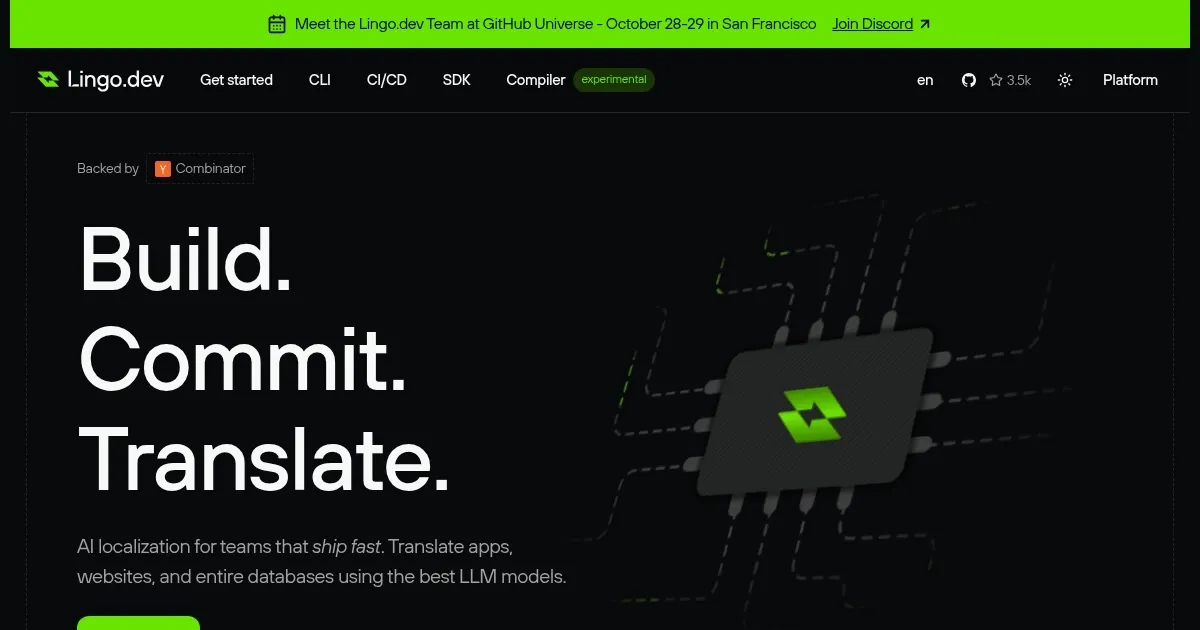
Automates translations for apps and websites using AI to enable seamless multilingual deployment
Lingo.dev is an AI localization engine designed for developers to automate translations in web and mobile apps. It integrates with Git and CI/CD pipelines to generate automated pull requests for localized content upon code commits. The tool supports translations across 83 languages using leading LLM models, handling UI elements, variables, plurals, and dynamic content with context awareness.
Key features include a Git-native approach for UI localization, a JavaScript SDK for real-time translations, and a powerful CLI for project-wide processing. It offers customizable brand voice to align with specific industry terminology and tone, ensuring consistency. The composable infrastructure allows full-stack localization, covering interfaces, marketing sites, emails, and more.
Pricing starts with a free Hobby tier providing 10,000 words monthly, scaling to Pro at $30 per month for 20,000 words, Team at $600 for 100,000 words, and custom Enterprise plans. Additional words incur charges that decrease with higher tiers. Compared to competitors like Lokalise, Tolgee, and Phrase, Lingo.dev emphasizes AI automation over manual coordination.
User feedback highlights accuracy often surpassing human translations in tests, with seamless integration praised by engineering teams. However, specialized jargon may require glossary adjustments. The open-source CLI and compiler for React enable build-time multilingual support without code changes.
Enterprise options include SLAs, dedicated support, and compliance features. The tool focuses on developer experience, automating processes to reduce localization overhead. Documentation provides quickstart guides for setup and usage.
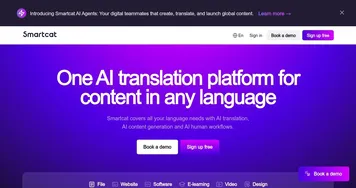
Homepage Screenshot 📸
What are the key features? ✨
- AI Localization Engine: Automates translations upon code commits for high-quality, hands-free results.
- Git-native UI Localization: Manages interface translations via automated pull requests in CI/CD pipelines.
- API & SDK for Dynamic Content: Enables real-time translation of user-generated content with context awareness.
- Customizable Brand Voice: Adapts translations to industry-specific terminology and brand personality.
- Composable Infrastructure: Supports full-stack localization across apps, sites, emails, and databases.
Who is it for? 🤔
Examples of what you can use it for 💡
- Software Developer: Integrates Lingo.dev into CI/CD pipelines to automatically localize app interfaces during builds.
- Engineering Team Lead: Uses the CLI to translate project files and ensure consistent brand voice across multiple languages.
- Fintech Startup Founder: Applies the SDK for real-time translation of dynamic user content in a multilingual financial app.
- Product Manager: Leverages enterprise features for compliance and support in scaling localization for global markets.
- Indie App Creator: Starts with the free tier to test translations on a personal project before going live internationally.
Pros & Cons ⚖️
- Automated workflows
- Accurate AI translations
- Seamless integrations
- Customizable voice
- Word limits
- AI dependency
FAQs 💬
Ready to try Lingo.dev?
Automates translations for apps and websites using AI to enable seamless multilingual deployment
Visit Lingo.devLingo.dev alternatives 🔗