Frequently Asked Questions
What is the difference between subtitles and captions?
Subtitles are timed text on screen that shows what is spoken, mainly for viewers watching with sound off or in another language. Social captions, by contrast, are the text written beside a post. In AI tools, subtitle generators sync words to video frames, while caption generators write standalone descriptions for a feed.
How accurate is AI subtitle generation?
AI subtitle generation is usually 90 to 95 percent accurate on clear audio in a common language. Accuracy drops with background noise, heavy accents, fast speech, or technical terms. The transcription and timing are good enough to save most of the work, but a review pass to fix names and punctuation is worth the few minutes.
Can AI add subtitles to a video automatically?
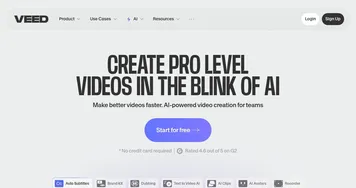
Yes, AI adds subtitles automatically by transcribing the audio and aligning each line to its timestamp. You upload the video, the tool generates synced captions, and you can edit wording, style, and position before exporting. Tools like CapCut and VEED burn styled subtitles into the video, while others export a separate caption file.
What file format are AI subtitles exported in?
AI subtitle tools usually export SRT or VTT files, the two standard caption formats that most video platforms accept. SRT is the most widely supported. Some tools also burn subtitles directly into the video as part of the image. Check that your tool offers a downloadable file if you plan to upload elsewhere.
Are AI subtitles good for accessibility?
AI subtitles improve accessibility by making spoken content readable for deaf and hard-of-hearing viewers, but auto-generated text alone often falls short of compliance standards. A human review to fix errors, add speaker labels, and mark sound cues is needed for true closed captions. Use AI for the first draft, then verify it.