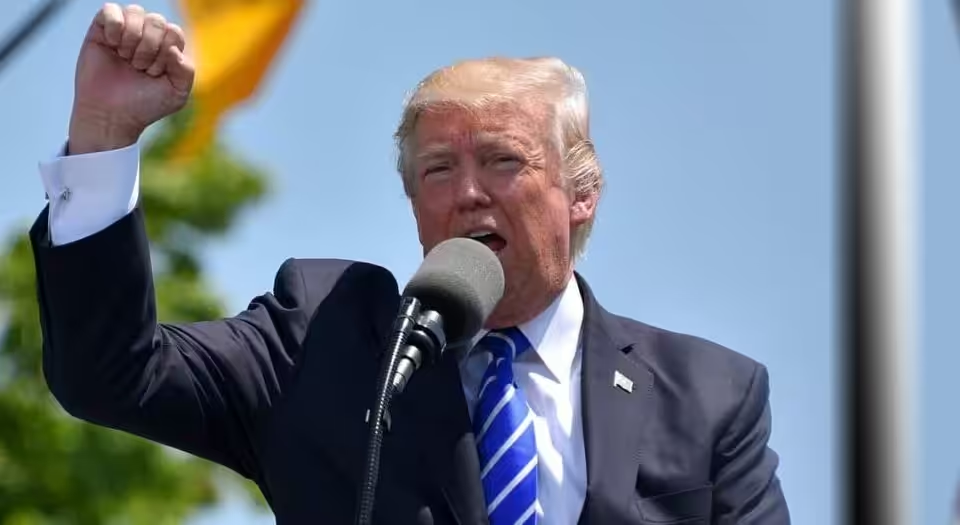
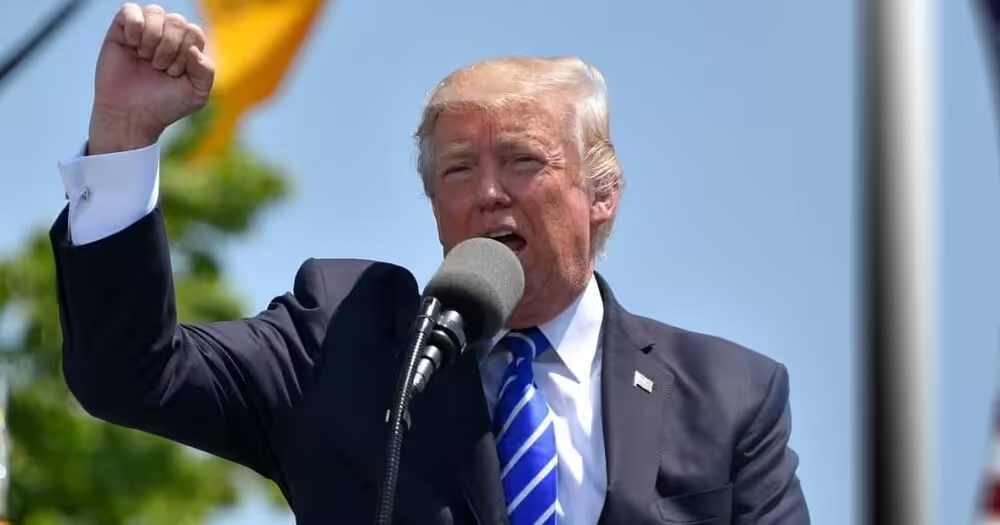
Trump just turned a Google antitrust fine into a geopolitical trade threat. After the European Commission hit Google with an €890 million ($1 billion) penalty for violating the Digital Markets Act, the president took to Truth Social to announce a Section 301 investigation into the EU, warning it will likely result in new tariffs on European goods. As reported by Engadget, Trump framed the EU’s fines as outright theft from American companies and taxpayers.
The Google fine itself is pretty straightforward by EU standards. The European Commission found that Google used its Search dominance to unfairly push its own travel and shopping tools over competitors, and that it blocked developers from pointing users toward alternative payment options in the Play Store. Both violations fall under the Digital Markets Act, the sweeping 2022 regulation the EU has leaned on hard to go after American platforms. Meta and Apple have already been through this process. Google is just the latest.
But Trump’s response is what makes this worth watching. The Supreme Court struck down his earlier global tariff framework back in February, so the administration has been routing around that ruling using Section 301 of the Trade Act of 1974. That law gives the US Trade Representative authority to investigate foreign trade practices that unfairly restrict American commerce, and to apply tariffs as a remedy. It’s a real legal tool with teeth, not just political theater.
Still, the irony is hard to ignore. Section 301 tariffs, like the EU’s DMA fines, can be challenged in court and overturned. Trump is essentially threatening to use a legally fragile mechanism to punish the EU for using its own legally fragile mechanism. Both sides are operating in contested territory.
The bigger picture here is about who controls the rules for American tech companies operating globally. The EU has been aggressive on this front, collecting fines from Google, Meta, and Apple while US regulators have largely pulled back under the current administration. From a policy standpoint, this matters because it sets a precedent: the US government is now explicitly treating European tech regulation as a trade issue, not just a legal one. That’s a significant shift.
For developers and founders building on Google’s platforms, the short-term impact is minimal. But if US-EU trade tensions escalate over tech regulation, the longer-term effects on data agreements, market access, and compliance costs could get complicated fast.