OpenAI has updated its ChatGPT desktop app to include voice support, letting users talk to the app to control AI agents and get things done on their computer. According to TechCrunch, the new feature runs on ChatGPT-Live, a family of voice models OpenAI launched earlier this month.
The desktop version is more capable than the existing smartphone version. While the mobile app introduced smoother, more natural conversations with better handling when you talk over the AI, it was never built to take action on your phone. The desktop app changes that. Users can now speak complex, multi-step commands and get real work done, with the AI asking for input when it needs clarification.
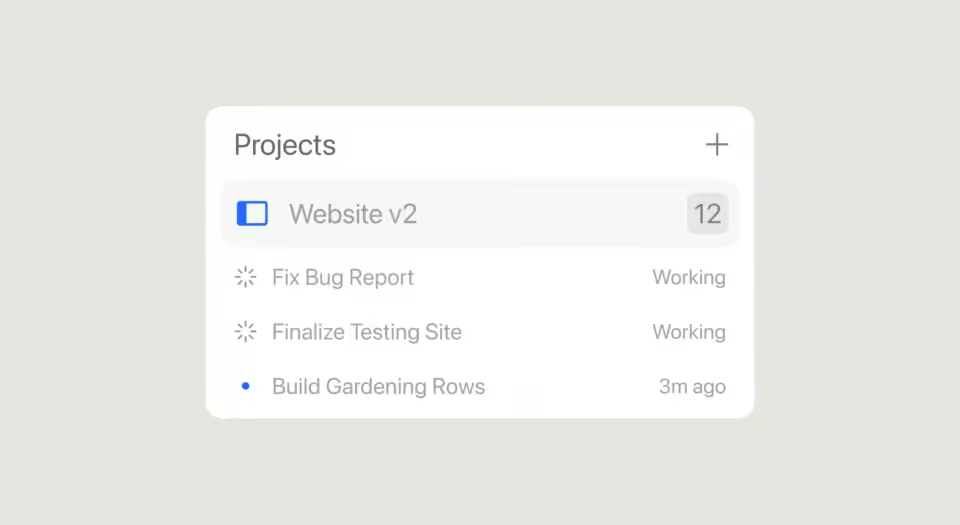
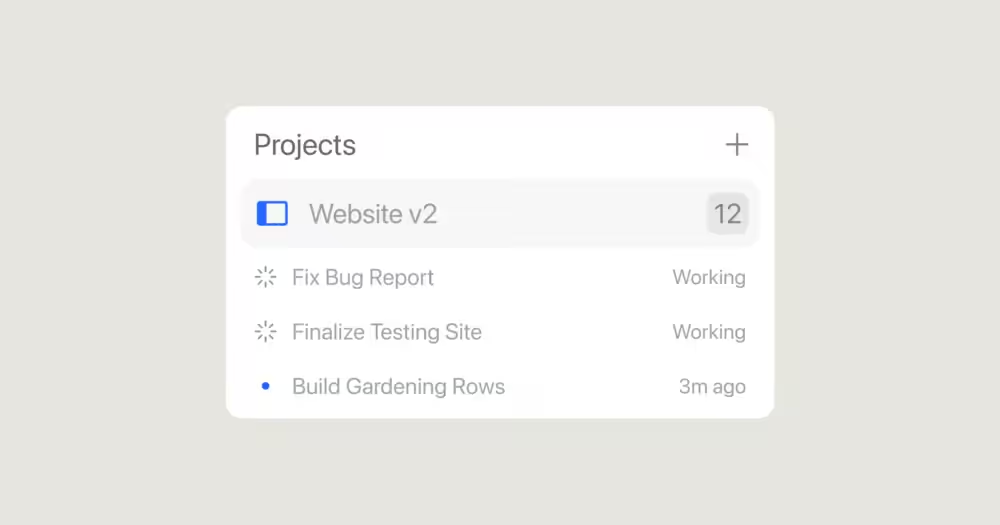
OpenAI showed what this looks like in practice with a demo aimed at developers. In one voice command, a developer asked ChatGPT to create a new thread, open a pull request, and track down the root cause of a bug. That kind of workflow, done by talking, is the clearest sign yet of where AI assistants are heading.
ChatGPT Voice on desktop works with both ChatGPT Work and Codex, OpenAI’s AI coding tool. It can also use computer use capabilities to browse websites and open apps. On macOS, there is an added feature called Appshots that lets the app read what is on your screen, including alt-text, so it understands the full context of what you are looking at.
For users who prefer working from their phone, OpenAI said ChatGPT Voice in Codex can also be accessed remotely through the iOS app.
OpenAI is not alone in pushing voice further into AI workflows. Anthropic has also updated its voice mode for Claude, which can now tap its Opus, Sonnet, and Haiku models to handle tasks inside apps like:
- Gmail
- Google Calendar
- Slack
- Notion
- Canva
The broader direction here is clear. AI companies are moving fast to make their tools feel less like chatbots you type at and more like assistants you actually talk to, ones that can take action, not just answer questions. Voice is becoming a core part of that shift, and the desktop is the natural place to start, given how much real work still happens there.