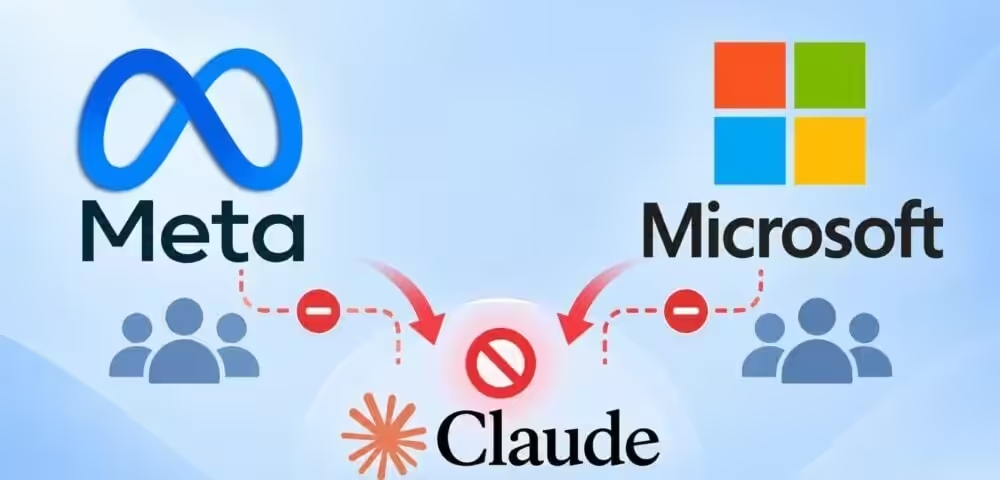
Meta cut its internal Claude Code users roughly in half. Microsoft slashed per-employee AI spending limits by 90%. And yet Anthropic is reportedly on a $65 billion annualized revenue pace. That tension is the whole story.
According to Cybersecurity News, both Meta and Microsoft have been actively redirecting employees away from Anthropic’s Claude toward their own AI coding tools. The report, originally published by The Information on October 5, is careful to distinguish internal policy from customer-facing products. Neither company has removed Claude from what they sell. This is about who pays for what internally, and who controls the developer workflow.
At Microsoft, internal monthly AI spending caps reportedly dropped from $100,000 per employee to around $10,000 in most cases. That’s not a minor adjustment. The company had previously projected internal Anthropic spending of at least $1 billion annually. That figure has reportedly fallen by more than a third. Employees are now expected to use GitHub Copilot and OpenAI models instead, which makes sense given Microsoft’s deep investment in OpenAI and its ownership of GitHub. Frustrated engineers who had more flexibility before are now working within tighter constraints.
Meta’s numbers are similarly striking. Claude Code users inside the company fell from roughly 60,000 to about 30,000. Layoffs account for some of that drop, but the report points to Meta’s push toward its own tools as the bigger driver. MetaCode had more than 30,000 internal users. Muse Code had over 6,000, and Meta started testing it externally in August. Still, Meta reportedly spent more than $105 million on Claude Code in a single 28-day period, which tells you that raw user counts don’t always reflect actual spending weight.
The broader context here is that AI coding assistants have stopped being experimental and started being budget line items. When that happens, companies with their own models have every reason to route internal use toward those models. It reduces dependency, improves internal feedback loops, and trims costs. Both Meta and Microsoft are in that position. Anthropic is not, which is why its products remain on enterprise platforms even as internal usage gets squeezed.
There’s a security angle worth keeping in mind too. The shift between coding assistants isn’t just an operational decision. Tools like Claude Code and GitHub Copilot have both faced vulnerability disclosures involving automated access to files, credentials, and repository settings. Anthropic patched a Claude Code issue involving unauthorized execution and API key exposure before it was publicly disclosed. Microsoft dealt with a GitHub Copilot flaw, called RoguePilot, where malicious instructions inside a GitHub Issue could lead to a full repository takeover. Switching tools doesn’t eliminate that class of risk. It just changes which vendor’s patching cadence you’re depending on.
For developers and security teams evaluating these tools, the takeaway is practical. Permissions should be minimal, project settings should be reviewed, and AI actions shouldn’t run unchecked regardless of which assistant is in use. The internal politics between Meta, Microsoft, and Anthropic are interesting. But the security hygiene requirements stay the same no matter who wins the internal adoption war.