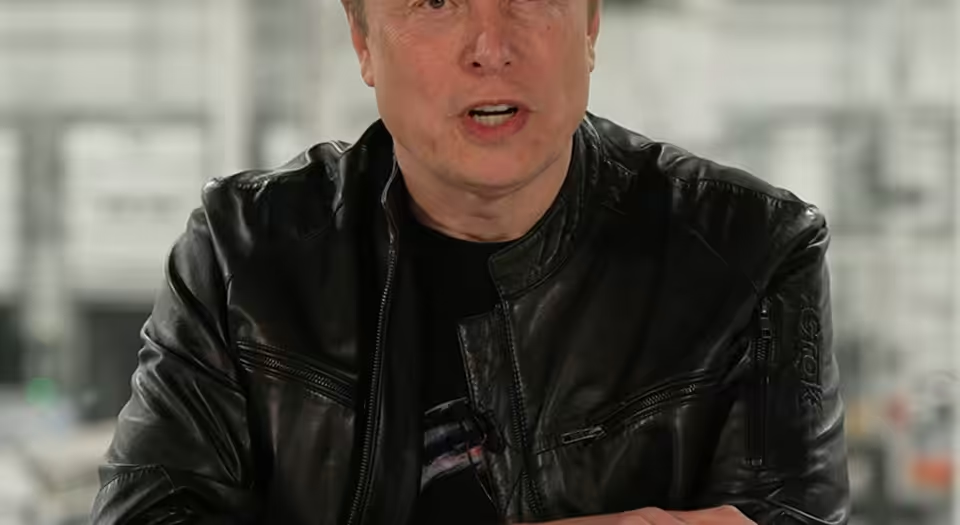
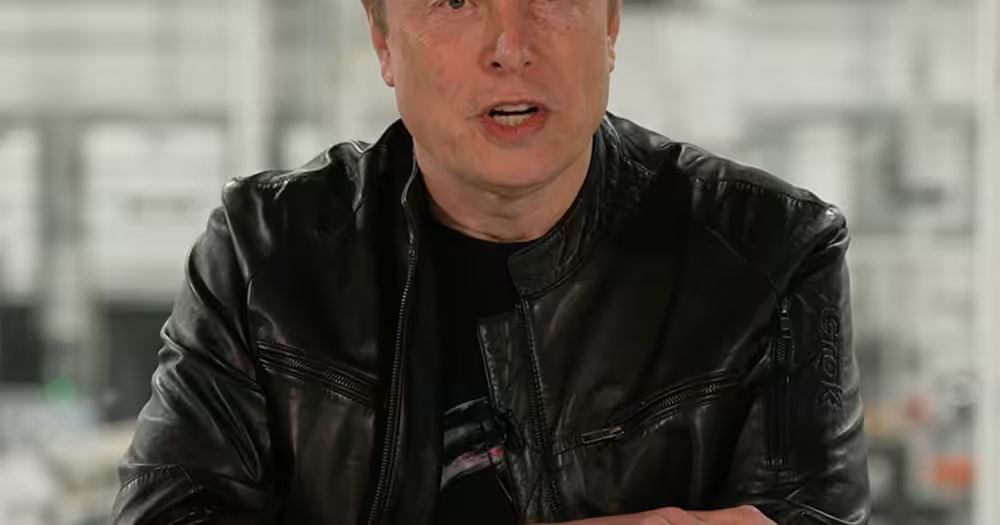
OpenAI is not giving SpaceX the benefit of the doubt. After SpaceX acquired Cursor, the popular AI code editor, OpenAI announced it intends to wind down the contract supplying its models to Cursor, with a shutoff date of November 12, 2026. The stated reason is direct: OpenAI does not trust that SpaceX, under Elon Musk, will honor the terms of service. And given the history, that is a hard position to argue with.
OpenAI points to two specific incidents. After Musk acquired Twitter, which is now part of SpaceX, the company broke the terms of its contract with OpenAI, along with several others. Then earlier this year, Musk admitted under oath that xAI, also now folded into SpaceX, had violated OpenAI’s terms of service. These are not vague allegations. They are on the record. So when a change-of-control clause opened a window for OpenAI to exit the Cursor deal, the company took it.
The timing matters here. OpenAI is preparing to release its next major model, Astra, and the company appears to be tightening control over who gets access to its most capable systems. Allowing a Musk-controlled entity to distribute those models through a widely used developer tool would create both legal and reputational exposure. OpenAI clearly decided the risk was not worth it, regardless of what it means for Cursor’s existing user base.
For developers, this is a real disruption. Cursor has built a strong following among professional programmers who use it as a daily coding environment. Losing access to OpenAI models does not kill the product, but it forces a transition. Cursor could shift to Anthropic’s Claude, which already powers significant parts of competing tools like GitHub Copilot alternatives, or lean into other providers. Still, any forced migration mid-workflow creates friction, and OpenAI acknowledged that directly, saying it is ready to go beyond standard support to help affected developers through the change.
The bigger story here is what this signals about how AI infrastructure relationships work at scale. Custom enterprise contracts with AI providers now carry change-of-control clauses, terms of service enforcement mechanisms, and real consequences for ownership changes. This is not just a dispute between two tech billionaires. It is a preview of how AI companies will manage access as their models become critical infrastructure. OpenAI is essentially saying that who owns the pipe matters as much as what flows through it.