Competera
Optimizes retail prices using AI-driven demand insights for revenue growth
Retail pricing has always been a bit like juggling flaming swords while riding a unicycle, hasn’t it? One wrong move, and your margins catch fire. Enter Competera, the AI wizard that’s quietly revolutionizing how big-box stores and online giants set their prices. I think it’s safe to say this tool doesn’t just tweak numbers; it peers into the soul of shopper behavior, using something called Contextual AI to sift through over 20 factors that make people hit ‘buy’ or ‘browse away.’ We’re talking everything from weather whims to competitor whispers, all crunched into recommendations that boast a whopping 95% accuracy rate. Pretty impressive, right? And here’s the kicker: it scales like a dream for enterprise setups, integrating seamlessly with ERP systems to pull in stock levels, transaction histories, and costs without breaking a sweat.
Now, let’s talk shop about what makes Competera tick. At its core, you’ve got the Demand-based Engine, which goes beyond basic elasticity to model cross-impacts between SKUs, so pricing one yoga mat doesn’t accidentally tank sales on resistance bands. Then there’s the Smart Rules Engine, dishing out suggestions for true key value items and spotting real competitors, not just the obvious ones. I love how it layers in human oversight, letting your team tweak rules and scenarios in a unified dashboard that’s intuitive enough for a pricing newbie but powerful for the pros. Users rave about slashing repricing time by 50%, and from what I’ve seen in case studies like Sephora’s, that’s no exaggeration. They automated price zones across beauty categories, fighting promo fatigue while padding margins. But wait, there’s more: predictive scenario planning lets you simulate ‘what if’ strategies, forecasting revenue hits before you flip the switch.
Of course, no tool’s perfect, and Competera has its quirks. The initial setup demands a solid data audit, which can feel like prepping for a marathon if your internal data’s a mess, and some folks mention a learning curve with the analytics toolkit. Compared to rivals like Pricefx, which leans heavy on B2B configurators, or Quicklizard with its promo-focused automation, Competera’s edge lies in that holistic demand forecasting, especially for omnichannel beasts. Pricing? It’s custom, modular plans starting from competitive data feeds up to full AI optimization suites, often landing more affordably for high-volume retailers than the enterprise lock-ins elsewhere. I might hedge here, but it probably pays for itself in months through that 6% average profit bump.
What surprises me most? The way it builds trust. Retailers like flaconi didn’t just optimize; they transformed pricing teams from firefighters to strategists, freeing them for creative campaigns. Imagine your pricing manager pitching bold ideas backed by AI crystal balls, not gut feels. And the continuous refinement? Models retrain on the fly, adapting to market shifts like inflation spikes or seasonal slumps, keeping accuracy north of 95%. It’s not flashy, but it’s reliable, like that old pickup truck that never leaves you stranded.
Heterogeneous workflows shine too, from granular SKU tweaks to portfolio-level overhauls. One paragraph on integrations: it hooks into Google Cloud for secure, siloed data handling, ensuring your beauty empire’s secrets stay vaulted. Users appreciate the transparency, with SKU-level visibility into what drives each recommendation, turning black-box AI into a chatty advisor.
Practical advice? Start with a proof-of-concept pilot, maybe on a single category like electronics where competition’s fierce. Map your KPIs early, lean on their pricing architects for that 60-day rollout, and watch how it turns weather volatility into opportunity. You’ll sleep better knowing your prices aren’t guessing games anymore.
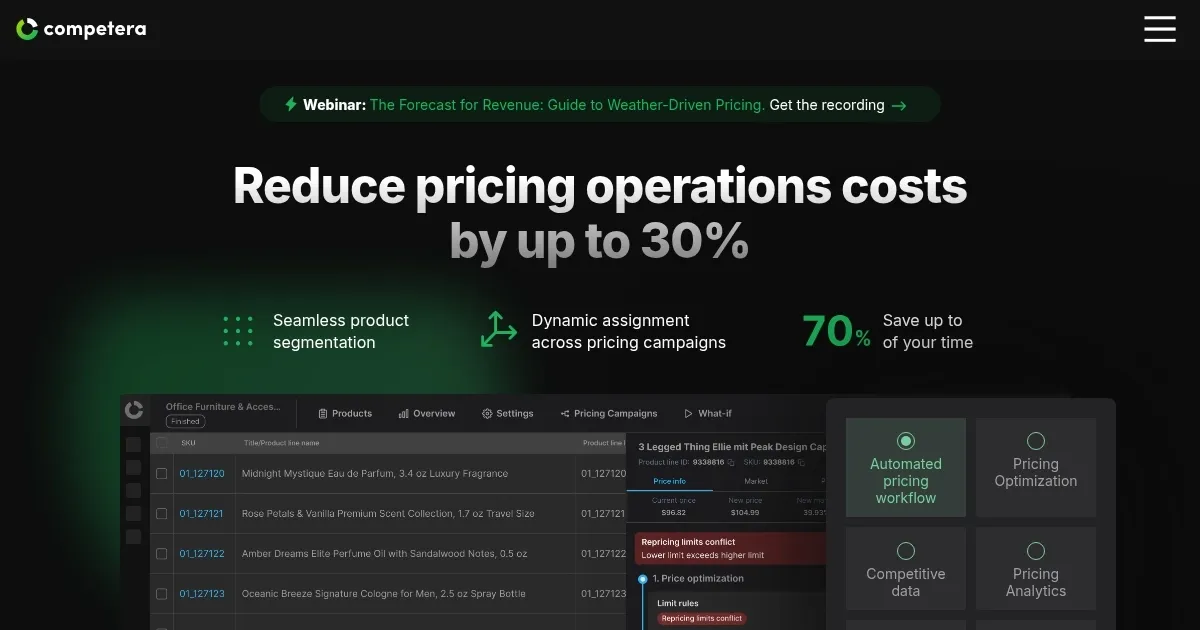
Homepage Screenshot 📸
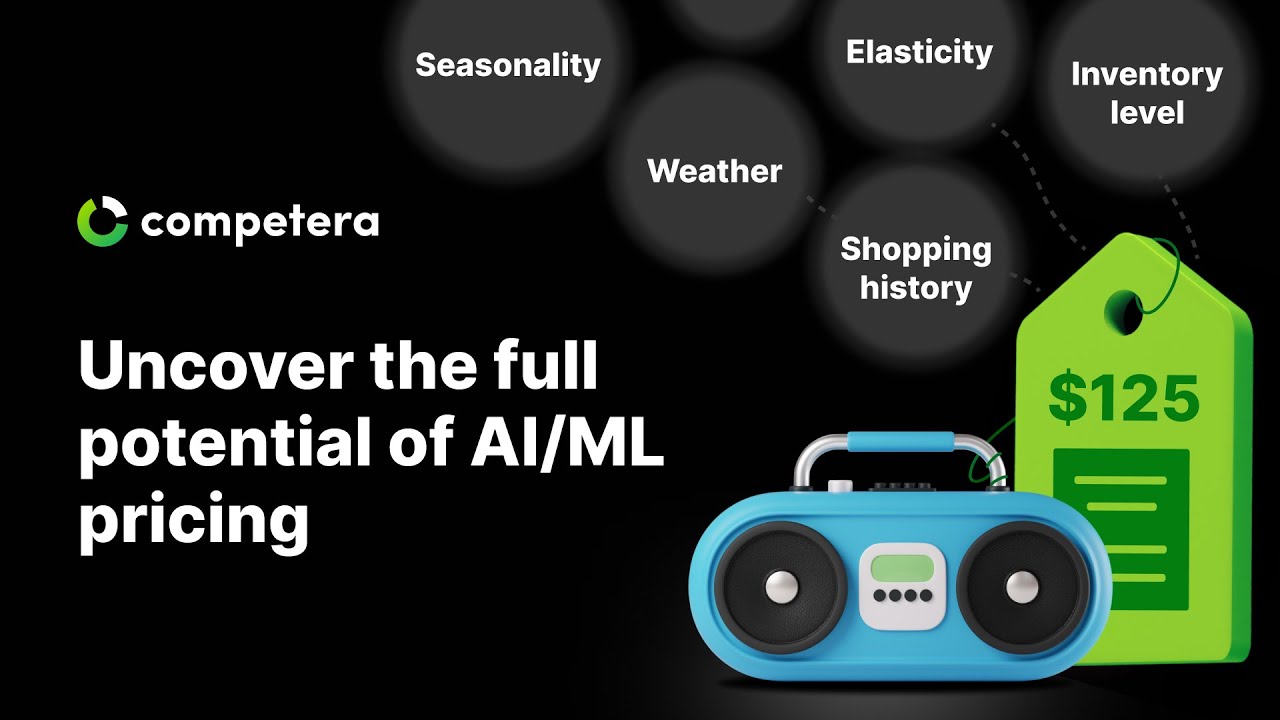
Video Overview 🎬
What are the key features? ✨
- True Demand Elasticity: Analyzes over 20 factors to reveal customer purchase drivers beyond price sensitivity.
- Predictive Scenario Planning: Simulates pricing strategies to forecast exact business impacts before implementation.
- Human-in-the-Loop Intelligence: Merges AI recommendations with team oversight and custom business rules for strategic control.
- Enterprise-Grade Scalability: Enables rapid deployment and integration for complex multi-channel retail operations.
- Unrivaled Accuracy: Delivers 95%+ precision in predicting outcomes through continuous model refinement.
Who is it for? 🤔
Examples of what you can use it for 💡
- Fashion Retailer: Uses Contextual AI to adjust prices for seasonal trends and competitor actions, boosting sell-through rates by 15%.
- Grocery Chain: Optimizes everyday low prices with demand elasticity modeling to balance stock freshness and margin goals.
- Beauty Brand: Automates promo strategies across zones to combat discount fatigue while preserving premium perception.
- Electronics Store: Identifies true KVIs for dynamic repricing, increasing revenue without cannibalizing high-margin items.
- Omnichannel Merchant: Integrates ERP data for unified online-offline pricing, reducing discrepancies and enhancing loyalty.
Pros & Cons ⚖️
- 95% accuracy
- Scales enterprise-wide
- Cuts repricing 50%
- Holistic forecasting
- Setup data audit
- Custom pricing opacity
FAQs 💬
Ready to try Competera?
Optimizes retail prices using AI-driven demand insights for revenue growth
Visit CompeteraCompetera alternatives 🔗