MenuGen
Transforms menu photos into AI-generated dish images.
I stumbled onto MenuGen last month while scrolling X during a rainy lunch break, and figured why not give it a whirl. Id just wrapped a quick trip to a new Thai spot downtown, menu in hand, half the dishes sounding like poetry I couldn’t picture. Uploaded the photo on a whim, and boom, there they were: steaming bowls of tom yum with lemongrass twisting like hidden springs, pad thai noodles coiling under lime wedges that popped like fireworks. It wasn’t flawless, mind you. The khao soi came out looking more like a curry mishmash than the layered coconut dream I remembered from Chiang Mai, but that slight off-kilter charm? It made me chuckle, like the AI was riffing off my vague memories.
Spending a lazy afternoon tinkering, I fed it menus from old photos, everything from sushi joints to barbecue shacks. The flow is buttery, you drag and drop, hit generate, and it churns through text extraction with what feels like effortless grace. Behind the scenes, its juggling OCR to snag those dish names, then whispering prompts to an LLM that spins tales vivid enough for a food photogs portfolio. Stable Diffusion takes the baton, painting scenes that make your stomach growl mid-scroll. I think what surprised me most was how it nailed the plating details, like garnishes that scream fresh farm-to-table, even on a budget upload. But here’s a wit-tinged caveat, it once turned beef rendang into something suspiciously like a spicy pudding, proving AIs got a cheeky side when cultures clash.
Against the backdrop of broader tools, MenuGen carves its niche sharp as a chefs knife. Tools like Midjourney let you dream up feasts from scratch, but who has time to prompt engineer a 20-item list? Or DALL-E, brilliant for one-offs yet clunky for batch jobs like this. MenuGens got that automated pipeline, chaining steps so you lean back and sip your coffee while it works. Pricing hits light, credits for generations that stretch further than a full-blown sub from those giants, making it feel like a smart hack rather than a splurge. One evening, I even mocked up a friends pop-up menu, visuals so tempting they nearly convinced me to invest.
The real joy sneaks in through those unexpected moments, like when a garbled menu text led to a surreal fusion image, half pasta half paella, sparking a late-night debate on hybrid cuisines. Sure, there are hiccups, slower loads on peak hours that test your patience, and outputs that occasionally veer cartoonish instead of crave-worthy. I didn’t dive days-deep, just a handful of hours spread out, but it left me pondering how this could jazz up recipe apps or even virtual cooking classes. Its got that spark, the kind that makes you text a buddy, Hey, check this out, and suddenly you’re both plotting dinner experiments.
If you’re eyeing something similar, start with familiar fare to build confidence, then push boundaries with global picks. Tweak prompts manually if a dish flops, it sharpens the fun. For foodies or frequent flyers, this tools a quiet game-changer, turning the unknown into the inviting. Grab your phone next outing, snap that menu, and let MenuGen paint the possibilities, you might just order bolder.
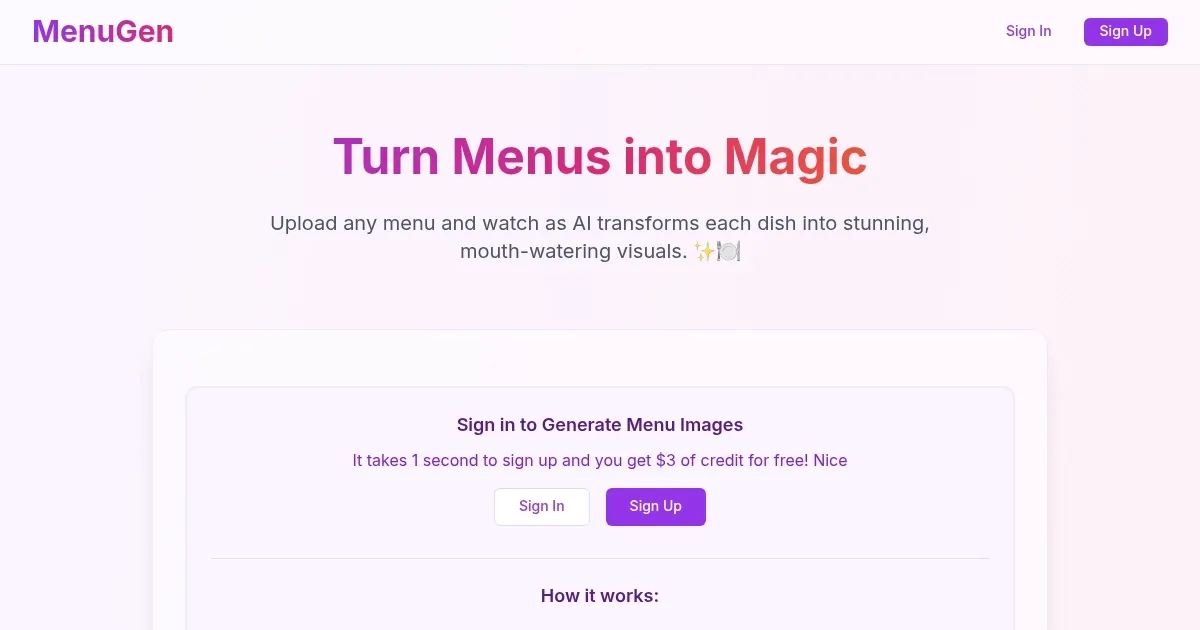
Homepage Screenshot 📸
What are the key features? ✨
- Menu Upload: Users upload a photo of any restaurant menu to start the AI processing.
- Text Extraction: Optical character recognition identifies dish names and descriptions from the image.
- Prompt Generation: A large language model creates detailed, vivid prompts for each menu item.
- Image Creation: Diffusion models like Stable Diffusion produce realistic visuals based on the prompts.
- Results Display: Outputs appear in a formatted list with dish names paired to generated images.
Who is it for? 🤔
Examples of what you can use it for 💡
- Traveler: Snaps a menu in a Parisian bistro to visualize croque-monsieur variations before ordering.
- Restaurant Owner: Uploads a new seasonal menu to generate pro-level images for website updates.
- Food Blogger: Processes a tapas list into eye-catching visuals for an Instagram recipe series.
- Home Cook: Uses a copied cafe menu to recreate and illustrate dishes for personal meal planning.
- Date Planner: Previews fusion options from a trendy spot to suggest safe yet exciting picks to a partner.
Pros & Cons ⚖️
- Fast generations
- Visual clarity
- Easy uploads
- Travel aid
- Cultural biases
- Credit limits
FAQs 💬
MenuGen alternatives 🔗