Spellbook by Rally
A tool that helps users draft, review and suggest contract terms 3x faster
Spellbook uses OpenAI’s large language model GTP-4 to help users draft, review and suggest contract terms 3x faster.
The service has been trained on billions of lines of legal text, enabling it to suggest language for all kinds of contracts instantly. It can also detect aggressive terms, list missing clauses and definitions, and provide negotiation suggestions.
As they put it, Spellbook gets the small stuff out of the way so that you can close better deals, faster.
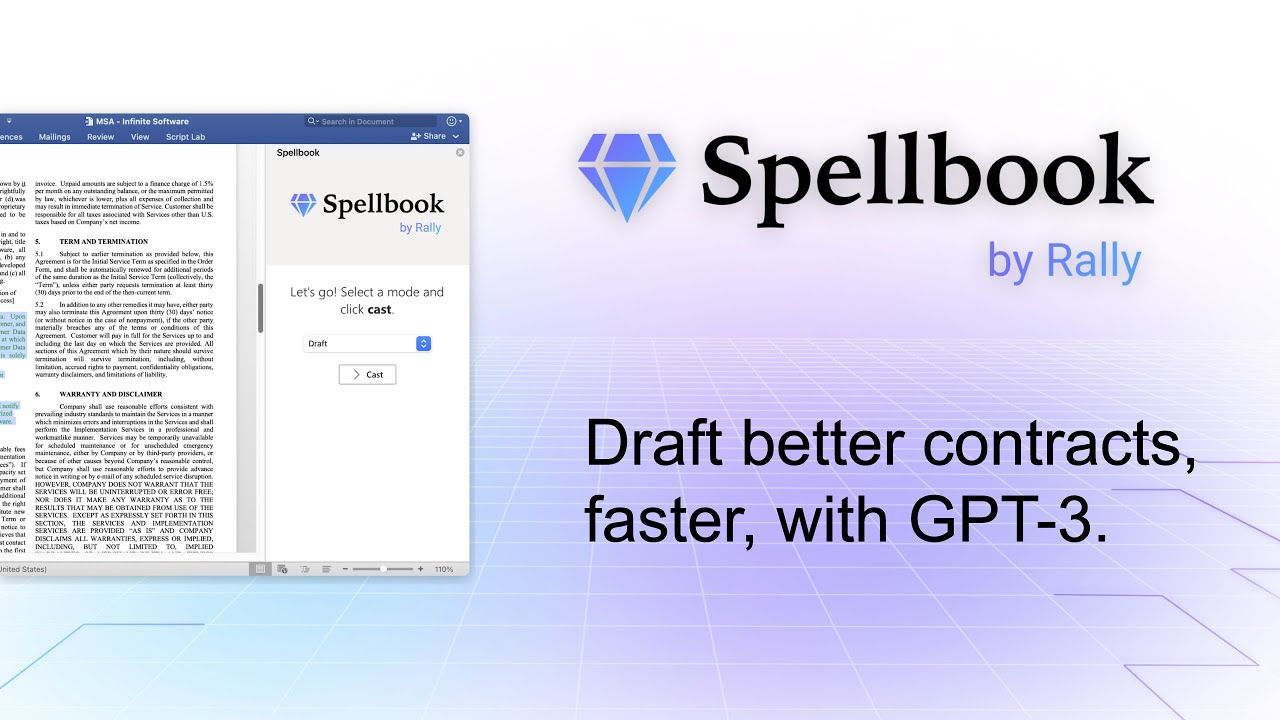
And the best part is that it is integrated with Microsoft Word.
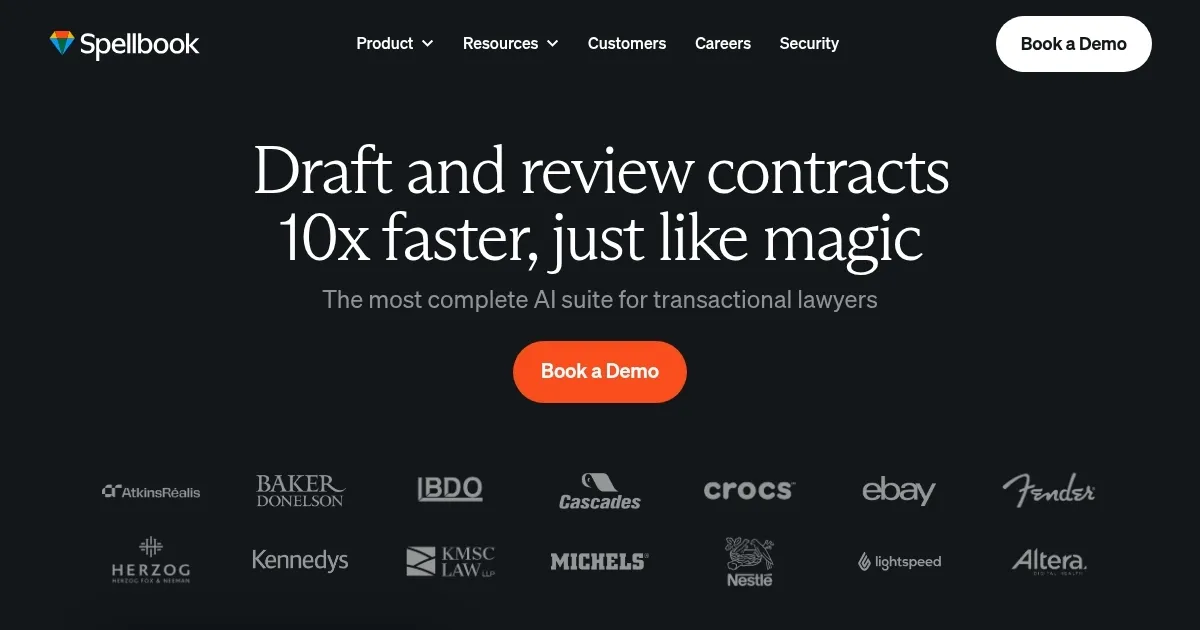
Homepage Screenshot 📸
Video Overview 🎬
What are the key features? ✨
- Contract drafting: Spellbook uses GPT-4 to help you create contracts faster. Like, much faster, as it will suggest terms and format the contract properly for you.
- Instant suggestions: Speaking of suggestions, Spellbook knows its thing, having been trained on a vast amount of legal text. It can draft new clauses and sections while also considering the context.
- Term detection: The tool can detect aggressive or unusual terms in a contract, highlighting potentially problematic language that may need further review.
- Missing clauses detection: It will also see if some clauses are missing from your contract. This helps ensure that your agreement is complete and robust.
- Negotiation suggestions: Spellbook can suggest common points that might be negotiated in a contract, helping you to prepare better for discussions.
Who is it for? 🤔
Although everyone could use it, Spellbook primarily targets professionals who frequently deal with contracts. These would include the likes of lawyers, contract managers, business executives, and company owners. Moreover, it could be valuable for individuals and firms involved in large contract negotiations or due diligence processes.
Examples of what you can use it for 💡
- Create contracts 3x times (or more) faster
- Get suggestions for contract language, including new clauses and entire sections
- Identify aggressive terms in a contract so you can react accordingly
- Find what's missing from a contract
- Get help with contract negotiations
Pros & Cons ⚖️
- Draft contracts 3x faster
- Great for summarizing contracts for clients
- It can suggest common points of negotiation
- Spellbook is strictly available for legal professionals
FAQs 💬
What does Spellbook actually do inside Microsoft Word?
Spellbook appears as a side pane in Word where you can review contracts for risks and add redlines, draft new clauses or documents, ask questions about the text with cited answers, compare terms to industry benchmarks, and run multi-step workflows across documents.
Is Spellbook suitable for small law firms or solo practitioners?
Yes, small firms and solos use it successfully, especially for commercial, real estate, IP, or estate planning contracts, because it works directly in Word and delivers fast results without requiring big teams or complex setups.
How accurate are the AI suggestions for legal contracts?
The tool is tuned specifically for contracting on billions of lines of legal text, so suggestions tend to be precise and context-aware, but lawyers always review and apply final judgment since AI can miss subtle jurisdiction-specific nuances.
Does Spellbook work with documents other than contracts?
It focuses primarily on contracts and transactional documents, but users apply it successfully to related legal writing where clause-level precision and risk spotting matter.
What kind of privacy and security protections does Spellbook offer?
It provides zero data retention agreements, SOC 2 Type II compliance, GDPR/CCPA/PIPEDA alignment, and HIPAA support options so client data stays protected and isn't used for model training.
Can Spellbook help benchmark my contract terms against market standards?
Yes, the Compare to Market feature analyzes key deal points against thousands of similar real-world contracts, showing whether terms are favorable, standard, or outlier.
Is Spellbook designed for in-house legal teams as well as law firms?
Absolutely, both in-house teams and law firms use it extensively, with workflows tailored for commercial deals, M&A, vendor agreements, and other recurring contract work.
How does Spellbook handle multi-document transactions?
Through the Associate feature, it acts as an AI agent that can review data rooms, update terms across files, and execute multi-step revisions, reducing manual coordination.
Do I need advanced technical skills to start using Spellbook?
No, it's built for everyday lawyers; installation is a simple Word add-in, and the interface is straightforward with one-click actions for review, drafting, and queries.
Will Spellbook replace the need for junior associates on contract work?
It handles a lot of routine review and drafting quickly, freeing up time for higher-level strategy, but human oversight remains essential for complex negotiations and liability risks.
Ready to try Spellbook?
A tool that helps users draft, review and suggest contract terms 3x faster
Visit Spellbook