TaxGPT
Streamlines tax research and automates workflows for tax professionals with AI precision
TaxGPT isn’t just another tool in the crowded tax software market, it’s a lifeline for accountants drowning in paperwork and tight deadlines. Imagine a world where you can ask a thorny tax question, say, about Section 174 deductions for a film industry client, and get a sourced, reliable answer in seconds. That’s TaxGPT’s promise, and it delivers with a swagger that’s hard to ignore. Built by Kashif Ali and Isabella Maceda-Ali in 2023, this San Francisco-based startup has already won over 10,000 tax professionals, from solo CPAs to Fortune 500 firms, by automating the grunt work of tax research, memo writing, and client communication. The AI Co-Pilot feature is the star here, acting like a hyper-efficient intern who never sleeps, pulling insights from a massive database of tax laws and CPA-verified sources.
What’s to love? The speed. TaxGPT claims to cut research time by 90%, and user testimonials back this up, with some reporting savings of 5–8 hours daily. The document upload feature is another gem, letting you toss in IRS notices or client returns and get tailored responses, complete with red, yellow, and green flags to highlight audit risks or savings opportunities. Agent Andrew, the audit and review tool, feels like having a seasoned partner double-checking your work, catching errors like mismatched data or missing deductions. Security is no afterthought either, with AES-256 encryption and SOC 2 compliance ensuring your clients’ sensitive data stays locked down.
But it’s not all sunshine. Some users on platforms like Reddit question whether TaxGPT is just a souped-up version of ChatGPT with tax code guardrails, suggesting you could replicate it with a premium OpenAI subscription. Others grumble about the learning curve, especially for new users navigating the platform’s robust features. Pricing, while competitive compared to giants like Bloomberg Tax or Thomson Reuters Checkpoint, isn’t exactly pocket change, starting around $1,000 per year per seat. For small firms, that’s a hefty ask, especially when free alternatives like ChatGPT can handle basic queries.
The surprise element? TaxGPT’s client portal. It integrates seamlessly into your website, offering a chatbot that wows clients with instant answers while you focus on strategy. It’s like giving your firm a 24/7 receptionist who’s also a tax whiz. Compared to competitors like Intuit TurboTax (better for individual filers) or AnswerConnect (more client-service focused), TaxGPT’s niche is its laser focus on tax pros, not end-users. It’s not trying to replace your CPA, it’s trying to make you a better one.
My advice: Start with the free tier to test the waters. Upload a few documents, ask some complex questions, and see how it fits your workflow. If you’re a solo practitioner or small firm, weigh the cost against time saved. For larger firms, the scalability and integration options make it a no-brainer. Just don’t expect it to hold your hand through setup, you’ll need to poke around a bit to unlock its full potential.
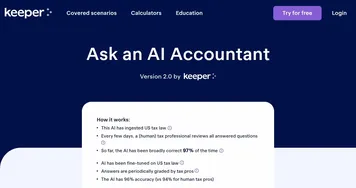
Homepage Screenshot 📸

Video Overview 🎬

What are the key features? ✨
- AI Co-Pilot: Delivers instant, sourced answers to complex tax questions across jurisdictions.
- Agent Andrew: Reviews tax forms and flags errors or savings with color-coded reports.
- Document Upload: Allows secure uploads for personalized tax research and IRS notice responses.
- Client Portal: Integrates a chatbot into websites for efficient client communication.
- Real-Time Compliance: Monitors tax law changes for federal, state, and international regulations.
Who is it for? 🤔
Examples of what you can use it for 💡
- Solo CPA: Uses TaxGPT to draft memos and respond to IRS notices, saving hours daily.
- Small Business Owner: Identifies deductions like home office expenses via document uploads.
- Large Tax Firm: Integrates client portal for seamless communication with multiple clients.
- Tax Lawyer: Researches industry-specific tax laws, such as Section 174 for film clients.
- Freelancer: Calculates estimated tax payments for variable income with AI guidance.
Pros & Cons ⚖️
- Cuts research time by up to 90%.
- Scalable for solo to large firms.
- Identifies deductions accurately.
- Steep learning curve for new users.
- Limited global tax coverage.
FAQs 💬
Ready to try TaxGPT?
Streamlines tax research and automates workflows for tax professionals with AI precision
Visit TaxGPTTaxGPT alternatives 🔗