Phoenix.new
Generates Phoenix apps from natural language descriptions in the browser
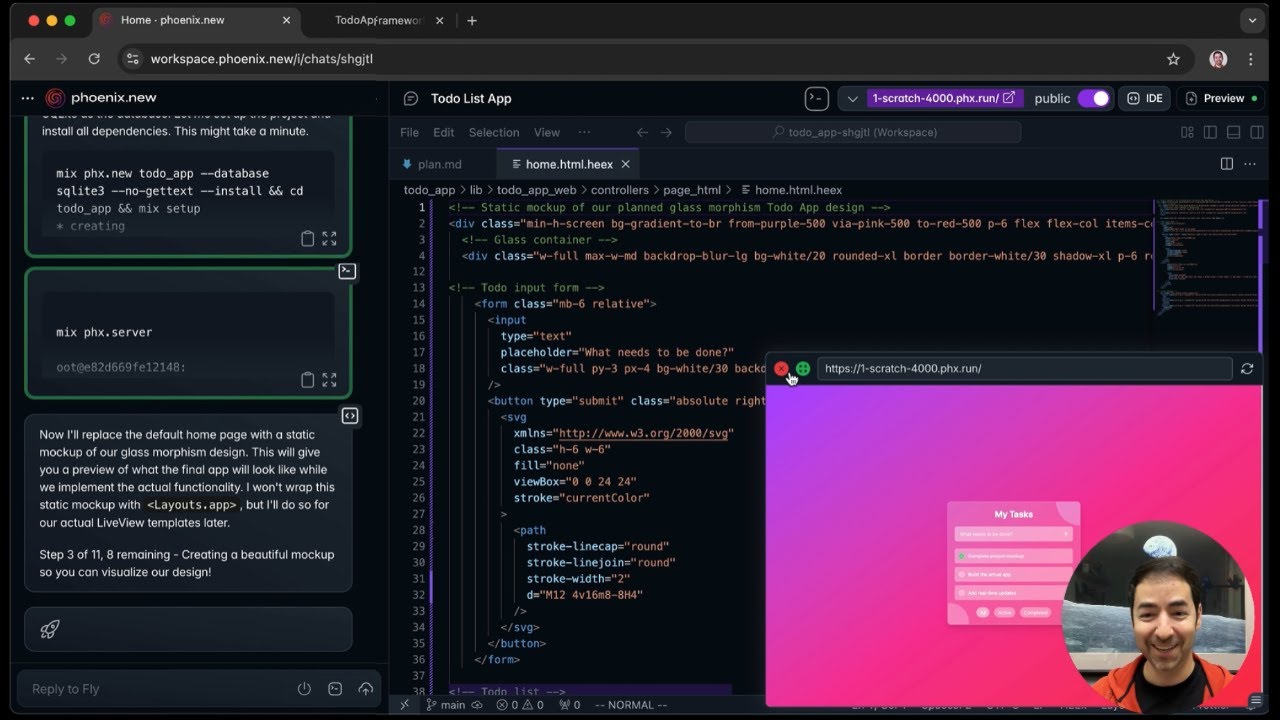
Phoenix.new is a browser-based AI coding agent designed for building Phoenix framework applications using natural language prompts. It operates as a remote runtime on Fly.io infrastructure, creating ephemeral virtual machines for safe code execution. The tool provides a VS Code-like editor interface with root shell access, allowing the AI to install packages, run Elixir commands, and manage dependencies without local setup. Key functionalities include code generation, automated testing via mix, and deployment to live URLs. The integrated headless browser enables the agent to interact with and verify front-end elements in Phoenix LiveView components.
The agent handles full-stack development, incorporating Elixir modules, Ecto schemas for databases, and real-time features like PubSub and Presence. Users input app descriptions, and the system iterates through planning, implementation, testing, and refinement loops. GitHub integration supports repository creation, pull requests, and issue triaging based on logs. Technical implementation uses large language models tuned for Elixir syntax and Phoenix conventions, ensuring compatibility with BEAM’s concurrency model. Sessions reset per project, promoting isolated experimentation.
Competitors include Cursor, which offers AI assistance across languages but lacks Phoenix-specific optimizations and VM isolation. Replit provides collaborative coding with AI features yet focuses on simpler scripts without deep framework support like LiveView. v0.dev generates React-based UIs from prompts but does not handle server-side Elixir logic or real-time deployments as natively. Phoenix.new’s pricing aligns with Fly.io’s pay-per-use structure, typically lower for sporadic prototyping compared to Cursor’s subscription model.
Users appreciate the rapid prototyping for real-time apps, such as multi-user games or chat systems, often completing builds in minutes. The tool’s strength in UI verification reduces manual debugging. Drawbacks involve occasional errors in complex logic, requiring prompt refinements, and a learning curve for non-Elixir users. A notable element is the agent’s proactive schema suggestions for Ecto, enhancing database integration beyond basic CRUD.
The workflow involves prompt entry, agent execution, code review in the editor, and optional manual edits before deployment. It supports asynchronous operation, where the agent works independently on tasks like bug fixes.
For effective use, structure prompts with specific requirements, such as “implement user authentication with Ecto,” and monitor agent logs for transparency. Deploy early to test real-world performance on Fly.io.
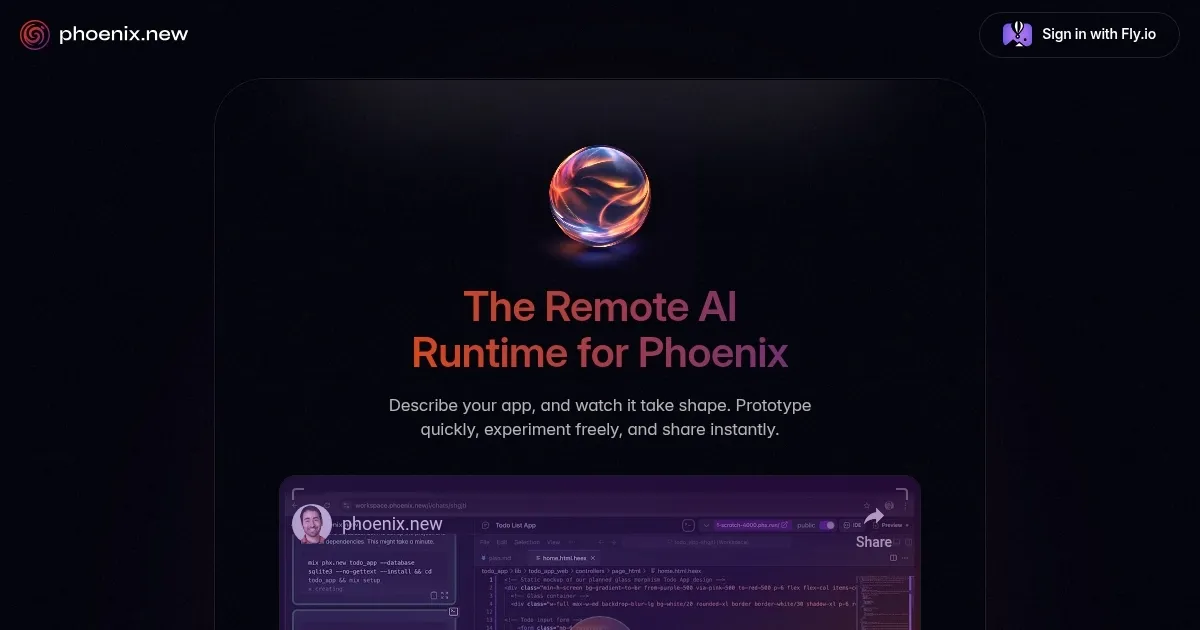
Homepage Screenshot 📸
Video Overview 🎬
What are the key features? ✨
- AI Code Generation: Uses natural language prompts to create Elixir and Phoenix code for full-stack applications.
- Headless Browser Testing: Allows the agent to interact with and verify UI changes in real-time without manual intervention.
- Ephemeral VM Environment: Provides isolated virtual machines on Fly.io for safe execution of commands and installations.
- Automated Deployment: Deploys built apps to live, shareable URLs with GitHub integration for version control.
- Real-Time Iteration: Enables the agent to run tests, analyze logs, and refine code in iterative loops.
Who is it for? 🤔
Examples of what you can use it for 💡
- Indie Developer: Builds a multi-room game app by describing mechanics, letting the agent handle LiveView and PubSub setup for real-time play.
- Startup Founder: Prototypes a chat application with user auth, using prompts to generate Ecto schemas and deploy a shareable demo for feedback.
- Elixir Learner: Creates a task tracker with database migrations, reviewing AI code to understand Phoenix conventions and concurrency.
- Product Manager: Generates a virtual event platform outline, iterating on UI via headless browser tests for stakeholder reviews.
- DevOps Engineer: Tests real-time notification systems by simulating user interactions, ensuring scalability before full implementation.
Pros & Cons ⚖️
- Fast prototyping
- UI auto-testing
- Phoenix optimized
- Elixir focused
- Usage costs add up
FAQs 💬
Ready to try Phoenix.new?
Generates Phoenix apps from natural language descriptions in the browser
Visit Phoenix.new