Vanna.AI
Converts natural language questions into SQL queries for database interaction
Vanna.AI is an open-source Python framework that generates SQL queries from natural language inputs using Retrieval-Augmented Generation (RAG). It connects to databases like Snowflake, Postgres, and BigQuery, enabling users to query data without SQL expertise. The tool trains on your database schema, past queries, or business terms to improve accuracy. It supports multiple LLMs, including OpenAI and Ollama, and integrates with Jupyter, Slack, or Flask apps.
The core feature is its RAG-based query generation. You provide table structures (DDL), documentation, or sample SQL, and Vanna.AI creates a model tailored to your database. For example, asking “What are the top 10 products by sales?” generates a SQL query and, optionally, a Plotly chart. The self-learning system stores corrected queries to enhance future performance. It’s compatible with any SQL database via Python connectors and supports vector stores like ChromaDB or Qdrant for embedding storage.
Vanna.AI’s open-source nature makes it cost-effective compared to ThoughtSpot or Tableau, which target enterprise analytics with higher costs. However, it requires training for accuracy, and poorly structured databases can lead to incorrect queries. The Plotly feature, while useful, poses security risks if not disabled, as it executes dynamic code. Setup can be complex for non-developers, and the web interface lacks a true chat experience.
Recent feedback from Medium and Reddit highlights Vanna.AI’s developer appeal but notes challenges with messy schemas. Its flexibility shines in custom integrations, like Slack or Streamlit apps. The hosted version simplifies use but may not suit privacy-focused teams.
For best results, train Vanna.AI thoroughly with relevant data, review generated queries before execution, and explore its open-source GitHub repo for customization options.
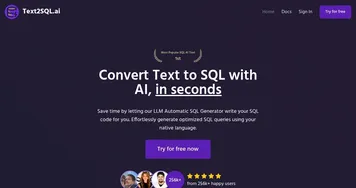
Homepage Screenshot 📸
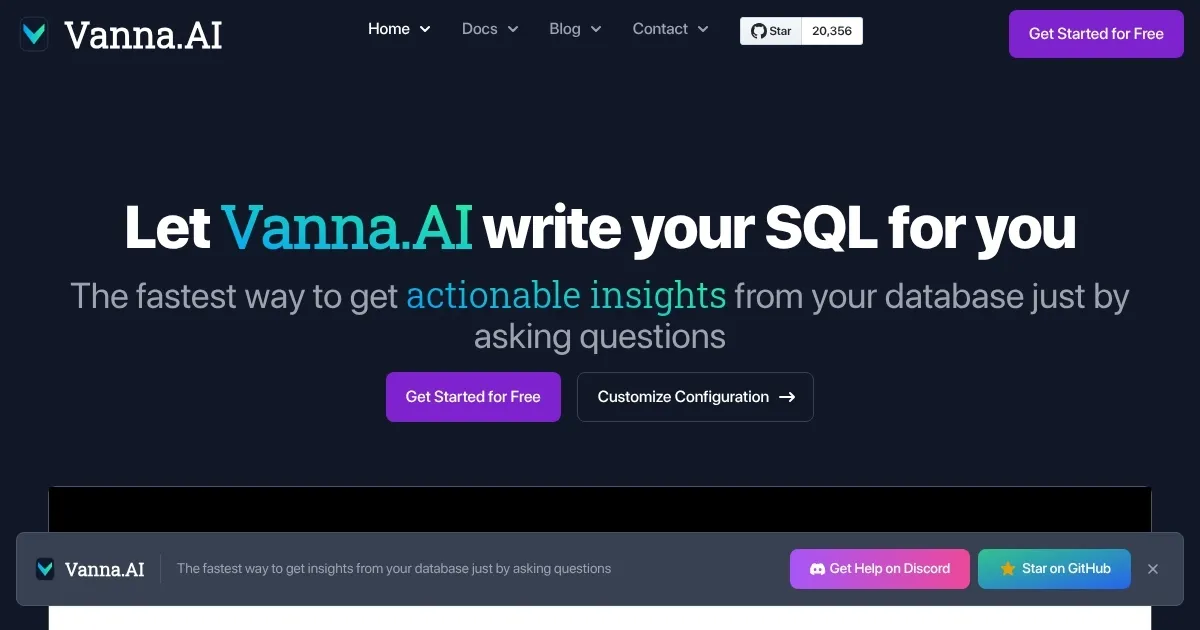
Video Overview 🎬
What are the key features? ✨
- RAG Query Generation: Translates natural language into accurate SQL queries using Retrieval-Augmented Generation.
- Self-Learning System: Improves query accuracy by storing corrected SQL for future use.
- Database Compatibility: Connects to any SQL database, including Snowflake, Postgres, and BigQuery.
- Flexible Integrations: Supports Jupyter, Slack, Flask, or Streamlit for user-friendly interfaces.
- Open-Source Framework: Allows full customization and local deployment for cost-effective use.
Who is it for? 🤔
Examples of what you can use it for 💡
- Data Analyst: Uses Vanna.AI to quickly generate SQL queries for ad-hoc reports without manual coding.
- Business Manager: Queries sales data in plain English via Slack integration for real-time insights.
- Developer: Integrates Vanna.AI into a custom web app for client-facing data analytics.
- Data Scientist: Trains Vanna.AI on a research database to streamline exploratory data analysis.
- IT Administrator: Deploys Vanna.AI locally to ensure data privacy for sensitive enterprise databases.
Pros & Cons ⚖️
- Easy natural language queries
- Open-source and customizable
- Supports many databases
- Needs training for accuracy
- Setup complex for beginners
FAQs 💬
Ready to try Vanna.AI?
Converts natural language questions into SQL queries for database interaction
Visit Vanna.AI