Azure AI Foundry by Microsoft
Cloud-based platform designed to facilitate the development, training, and deployment of AI models
Part of Microsoft’s Azure Cloud offering, Azure AI Foundry is designed to facilitate the development, training, and deployment of AI models — especially those focused on generative AI technologies. It offers a suite of tools and services that enable users to create AI applications more easily and efficiently.
With Azure AI Foundry, developers can access pre-built models, utilize AI-powered tools for code generation, and deploy AI solutions at scale. The platform aims to streamline the AI development process, making it more accessible to a broader range of developers — including those who may not have deep technical expertise in AI.
Companies can use Azure AI Foundry to improve various aspects of their business. For instance, they can create smart chatbots to improve customer experiences and streamline onboarding, leverage advanced analytics and automation to reduce organizational risk, create solutions that improve operational efficiencies, and overall enhance productivity and efficiency within their organization.
As that’s the case with all Azure services, there is a high level of flexibility in pricing, and you can pay per use or based on a different model.
Also included with Azure is security and compliance, with Microsoft investing billions and employing thousands to make sure your data is well protected against all kinds of cyberthreats. On the compliance side, it is worth noting that Azure has one of the largest compliance certification portfolios in the industry.
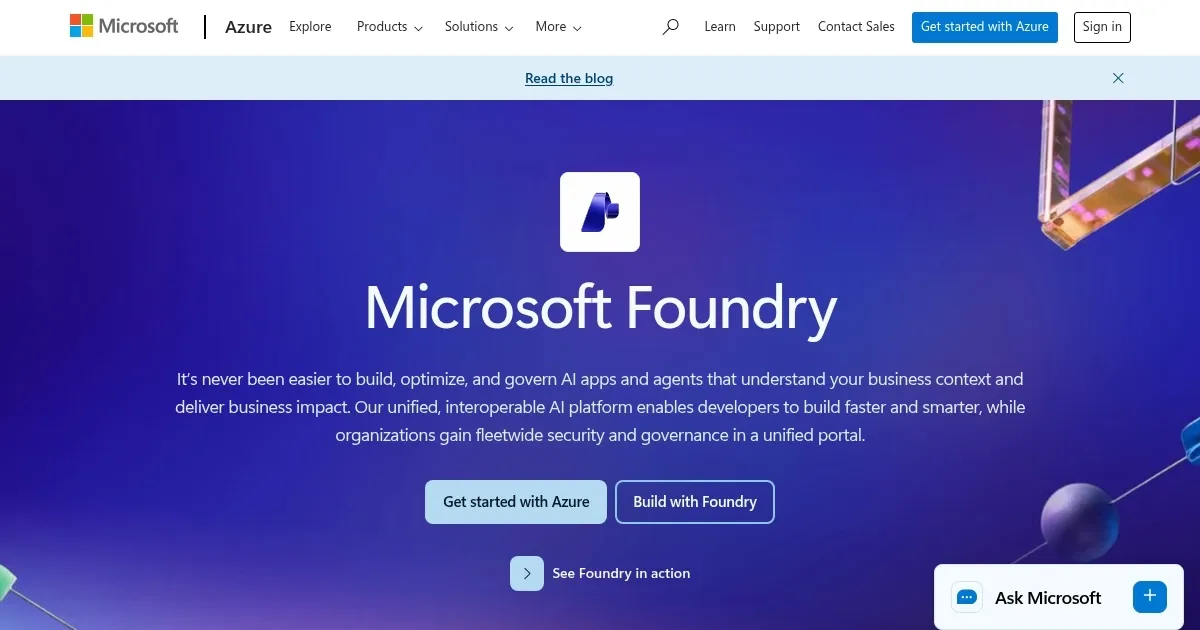
Homepage Screenshot 📸
Video Overview 🎬

What are the key features? ✨
- Build your own copilot: Build your own AI solution that will help users interact naturally with devices, chatbots, and apps.
- Create an enterprise chat app: Build a chatbot that draws on your own data for informed and custom responses to customers' questions. Or create a chatbot that streamlines onboarding of employees, partners, clients, and more.
- Multiple modalities: With Azure AI Foundry, you can build apps with models that combine multiple types of data, such as text, images, video, and audio.
- Analyze speech: Transform voice data into actionable insights with transcription, text-to-speech, and speaker recognition capabilities.
- Security and compliance: Microsoft has committed to investing $20 billion in cybersecurity over five years. The company employs over 8,500 security and threat intelligence experts across 77 countries, and Azure has one of the largest compliance certification portfolios in the industry.
Who is it for? 🤔
Examples of what you can use it for 💡
- Improve customer experiences with personalized content while reducing wait times with your own chatbot
- Build apps that leverage advanced analytics and automation to proactively identify, assess, and mitigate operational risks
- Create solutions that help teams work better together to improve operational efficiencies and close feedback loops faster
- Use AI capabilities to optimize processes, automate tasks, and improve productivity so employees can focus on critical work
Pros & Cons ⚖️
- Makes it easier to develop AI solutions
- Especially great for existing Azure users - it's just another service they could use
- Thanks to Microsoft's partnership with OpenAI, you can get early access to the latest AI models
- If you're on AWS or Google Cloud, you'll probably want to use their AI solutions
FAQs 💬
Ready to try Azure AI Foundry?
Cloud-based platform designed to facilitate the development, training, and deployment of AI models
Visit Azure AI FoundryAzure AI Foundry alternatives 🔗