Bohrium
Empowers researchers with AI-driven literature reviews and precise academic insights.
Bohrium is an AI-powered research platform designed to streamline literature reviews for global scientists. It taps into over 160 million academic papers, journals, and patents, using advanced models like DeepSeek R1 to deliver precise, citation-backed answers. Researchers can input natural language queries, and the platform returns curated results with summaries, methodologies, and clickable references. Features like DeepThink R1 enhance analysis, while multimodal Q&A integrates text and interactive diagrams for clarity. The platform supports exports to CSV, Markdown, and LaTeX, making it compatible with tools like Zotero and Jupyter.
Compared to SciSpace and Elicit, Bohrium offers a larger database and smoother interface. SciSpace excels at quick summaries but lacks depth, while Elicit’s functionality can feel less intuitive. Bohrium’s free tier includes 1500 credits, sufficient for basic use, with premium plans unlocking advanced features like paper comparison and scholar profiles. Pricing is competitive, though premium tiers are costlier than some alternatives. The interface may feel busy during heavy use, and JavaScript reliance can pose issues on restricted networks. A standout feature is the ability to chat with papers, extracting specific insights in seconds.
Researchers should begin with the free tier, test simple queries, and explore integrations with existing tools to maximize value.
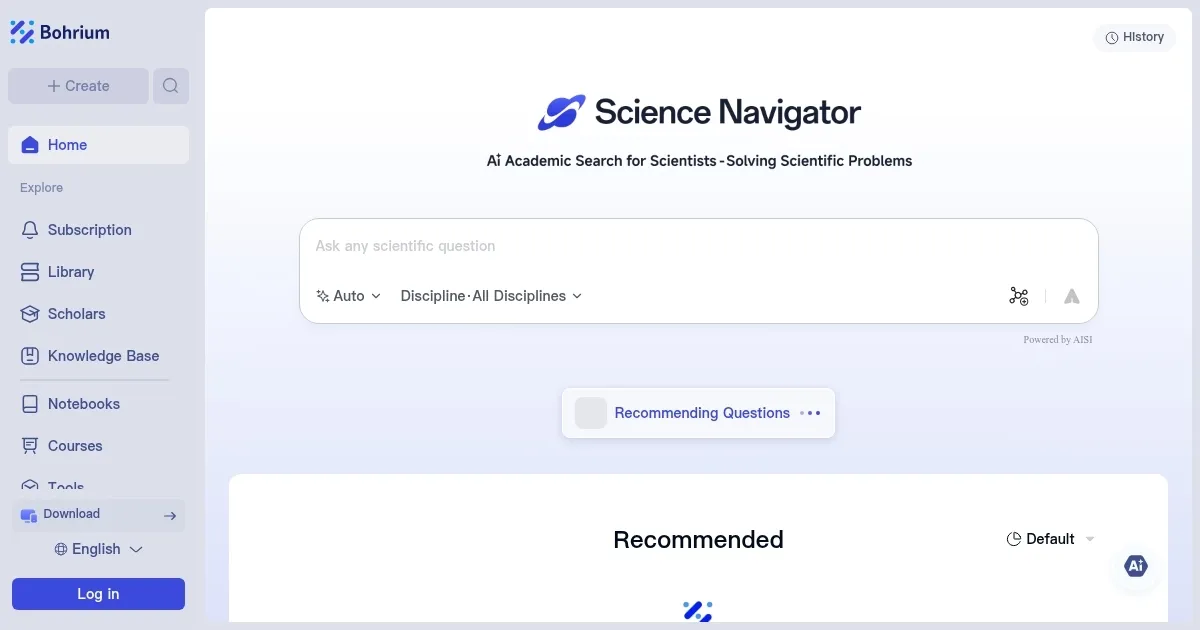
Homepage Screenshot 📸
What are the key features? ✨
- DeepThink R1: Uses AI to analyze 160M+ papers for precise results.
- Multimodal Q&A: Combines text and diagrams for clear insights.
- Paper Chat: Allows direct questioning of academic papers.
- Export Options: Supports CSV, Markdown, and LaTeX exports.
- Scholar Profiles: Tracks leading researchers’ latest work.
Who is it for? 🤔
Examples of what you can use it for 💡
- Graduate Student: Uses Bohrium to find relevant papers for a thesis on AI in healthcare.
- Professor: Summarizes recent studies for a grant proposal in quantum physics.
- Research Scientist: Compares methodologies across papers for a new experiment.
- Postdoc: Tracks leading scholars’ work in renewable energy research.
- Academic Writer: Exports curated citations to LaTeX for a journal article.
Pros & Cons ⚖️
- Access to 160M+ academic papers.
- Intuitive DeepThink R1 model.
- Free tier with 1500 credits.
- Multimodal Q&A enhances clarity.
- Seamless export to Markdown, CSV.
- Interface can feel cluttered.
- Steep learning curve for features.
FAQs 💬
Ready to try Bohrium?
Empowers researchers with AI-driven literature reviews and precise academic insights.
Visit BohriumBohrium alternatives 🔗