SciSpace by PubGenius Inc.
Your AI assistant to discover and understand research papers
SciSpace is one of those indispensable services for modern researchers. It’s actually a collection of different AI-powered tools that together make researchers’ lives that much easier.
For instance, it is a search engine curated for science, providing relevant answers from 272 million papers. Some of the questions you can ask include “How does climate change impact biodiversity?”, “Why are aging COVID patients more susceptible to severe complications?”, “How does social media affect the college selection process?”, “What are the interesting theories about dark matter and dark energy?”, and so on and on.
In addition, SciSpace lets you upload a research paper (PDF) and get answers backed by citations.
Speaking of citations, the tool provides a generator for them. Pick a source — upload a file, paste text or enter a URL — and select a citation style. There are more than 2,500 citation styles to choose from, including popular ones such as American Psychological Association 7th edition, Modern Language Association 9th edition, Begell House – Chicago Manual of Style, Elsevier – Vancouver, and many others.
There is also the Scholarly Paraphrasing Tool that can make your academic writing more clear, allowing you to write in more tones and languages than the popular rephrasing tool Quillbot.
Plus, we have an Academic AI Detector that can catch GPT-generated content and the ever-handy Chrome extension that lets you bring SciSpace’s tools with you across the web.
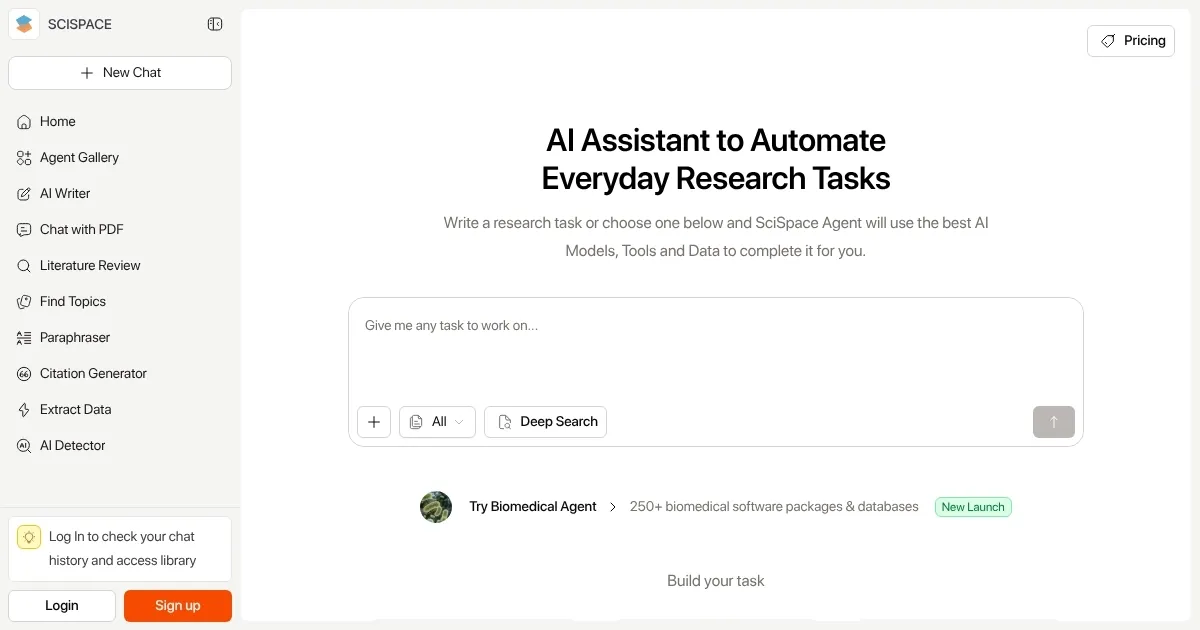
Homepage Screenshot 📸
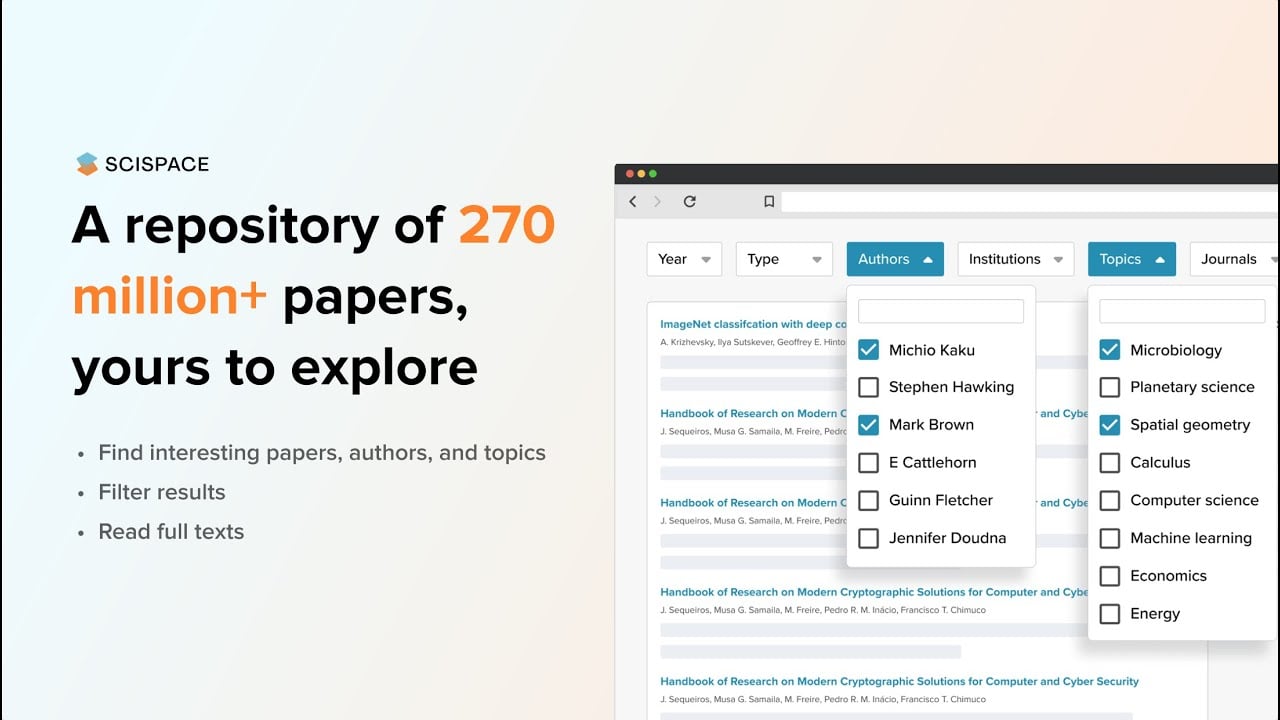
Video Overview 🎬
What are the key features? ✨
- Highlight text, math, and tables: Next time you come across something confusing, simply select the section of the paper to get summaries and explanations.
- Ask follow-up questions: Still confused? Ask a follow-up question to dive deeper into a topic and remove all doubts while you're reading.
- Use preset questions: Find quick summaries, future works, and related papers to the scientific article and get faster at your conducting literature review.
- Save notes: Save parts of the PDF or an interesting Copilot response as a note, and keep all important information at your fingertips.
- Browser extension: SciSpace Copilot for Chrome gives you real-time answers to articles, no matter where you read them online.
- APA citation generator: SciSpace gives you instant and accurate APA citations, and you get to choose between more than 2,500 citation styles.
- Scholarly paraphrasing tool: Make your academic writing more clear and original with SciSpace's Paraphraser. Write in more tones and languages than the popular rephrasing tool Quillbot.
- Academic AI detector: Catch GPT-4, ChatGPT, Jasper, and other AI writers' presence in scholarly content.
Who is it for? 🤔
Examples of what you can use it for 💡
- Search through and get answers from 272 million research papers
- Take notes from research papers from your files and web pages
- Get summaries and explanations of research papers and complex concepts
- Quickly create citations in multiple styles
- Detect AI-generated content in scholarly content
Pros & Cons ⚖️
- Get answers from 272 million research papers
- Citation generator is a true time-saving tool
- The browser extension is a must-have tool for researchers
- AI-generated explanations might lack depth
FAQs 💬
SciSpace alternatives 🔗