Frequently Asked Questions
What does an AI paraphraser do?
An AI paraphraser rewords text so it says the same thing in a new way. You give it a sentence or passage and it returns an equivalent version with different vocabulary and sentence structure. People use it to reduce repetition, rephrase quotes in their own words, or find a clearer way to express an idea.
Is paraphrasing the same as rewriting?
Paraphrasing and rewriting overlap but differ in intent. Paraphrasing restates the same meaning in fresh words, aiming for equivalence rather than improvement. Rewriting goes further, reshaping the text to be clearer, tighter, or differently toned, and it may cut or reorder ideas. Paraphrasing changes the words; rewriting changes the quality.
Does paraphrasing count as plagiarism?
Paraphrasing another person's idea still counts as plagiarism if you don't cite the source. Swapping words doesn't make the thought yours, so academic and professional writing requires a citation even when the wording is original. Use a paraphraser to phrase your own understanding clearly, and credit any source you're drawing the idea from.
What is the best free AI paraphraser?
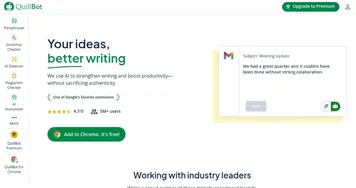
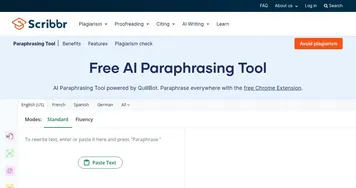
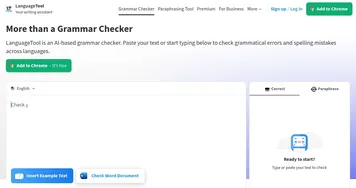
Several AI paraphrasers offer capable free tiers. QuillBot is the best known and handles short passages well, LanguageTool rephrases while checking grammar, and Scribbr suits academic phrasing. Free versions usually cap the word count and the number of rephrasing modes, which is fine for sentence-level work and occasional use.
Can AI paraphrasing tools bypass plagiarism detectors?
Some paraphrasers claim to bypass plagiarism detectors, but relying on that is risky and often backfires. Detectors keep improving, and instructors increasingly spot reworded source text. Beyond the technical odds, passing off someone else's idea as your own remains plagiarism regardless of the wording. Paraphrase honestly and cite, rather than trying to game a checker.