Best AI Proofreading Tools

46 toolsRanked by traffic

AI proofreading tools give your writing a comprehensive final review before you publish, checking grammar, spelling, punctuation, and style in one pass. This is the last polish, where you catch the small mistakes that slip through earlier drafts. Leading options include Grammarly, QuillBot, and Scribbr, while Turnitin adds originality checking for academic work.

Students submitting papers, writers shipping articles, and teams sending client work use proofreaders as a safety net on near-final text. The difference from a plain grammar check is breadth: proofreading weighs spelling, punctuation, consistency, and style together, not just grammar rules. Run it last, after the writing and editing are done, so it works on text that's already shaped. AI proofreading catches most errors fast, though a careful human read still spots the tone and meaning issues software misses.

Grammarly
Grammarly - icon
Grammarly
Enhances writing with grammar, tone, and style suggestions.
QuillBot
QuillBot - icon
QuillBot
Enhances writing with AI-powered paraphrasing, grammar checking, and tone analysis.
Turnitin
Turnitin - icon
Turnitin
An educational platform that uses advanced AI to ensure academic integrity by detecting plagiarism
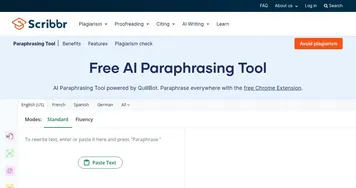
Scribbr
Scribbr - icon
Scribbr
Rewrites text using AI to maintain meaning with new wording
Ahrefs AI writing tools
Ahrefs AI writing tools - icon
Ahrefs AI writing tools
Enhance your marketing and content performance with Ahrefs' free copywriting tools powered by AI
LanguageTool
LanguageTool - icon
LanguageTool
Checks grammar, spelling, and style across multiple languages
DupliChecker
DupliChecker - icon
DupliChecker
An online tool that helps users identify and handle plagiarism in their text
Copyleaks
Copyleaks - icon
Copyleaks
A tool for detecting plagiarized or AI-generated content
Originality.ai
Originality.ai - icon
Originality.ai
A plagiarism and AI generated content detection tool
PlagiarismDetector.net
PlagiarismDetector.net - icon
PlagiarismDetector.net
An AI-powered tool for detecting plagiarism in different types of documents
Paraphraser
Paraphraser - icon
Paraphraser
Rephrases text using AI to maintain meaning with new wording
Paperpal
Paperpal - icon
Paperpal
Get AI-powered in-depth suggestions to help you polish your academic writing
Wordtune
Wordtune - icon
Wordtune
Enhances writing with AI-powered paraphrasing, grammar correction, and tone adjustments
Jenni
Jenni - icon
Jenni
An AI research and writing assistant that uses the latest research as well as your own files for citations
Wordvice AI
Wordvice AI - icon
Wordvice AI
Enhance the quality and clarity of different types of written content

Frequently Asked Questions

What is the best AI proofreading tool?
The best AI proofreading tool for most writers is Grammarly, which reviews grammar, spelling, punctuation, and style in one place. QuillBot is a strong free alternative, Scribbr suits formal academic work, and Turnitin adds originality checks for students. Your choice depends on whether you need style depth, language coverage, or plagiarism detection.
What is the difference between proofreading and editing?
Proofreading is the final surface-level pass for grammar, spelling, punctuation, and consistency, done on near-finished text. Editing happens earlier and deeper, reshaping structure, argument, clarity, and flow. You edit to make the writing better and proofread to make it correct, so proofreading is the last step before you publish.
Can AI replace a human proofreader?
AI can handle much of proofreading but doesn't fully replace a human. It catches typos, punctuation slips, and obvious grammar errors quickly and cheaply. A human proofreader still reads better for tone, ambiguity, factual sense, and the kind of mistake that's technically correct but wrong in context. For high-stakes text, use both.
When should I proofread with AI?
You should proofread with AI as the last step, once the writing and editing are finished. Running a proofreader on a rough draft wastes its strength, since you'll change sentences anyway. Save it for near-final text, fix the flagged issues, then give the piece one slow human read before sending it.
Are AI proofreading tools accurate?
AI proofreading tools are accurate on mechanical errors like typos, spelling, and punctuation, which is most of what proofreading covers. They're less reliable on judgment calls about style and on errors that depend on meaning. They'll clean up the vast majority of surface mistakes, but a final human pass remains worthwhile.