Iris.ai
Streamlines scientific research with AI-driven text analysis and data extraction
Iris.ai is an AI-driven platform designed to streamline scientific research and knowledge management for academics, R&D teams, and enterprises. It offers tools like Explore, Smart Search, and a reference-backed chatbot to analyze texts, extract data, and generate insights from large datasets. The platform, RSpace, supports ingestion of various file types, including PDFs and Word documents, making it versatile for processing internal or external documents.
The Explore tool analyzes research paper abstracts, identifying key concepts and linking them to related studies, which is ideal for literature reviews. Smart Search uses advanced NLP to deliver contextually relevant results, outperforming traditional keyword searches. The chatbot allows users to query documents directly, providing answers with citations, which enhances efficiency. For enterprises, Iris.ai’s ability to systematize unstructured data into actionable insights is a core strength, particularly for R&D and knowledge management teams. Its Agentic RAG (Retrieval-Augmented Generation) system supports scalable workflows, allowing integration with custom AI models or on-premise deployment.
Compared to competitors, Iris.ai offers more robust data extraction than Semantic Scholar, which focuses on academic search, and deeper enterprise integration than Connected Papers, which prioritizes visualization. However, its interface may require a learning curve, especially for non-technical users. Pricing follows a subscription model, with tiers for individuals and enterprises, competitive with tools like Elicit but potentially costly for smaller teams. Some users report occasional delays in processing large datasets.
Iris.ai excels in handling multilingual documents, a feature not widely highlighted but valuable for global teams. It also ensures data privacy, a critical factor for enterprises. For best results, request a demo to test its integration with your workflow, and start with small datasets to gauge performance.
Homepage Screenshot 📸
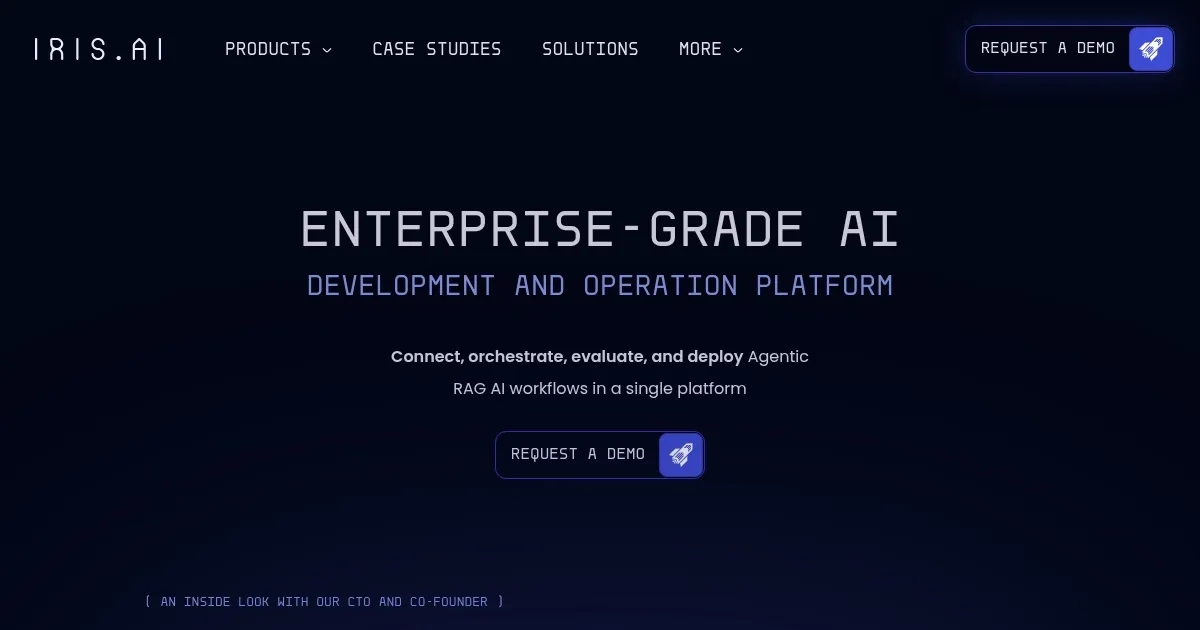
Video Overview 🎬

What are the key features? ✨
- Explore Tool: Analyzes abstracts to map key concepts and link related studies.
- Smart Search: Uses NLP to deliver contextually relevant search results.
- Chatbot: Answers queries with references from uploaded documents.
- Data Extraction: Processes unstructured data into actionable insights.
- RSpace Platform: Supports ingestion of PDFs, Word docs, and other formats.
Who is it for? 🤔
Examples of what you can use it for 💡
- Academic Researcher: Uses Explore to map concepts for literature reviews.
- R&D Manager: Extracts data from patents to monitor competitors.
- Knowledge Manager: Organizes internal documents into actionable insights.
- AI Developer: Integrates Iris.ai’s RAG system for custom applications.
- Graduate Student: Queries papers via chatbot for quick clarifications.
Pros & Cons ⚖️
- Contextual smart search
- Multilingual support
- Scalable for enterprises
- Reference-backed chatbot
- Costly for small teams
- Complex interface
FAQs 💬
Ready to try Iris.ai?
Streamlines scientific research with AI-driven text analysis and data extraction
Visit Iris.aiIris.ai alternatives 🔗